
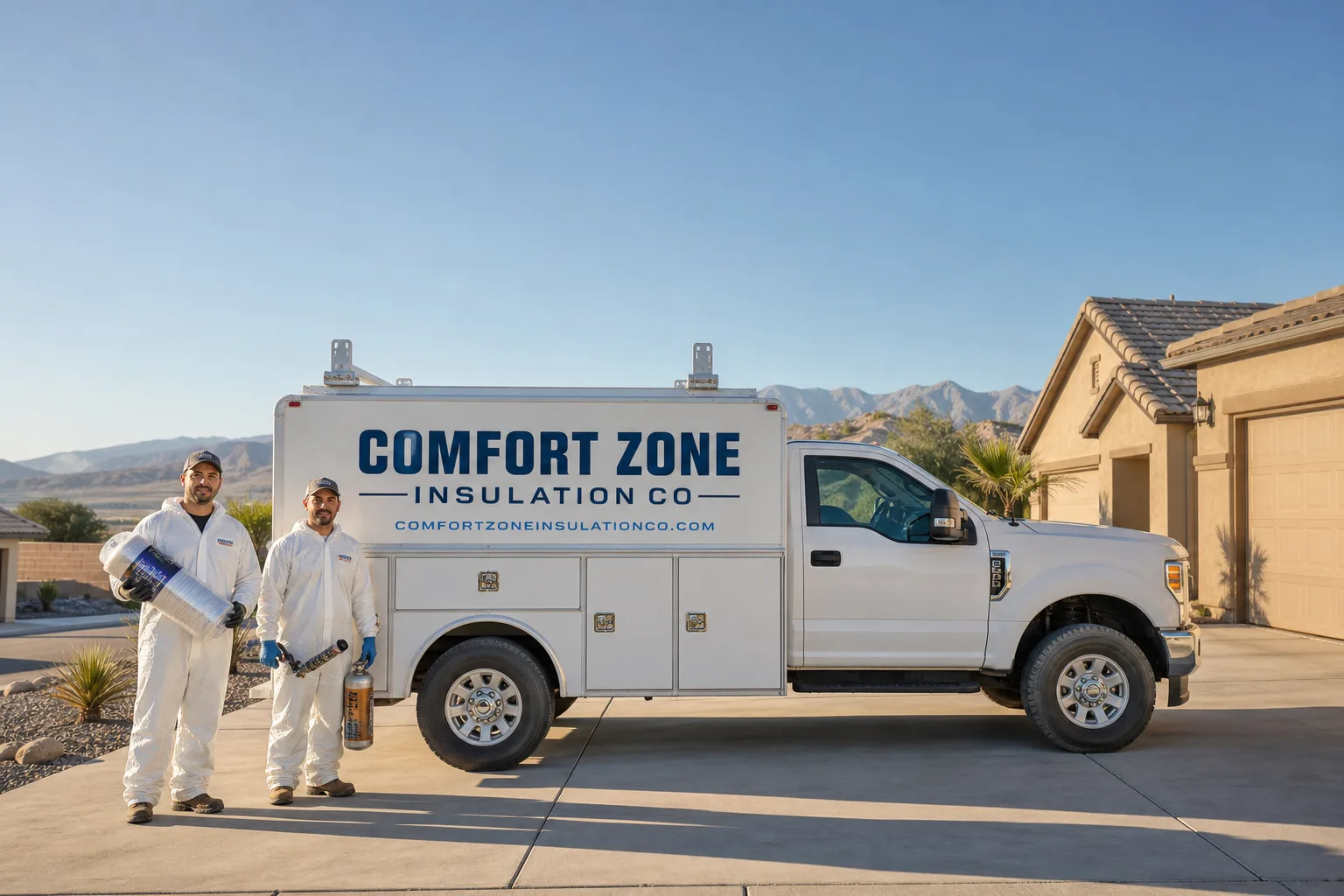
Fast, Reliable Spray Foam Insulation Across Walnut
Spray foam insulation in Walnut, CA typically costs $2.50 to $6.50 per board foot for open-cell and $3.50 to $9.00 per board foot for closed-cell, with most whole-attic projects landing between $4,800 and $14,000 depending on square footage and roof assembly complexity. Same-day and next-day appointments are available for most Walnut zip codes, including 91789 and 91788. We know the homes here, the heat here, and what it takes to get your house comfortable before the next Santa Ana wind event rolls through. Call (855) 341-7856 for a free estimate from a team that installs insulation and nothing else.
Why Comfort Zone Insulation Co Is Walnut’s Preferred Spray Foam Insulation Company
We are an insulation-only contractor. That distinction matters in Walnut, where homes off Grand Avenue and around Lemon Avenue run the gamut from 1960s tract houses to hillside equestrian estates with unvented roof assemblies that demand real diagnostic work. Our team is led by Noel Carrasco, who has spent years focused exclusively on how homes hold temperature. Noel trains every crew member on the same principle: read the house first, then choose the material.
Walnut homeowners call us because we show up with answers, not a sales pitch. We have dense-packed blown-in behind 1970s drywall, air-sealed knee walls that were funneling attic heat into master bedrooms, and applied closed-cell foam to garage ceilings that registered 130°F on the interior surface by late morning. Our crews know the streets, the sun exposure patterns, and the building eras that define this part of the San Gabriel Valley.
We carry eight leading brands including Owens Corning, Rockwool, and Icynene, so the product we recommend is the one that actually fits your roof deck, your framing, and your ventilation setup. That is the difference between a contractor who shows up with one foam in the truck and a specialist who brings the full portfolio. Call (855) 341-7856 and we will have someone out to Walnut within 24 hours.
Crawl Space Spray Foam Insulation in Walnut
Crawl Space Spray Foam Insulation is one of the most effective upgrades for Walnut homes built between the 1960s and 1990s, especially those along Amar Road and in the flatter tract neighborhoods of 91789, where vented crawl spaces underneath the house pull hot, dusty air up through floor gaps all summer long. In these homes, the crawl space acts as an unsealed plenum. When outside air is 100°F and dry, that air moves upward through plumbing penetrations, subfloor seams, and rim joist cavities. We apply closed-cell foam to the crawl space walls and rim joists, sealing the boundary between the soil, the outdoors, and your living space.
Rim Joist Air Sealing
The rim joist is where the floor framing meets the foundation wall, and in Walnut it is also where Santa Ana winds push fine dust and hot air into the house. Spraying closed-cell foam along the rim joist band stops that infiltration at the source. Homeowners notice the difference immediately in rooms above the crawl space floors that used to feel warm underfoot in July.
Encapsulation Support
For Walnut homeowners who have already installed or are considering a crawl space vapor barrier, foam insulation on the walls is the next logical step. It turns the crawl space into a semi-conditioned zone that stays within 10 degrees of the house interior instead of tracking outdoor highs. Our crews apply the foam, then we inspect every seam with a thermal camera before we leave.
Garage Spray Foam Insulation in Walnut
Garage Spray Foam Insulation is a high-impact job in Walnut because so many homes here have attached garages sitting directly beneath bedrooms or bonus rooms. In a typical two-story tract house off Nogales Street, the garage ceiling is also the floor of the room above it. When the garage soaks up 100-degree afternoon heat, that room above never cools down, no matter what the thermostat says. We spray closed-cell foam on the garage ceiling and the garage exterior walls, creating a thermal break that keeps that cavity from radiating heat upward for hours after sunset.
Interior Garage Walls
Many Walnut homeowners use their garages as workshops, home gyms, or storage for temperature-sensitive items. Foam on the interior garage walls makes that space usable year-round without running a portable AC unit. The difference is immediate: a garage that used to hit 110°F by noon will hold closer to 85°F, and the bedroom above it loses that late-evening heat load.
Bonus Room Above Garage
The room above the garage is historically the most uncomfortable room in any Walnut two-story. Spray foam on the garage ceiling flips that dynamic. We have had homeowners tell us their upstairs bonus room, which used to run 12 to 15 degrees hotter than the rest of the house, now sits within 2 degrees of the hallway thermostat. That is the outcome we sell: your home holds the temperature you set.
Trusted Brands We Service in Walnut
Comfort Zone Insulation Co is authorized to install spray foam systems from Icynene and Demilec, two of the most recognized open-cell and closed-cell product lines in North America. We also work with Owens Corning for fiberglass and mineral wool detailing, Johns Manville for specialty applications, and Knauf where the job calls for it. For Walnut customers, that means the right foam for your specific roof assembly, not whatever is on the truck this week. We keep local stock for common Walnut jobs, which translates to faster turnaround when you need a rim joist sealed or a knee wall rebuilt before the next heat wave. Whether your home calls for open-cell on an attic roof deck or closed-cell in a crawl space, we match the product to the house. That is what Spray Foam Insulation specialization means.
Common Spray Foam Insulation Problems We See in Walnut Homes
- Failed fiberglass batts under fresh foam: In 1960s – 1990s tract attics off Amar Road and Lemon Avenue, original fiberglass batts have often compressed or sagged. Applying spray foam directly over them without removal traps heat, leaves eave gaps unsealed, and wastes the foam’s air-sealing capability.
- Unvented hillside roof assemblies without ignition barriers: Walnut’s hillside estate homes frequently have unvented roof designs that were originally built for fiberglass. Applying closed-cell foam at the wrong thickness can trap moisture against the sheathing or void shingle warranties. These jobs need a thickness calculation, not a default application.
- Santa Ana wind dust intrusion through eave gaps: When Santa Ana winds push fine dust through knee-wall and eave gaps, that dust settles on the sheathing and framing. If those gaps are not air-sealed before the foam is applied, the foam cannot bond properly and creates voids that leak air and heat.
- Over-conditioned attics with inadequate ventilation balancing: Some Walnut homeowners convert attics to storage or living space and ask for full foam encapsulation. Without addressing the existing gable vents, soffit vents, or ridge vents, the foam can create a moisture sandwich that leads to condensation on the underside of the decking.
Pricing for Spray Foam Insulation in Walnut, CA
Open-cell spray foam in Walnut generally runs $2.50 to $4.50 per board foot installed, while closed-cell runs $3.50 to $6.50 per board foot for most residential jobs. A typical crawl space rim joist package for a 1,800-square-foot home lands between $1,900 and $3,400. A full garage ceiling and wall encapsulation usually runs $2,800 to $5,200 depending on garage size and access. Whole-attic spray foam on a 2,000-square-foot home in 91789 typically falls between $6,500 and $12,000. Larger hillside custom homes with multiple attic zones and complex roof geometry can run higher because foam thickness must be tuned zone by zone. We provide a written, line-item estimate before any work begins. Call (855) 341-7856 and we will walk your home with a thermal camera and give you real numbers, not a phone quote.
We Also Serve Cities Near Walnut
Our crews cover all of Walnut plus South San Jose Hills, Rowland Heights, West Covina, and Pomona. If you are in a neighboring community and your attic is baking, call us. We schedule routes through the San Gabriel Valley daily, which means we can often reach surrounding cities as fast as homes inside Walnut itself.
Serving Walnut, CA — Our Local Coverage Area
We’re based in the Walnut area and know this community well. Use the map below to see our service coverage — if you’re nearby, we can almost certainly help.
FAQs About Spray Foam Insulation in Walnut
No. Spray foam should never be applied over old fiberglass batts in Walnut attics. The batts must be removed first. If you spray over compressed or sagging fiberglass, the foam cannot air-seal the eave gaps or knee walls, and you trap heat inside the attic cavity while masking the real problem. In the tract homes built off Amar Road in the 1960s through the 1990s, those original batts have often failed. We remove them, air-seal the top plates and penetrations, then apply foam directly to the roof deck or attic floor. Call (855) 341-7856 for an attic inspection and we will tell you exactly what is under the floorboards before we quote a single board foot.
Closed-cell spray foam is almost always the correct choice for unvented roof assemblies in Walnut’s hillside estates. Closed-cell foam provides a vapor barrier and adds structural rigidity to the roof deck, which matters when Walnut temperatures push attic surfaces past 140°F. The critical variable is thickness: too little foam and condensation forms on the underside of the sheathing; too much and you can void shingle warranties. We calculate the correct depth based on the roofing material, the framing spacing, and the home’s elevation. This is not a guess-and-spray job, and that is where working with a specialist like Noel Carrasco and his team makes a measurable difference.
Spray foam in the garage stops heat from radiating upward into the rooms above. In a two-story Walnut home, the garage ceiling is the floor of your bedroom or bonus room. When the garage air hits 110°F to 120°F, that heat conducts through the floor assembly for hours after the sun goes down. Closed-cell foam on the garage ceiling creates a thermal break. We have measured a 20-degree surface temperature drop on the garage ceiling after application. The room above follows. Call (855) 341-7856 and we will bring a thermal camera to your garage and show you the heat map before we propose anything.
Yes, significantly. Santa Ana winds push fine dust and allergens through eave gaps, knee-wall gaps, rim joist cavities, and any unsealed penetration in the building envelope. Spray foam is the only insulation that air-seals as it insulates. When we apply foam to the knee walls, eave lines, and rim joists, those gaps are closed permanently. Walnut homeowners tell us the difference is most noticeable in the fall, when the winds pick up and the house stays noticeably cleaner. One note: the air-sealing must happen before the foam. If gaps are not cleaned and sealed first, the foam adheres to dust rather than framing.
Most spray foam insulation work in Walnut does not require a building permit when it is installed within an existing residential attic or crawl space and does not alter the structure. However, any foam installed in a habitable space, or any job that changes your home’s ventilation profile, may need plan review. We handle that determination for you. As for ignition barriers: yes, most building codes require an ignition barrier or thermal barrier between spray foam and living space. For unvented attic applications in Walnut’s hillside homes, we spec a barrier that meets current code without compromising the foam’s air-sealing performance. We will walk you through what your specific house needs before any material is ordered.
Written by Noel Carrasco, Owner at Comfort Zone Insulation Co, serving Walnut and the San Gabriel Valley.