
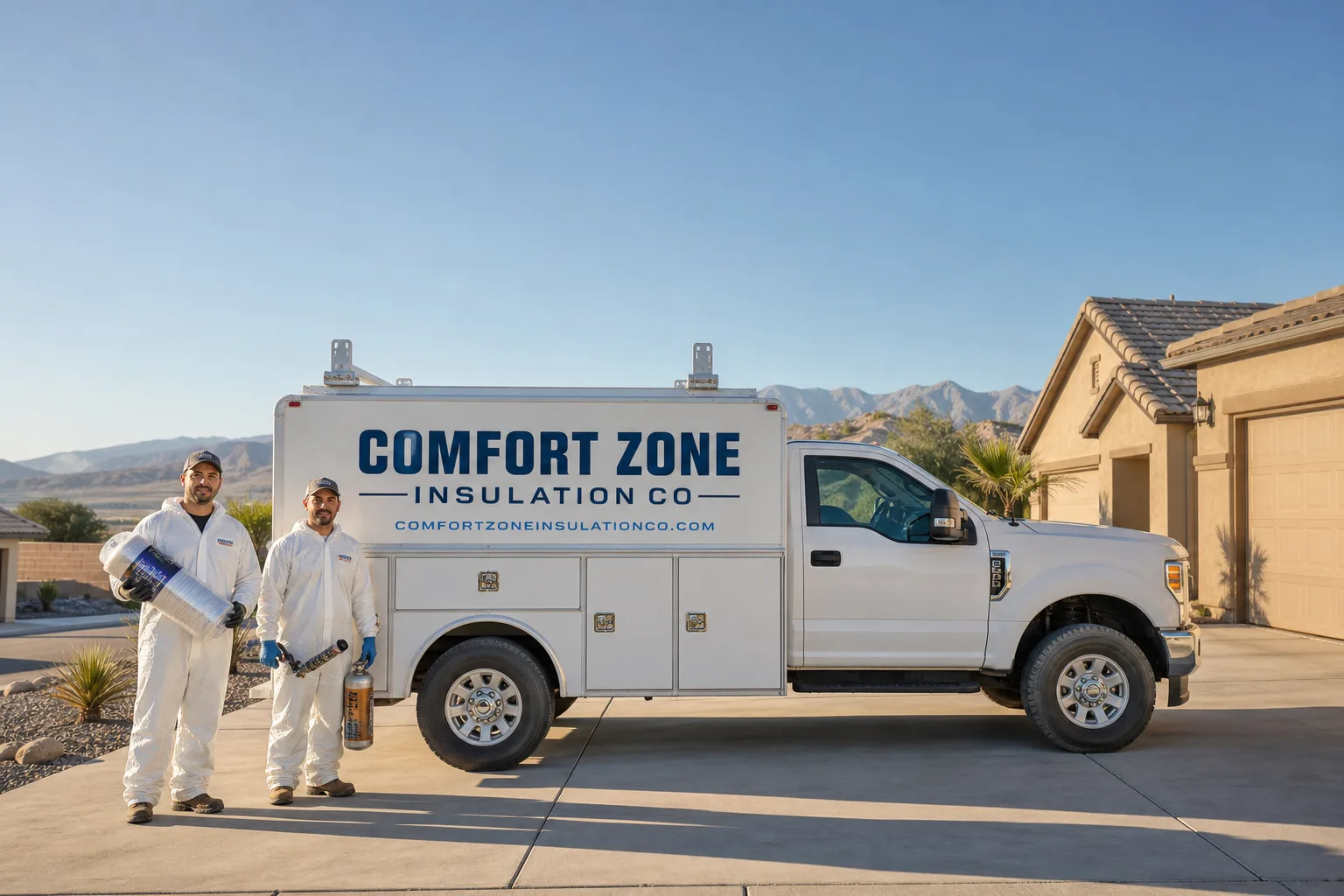
Fast, Reliable Spray Foam Insulation Across South San Jose Hills
Spray foam insulation in South San Jose Hills has to be specified differently than in Rowland Heights or West Covina, and that’s the honest starting point. The hillside exposure here means attic temperatures climb past 140°F for weeks at a time, and that heat cycling is brutal on insulation. If you’re in the 91792 ZIP and your rooms never hold the temperature you set, the problem usually starts at the top of the house. Comfort Zone Insulation Co works throughout South San Jose Hills with response times measured in days, not weeks. Call (855) 341-7856 for a free estimate, and we’ll tell you exactly what your attic, rim joist, and crawl space actually need.
Why Comfort Zone Insulation Co Is South San Jose Hills’s Preferred Spray Foam Insulation Company
We install insulation and nothing else. That’s not a slogan, it’s the reason South San Jose Hills homeowners call us after another contractor takes a quick look and guesses. Insulation work in the San Jose Hills demands attention to how heat moves through a wood-framed attic with minimal ventilation, and the failure patterns here are specific. We’ve pulled failed batts from south-facing slopes off Valley Boulevard, inspected rim joists cracked from thermal expansion, and corrected spray foam jobs that were applied over settled cellulose. We know what this housing stock does under sustained sun exposure because we’ve worked inside it.
Noel Carrasco leads our team, and he built Comfort Zone Insulation Co as a specialist operation. That means our crews aren’t splitting time between roofing, HVAC, and insulation. They spend every day in attics, crawl spaces, and rim joist cavities. We carry eight leading manufacturer brands including Owens Corning, Rockwool, and Icynene, so the recommendation you get is based on your home’s specific conditions, not whatever product we happened to order this week. For South San Jose Hills customers, we typically schedule estimates within a few days and complete most residential spray foam jobs in one to two visits.
Rim Joist Spray Foam in South San Jose Hills
Rim joist spray foam in South San Jose Hills addresses one of the most ignored air leakage points in 1960s to 1980s tract homes. The rim joist is the band of wood where your floor framing meets the foundation wall, and in the 91792 hillside homes, it’s often completely uninsulated. Hot hillside air pushes into the house through these gaps, and in winter, the same gaps let conditioned air escape. We see this on nearly every home we assess off Valley Boulevard and throughout the surrounding slopes.
When Your Rim Joist Needs Attention
If the floors above your crawl space always feel cold in the morning or your first-floor rooms run several degrees warmer than upstairs, the rim joist is usually a contributor. Homes on west-facing slopes get hit hardest because afternoon sun drives heat into the crawl space. We apply closed-cell spray foam to the rim joist cavity, which air-seals and insulates in one pass. A typical rim joist spray foam job in South San Jose Hills runs $1,800 to $3,400 depending on linear footage and access.
Why Open Cell Doesn’t Always Cut It Here
Open-cell spray foam has its place, but for rim joists in South San Jose Hills, closed-cell is usually the right call. The material needs to resist moisture migration from the crawl space and handle the temperature swings between the foundation and the framed floor above. We carry Demilec and Icynene closed-cell systems for exactly this application.
Crawl Space Spray Foam Insulation in South San Jose Hills
Crawl space spray foam insulation in South San Jose Hills is about breaking the cycle of hot air rising into the home from below. Most of the tract homes here sit over shallow crawl spaces with dirt floors and vented foundation walls. That design might have made sense in 1975, but under the San Jose Hills sun, it means the crawl space becomes a heat reservoir by mid-afternoon. The heat migrates upward through the floor assembly and makes your air conditioner work against physics.
Sealing the Thermal Boundary
When we spray foam a crawl space, we’re moving the thermal boundary from the floor above to the foundation walls and rim joist perimeter. The result is a conditioned buffer that keeps the floorboards within a few degrees of the interior temperature. A crawl space spray foam job in South San Jose Hills typically runs $2,500 to $5,800 depending on square footage, access clearance, and whether we’re sealing the band joist at the same time.
Hillside Access Considerations
Some South San Jose Hills homes have crawl spaces that follow the hillside slope, meaning access heights change from one end to the other. That affects application technique and material selection. We’re used to working in tight clearances and low-profile cavities around here, and the estimate accounts for real site conditions rather than assuming a flat, open crawl space like you’d find in West Covina.
Trusted Brands We Service in South San Jose Hills
We install products from Owens Corning, Johns Manville, Knauf, Rockwool, and several other manufacturers, because no single brand covers every situation in South San Jose Hills. A 1978 tract home with original R-11 batts and a low-sloped roof needs a different approach than a newer hillside property with vaulted ceilings. Icynene and Demilec spray foam systems give us open- and closed-cell options tuned for the heat cycling we see here. Carrying this range means you’re never steered toward a product that’s wrong for your house just because it’s what’s in stock. We stock material specific to the 91792 market and can typically start most South San Jose Hills jobs within a week of the estimate.
Common Spray Foam Insulation Problems We See in South San Jose Hills Homes
- Heat-sheared attic foam. Closed-cell foam applied directly to roof sheathing can delaminate on south-facing slopes after enough 140°F-plus heat cycles. We inspect the bond line before recommending this application and use the right product for the deck angle.
- Original batt adhesive failure. The 1960s and 1970s homes here often still have their original R-11 fiberglass batts. The paper-faced adhesive breaks down under sustained attic heat, and the batts end up crumpled on the attic floor, leaving bare drywall above your ceilings.
- Foam shrinkage over settled cellulose. Some homeowners had blown-in cellulose installed years ago, and it’s settled into a dense mat. Spraying foam over degraded cellulose in a low-slope attic traps heat and accelerates shrinkage. We remove the old material first.
- Rim joist thermal cracking. Unvented attics and crawl spaces expand and contract with hillside temperature swings, and rigid foam at the rim joist can crack along the seam line. Closed-cell spray foam moves with the framing better than rigid board, which is why we favor it here.
Pricing for Spray Foam Insulation in South San Jose Hills, CA
Spray foam pricing in South San Jose Hills depends on what you’re treating and how much access we have, but here are the honest ranges. Attic deck spray foam for a typical 1,200 to 1,800 square foot home runs $3,800 to $7,500. Rim joist treatment is usually $1,800 to $3,400. Crawl space perimeter spray foam falls between $2,500 and $5,800. Open-cell is less expensive per board foot, but closed-cell is often the right product on the sun-facing slopes because it doubles as a vapor retarder and handles heat cycling better. Estimates are free, and we give you line-item numbers before any work starts. Call (855) 341-7856 to get a specific price for your home.
We Also Serve Cities Near South San Jose Hills
Comfort Zone Insulation Co handles Spray Foam Insulation in South San Jose Hills on a regular basis, and our service area also includes Valinda, Walnut, West Covina, and Rowland Heights. If you’re on the edge of the 91792 ZIP or just over the border in a neighboring community, you’re still in our territory. The hillside conditions that affect South San Jose Hills extend into several of these areas, so the same diagnostic approach applies.
Serving South San Jose Hills, CA — Our Local Coverage Area
We’re based in the South San Jose Hills area and know this community well. Use the map below to see our service coverage — if you’re nearby, we can almost certainly help.
FAQs About Spray Foam Insulation in South San Jose Hills
South San Jose Hills sits on the direct sun-facing slopes of the San Jose Hills with no afternoon marine layer to buffer the heat. Attic temperatures here stay above 140°F for long stretches in summer, which is higher than what Rowland Heights or West Covina attics typically see. That sustained heat cycling causes cured spray foam to shear from roof sheathing, especially on south- and west-facing roof decks. We specify foam products designed for high-heat applications and check the sheathing bond before installation. Call (855) 341-7856 and we’ll inspect your attic’s specific exposure.
No, and we wouldn’t recommend it. The original R-11 batts in 1970s tract homes here are usually degraded, dust-laden, and full of rodent debris by now. Spraying foam over them creates a messy, poorly bonded layer that traps moisture and doesn’t address the air sealing you’re paying for. We remove the failed batts first, inspect the framing, then spray foam directly to the deck or floor surface. Removal and disposal is included in our estimate.
For rim joist and crawl space work in the 91792 area, we primarily install Icynene and Demilec closed-cell spray foam systems. These two product lines handle the thermal expansion and contraction we see in South San Jose Hills foundation assemblies better than most open-cell alternatives. We also have Owens Corning and Rockwool options for related work like attic baffles and partition walls. The brand decision comes after we evaluate your crawl space’s height, moisture conditions, and hillside exposure.
Homes on the hillside slopes of South San Jose Hills have crawl spaces that heat unevenly because the sun hits one foundation wall harder than the others. That creates differential expansion, which can crack rigid insulation and cause spray foam to pull away from the substrate if the wrong product was used. We account for this by using closed-cell foam with higher bond strength on sun-facing foundation walls, and we inspect the perimeter seal before finishing the job.
No, we don’t inspect garage door hardware. Our focus is insulation, and spray foam work in garages here typically means ceiling deck treatment above the garage. Garage door hardware is outside our trade, but we’ll tell you if foam overspray could interfere with tracks or opener mounts and work around those areas carefully. For anything related to springs, rollers, or opener chains, we’d recommend a dedicated garage door technician.
Written by Noel Carrasco, Owner at Comfort Zone Insulation Co, serving South San Jose Hills and surrounding communities.