
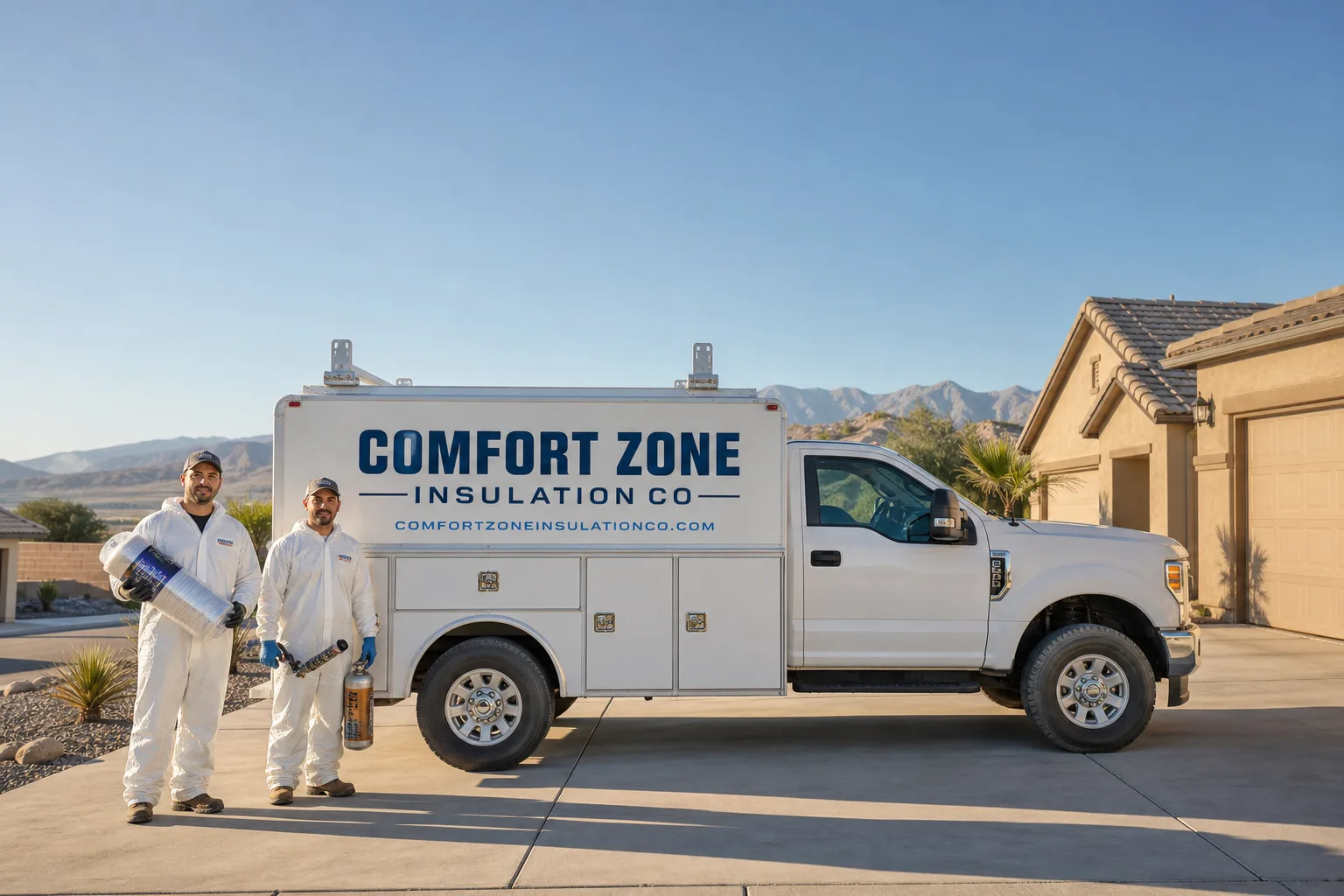
Fast, Reliable Spray Foam Insulation Across Topanga
Spray foam insulation in Topanga is typically a retrofit job on an older, owner-built canyon home, and it almost always involves sealing gaps that have existed for decades. Most 90290 houses were never insulated to any code, so the work is less about upgrading and more about starting from zero. We respond to Topanga callouts quickly, usually within a day or two, and we know the canyon roads, the steep driveways, and the way Santa Ana wind finds every opening in a house. Call (855) 341-7856 for a free estimate on any spray foam project in Topanga.
Key Takeaways:
- Topanga homes are predominantly pre-permit, owner-built structures from the 1920s through 1970s, which means most wall cavities are non-standard and have never held insulation.
- Spray foam in Topanga commonly doubles as an ember-blocking air seal because crawlspaces and attics often open directly onto brush-covered slopes.
- Closed-cell foam on rim joists and crawlspace undersides is the single most important retrofit for pier-and-beam cabins in the Santa Monica Mountains.
- Pricing for spray foam work in Topanga runs $2.50 – $5.75 per board foot depending on foam type and access conditions.
Why Comfort Zone Insulation Co Is Topanga’s Preferred Spray Foam Insulation Company
We install insulation and nothing else. That focus matters in Topanga because the housing stock here does not respond well to generic solutions. A 1960s cabin off Saddle Peak Road with exposed framing and a slab foundation needs a different approach than a 1970s redwood bungalow on a pier-and-beam setup near Fernwood Pacific Drive. Our crews spend more time in canyon homes than most insulation companies spend anywhere, and that familiarity shows in how we plan access, staging, and cleanup on steep lots.
Noel Carrasco leads our team, and he has built Comfort Zone Insulation Co around a simple idea: carry multiple brands so the product matches the house, not the other way around. We are authorized to install Icynene and Demilec spray foam systems alongside mineral wool from Rockwool and fiberglass from Johns Manville and CertainTeed. For Topanga customers, that means open-cell where the attic needs to breathe, closed-cell where a rim joist faces a brush slope, and Rockwool where fire resistance is the priority. We do not push one product because it happens to be on the truck.
Our response window to Topanga is straightforward. We schedule most inspections within 48 hours, and we carry equipment suited to narrow driveways and tight access points that are common along Old Topanga Canyon Road and Topanga Canyon Boulevard. The goal is a home that holds the temperature you set, even when the canyon drops thirty degrees between noon and midnight.
Rim Joist Spray Foam in Topanga
Rim joist spray foam in Topanga is often the highest-impact retrofit a pier-and-beam home can receive, because the band joist where the floor meets the foundation is frequently open to the outside air, and in canyon homes that outside air is often brushing right up against dry vegetation. We seal the rim joist with closed-cell foam, typically two to three inches applied directly to the band board and the subfloor edge above it. Homeowners in Topanga should consider this work when they feel drafts along exterior walls, when floor temperatures are noticeably colder than the rest of the room, or when they can see daylight from the crawlspace looking up at the house perimeter.
For a 1940s cabin with pier-and-beam construction off Old Topanga Canyon Road, rim joist sealing typically runs $1,800 – $3,400 depending on linear footage and access clearance. Crawlspaces with less than 18 inches of clearance add labor cost because crews work in confined conditions.
Ember Entry Sealing
Many Topanga crawlspaces open directly onto brush-covered slopes. The gap between the band joist and the subfloor becomes a wind-driven ember collector during Santa Ana events. Closed-cell foam installed at the rim closes that path and creates a continuous air barrier that also keeps conditioned air inside the living space.
When Two-Part Foam Beats Caulk
A bead of caulk will not fix a rim joist that has shifted or checked over sixty years. Spray foam expands to fill irregular gaps around old dimensional lumber, around plumbing penetrations, and around beams that were never milled to modern tolerances. That is the reality of most Topanga framing.
Crawl Space Spray Foam Insulation in Topanga
Crawl space spray foam insulation in Topanga means sealing the underside of a house that sits above a space most people never want to enter, but in 90290 that space is often the difference between a home that stays comfortable and one that feels cold from the floor up. The work involves applying closed-cell foam to crawlspace walls or the subfloor underside, depending on whether the space is vented or unvented, and then air-sealing all penetrations where pipes, wires, and drains pass through the floor. A Topanga homeowner should think about this when floors are cold, when humidity from the canyon floor creeps upward, or when the crawlspace opens directly onto sloped terrain.
Typical crawlspace foam insulation in Topanga runs $3,200 – $7,500 for a standard 800 – 1,200 square foot footprint. Steep lots with difficult access or very low clearance push toward the higher end because crews move material by hand and work on their backs.
Brush-Adjacent Crawlspaces
When a crawlspace wall faces a hillside covered in chamise and scrub oak, the insulation decision changes. We often recommend closed-cell foam on the exterior-facing crawlspace wall rather than the underside of the floor, because it blocks radiant heat from sun-baked soil and creates a fire-resistive layer against ember intrusion at grade level.
Old Ductwork and Open Returns
Topanga homes from the 1920s through 1970s frequently have ductwork running through the crawlspace, and that ductwork leaks. Foaming the crawlspace walls and turning the space into a semi-conditioned zone keeps the air your furnace paid to heat inside the thermal envelope instead of warming the dirt below the house.
Trusted Brands We Service in Topanga
We install Icynene and Demilec spray foam systems, and those two product lines cover the range of open-cell and closed-cell performance that Topanga homes require. For customers who want mineral wool options, we carry Rockwool, which offers strong fire resistance and sound attenuation alongside thermal performance. CertainTeed and Johns Manville round out the fiber-based options we service, so a Topanga homeowner is not limited to whatever product a single-brand shop happened to order that week. We keep common spray foam rig components stocked on our trucks, which means faster turnarounds when a job on Topanga Canyon Boulevard needs a same-week start.
Common Spray Foam Insulation Problems We See in Topanga Homes
- Open-cell foam applied too thick in unvented canyon attics. The big diurnal temperature swing in the Santa Monica Mountains means an attic that hits 120 degrees at 3 p.m. and drops to 55 degrees by 4 a.m. never lets moisture pockets dry out. Open-cell needs to be specified at the right depth for the assembly, not just blown in as thick as possible.
- Unsealed rim joists on pier-and-beam cabins opening onto brush slopes. This is the exact ember-entry path Santa Ana winds exploit. A gap of just half an inch between the band and the subfloor is enough to pull embers under the house when wind speeds hit 50 mph.
- Foam sprayed over non-standard owner-built framing without reconciling cavity depth. 1920s through 1970s Topanga homes have stud bays that are not 16 on center, not consistently deep, and often full of old wiring and abandoned plumbing. Spraying without first mapping the cavities leaves voids and creates off-gassing pockets.
- Closed-cell foam used where open-cell is the better fit. Some Topanga walls are so shallow, and so irregular, that rigid closed-cell foam cannot expand evenly without bowing wallboard. A material-agnostic approach matters here because the right product changes from room to room in the same house.
Pricing for Spray Foam Insulation in Topanga, CA
Spray foam insulation in Topanga generally runs $2.50 – $5.75 per board foot installed, with open-cell at the lower end and closed-cell at the higher end. For reference, a 2,000 square foot crawlspace sealed with 2 inches of closed-cell foam typically lands between $4,800 and $7,200 in Topanga. Rim joist work runs $1,800 – $3,400 as noted above. Costs are affected by foam type, access clearance, the condition of the existing framing, and how much air-sealing prep the job requires. We provide written estimates before any work begins, and those estimates are free. Call (855) 341-7856 to schedule an inspection, and we will give you a number before we leave the property.
We Also Serve Cities Near Topanga
Comfort Zone Insulation Co works throughout the western San Fernando Valley and the Santa Monica Mountains corridor. We serve Spray Foam Insulation customers in Encino, Santa Monica, Northridge, and Sherman Oaks, along with our dedicated work across Topanga. If you live in the canyon or just over the hill, the same crew and the same material portfolio apply.
Serving Topanga, CA — Our Local Coverage Area
We’re based in the Topanga area and know this community well. Use the map below to see our service coverage — if you’re nearby, we can almost certainly help.
FAQs About Spray Foam Insulation in Topanga
Yes, and in fact that describes most of the work we do in the 90290 ZIP code. Spray foam is often the best fit for pre-permit owner-built homes because it conforms to irregular cavities, fills gaps around old framing, and does not require the standard stud spacing that batt insulation assumes. We do not need permits to insulate an existing structure, and we work around whatever the original builder left behind. Call (855) 341-7856 to have us look at your specific framing before you commit to anything.
Yes. Closed-cell spray foam applied to rim joists and crawlspace walls closes the gaps that wind-driven embers enter through, and it does so with a material that will not sustain combustion the way exposed wood framing will. When a crawlspace opens onto a brush-covered slope behind a Fernwood Pacific Drive home, that air-sealing becomes an ember-blocking layer. It is not a substitute for defensible space and ember-resistant venting, but it is a meaningful part of hardening the structure.
Fiberglass batts rely on a consistent cavity depth and a tight fit, and most Topanga wall cavities have neither. Studs are often irregular, old wiring and plumbing run through the bays, and the exposed framing has settled over decades. Batts leave gaps, and a gap in a Topanga wall is a path for canyon air to move straight through your house. Spray foam fills the cavity completely and seals around the obstructions, which is the air-sealing benefit that batts cannot deliver. We still install fiberglass where it is the right call, but in most owner-built canyon framing it is not.
Closed-cell foam does not create a hot spot on its own, but an incorrectly specified foam assembly in an unvented, sun-baked Topanga attic can trap heat and moisture that never dries out because of the canyon’s temperature swings. That is why we assess each attic before choosing foam type and depth. In some attics, open-cell with proper ventilation is the correct assembly. In others, a hybrid approach works. The fire risk from insulation depends on the material’s ignition resistance and the overall assembly, not on the foam’s surface temperature. Call (855) 341-7856 and we will tell you what your attic actually needs.
We install Icynene and Demilec spray foam systems in Topanga, covering both open-cell and closed-cell applications. We also carry Rockwool mineral wool for fire-resistive and sound-attenuating applications, and fiber products from CertainTeed and Johns Manville. Having multiple lines means the product is matched to your house and the brush exposure around it, not to what a single-brand distributor had on the shelf. Estimates are free, and the consultation with Noel Carrasco or a member of our team is free as well.
Written by Noel Carrasco, Owner at Comfort Zone Insulation Co, serving Topanga and the Santa Monica Mountains.