
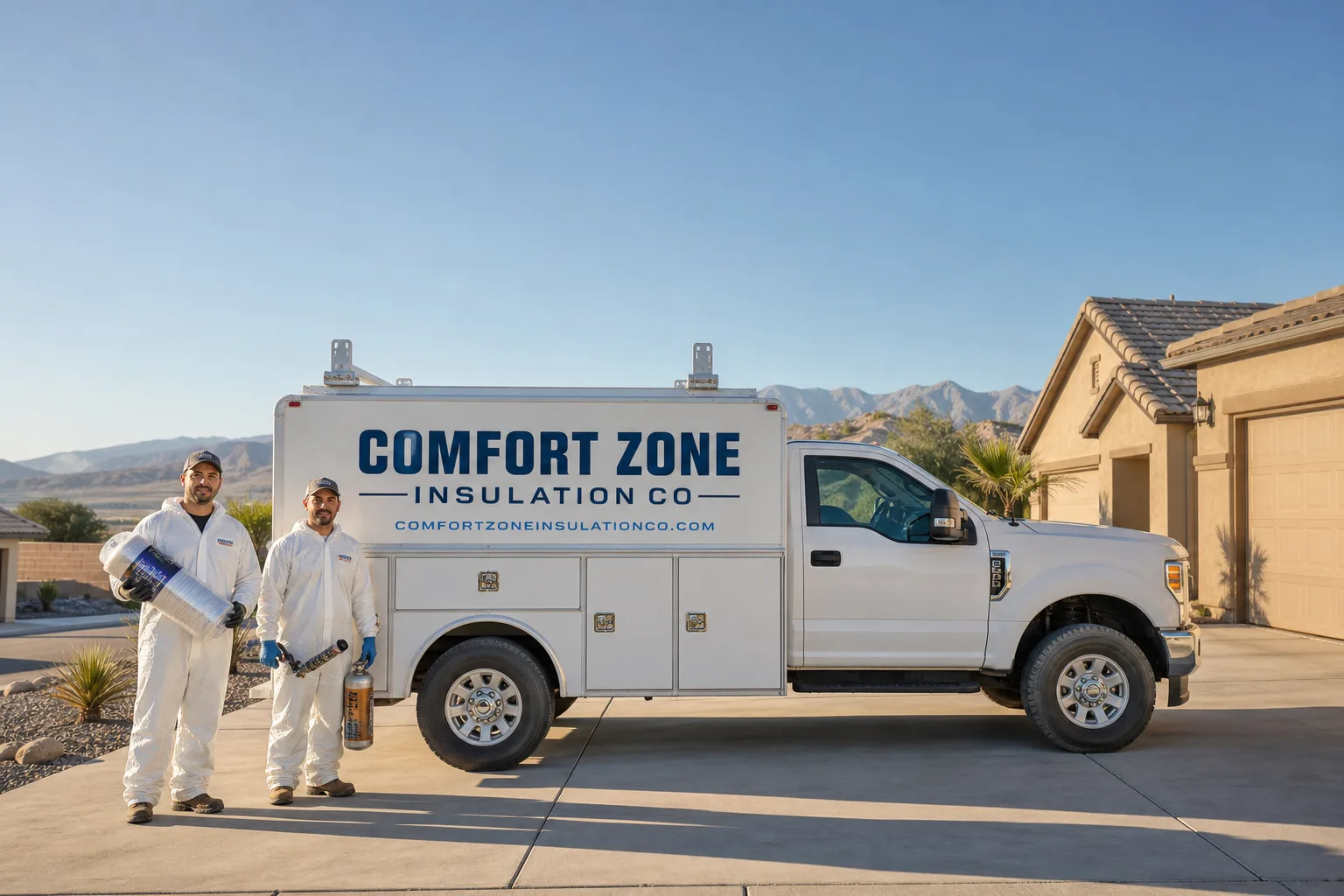
Fast, Reliable Spray Foam Insulation Across Northridge
Spray foam insulation in Northridge typically costs $2.50 to $6.50 per square foot installed, with most attic retrofit jobs landing between $3,800 and $9,200 depending on cavity depth and roof geometry. We reach most Northridge neighborhoods the same week you call, and our crews know the low-pitch ranch attics along Reseda Boulevard, Corbin Avenue, and Tampa Avenue better than anyone who doesn’t live here. If your second-story rooms bake by 3 p.m. and your AC never cycles off, the problem is usually above you, not in the walls. Call (855) 341-7856 and we’ll walk the attic with you before quoting anything.
Why Comfort Zone Insulation Co Is Northridge’s Preferred Spray Foam Insulation Company
We install insulation and nothing else. That single fact matters in Northridge, where shallow 1950s and 1960s attics turn a routine spray foam job into a geometry problem that general contractors consistently get wrong. Our crews have mapped hundreds of these low-pitch cavities across 91324 and 91325, and we know where the top plates hide behind original framing, where compressed fiberglass has settled to half its depth, and where a west-facing roof deck will hit 155°F by early afternoon in July. That local knowledge means we quote the job accurately the first time.
Noel Carrasco leads our Northridge work personally. He walks every attic before a single hose goes up the ladder, and his read on a post-1994 rebuild versus a pre-quake original is fast and exact. Customers across 91324, 91325, 91326, and 91330 tell us the same thing: the quote was specific, the crew showed up when they said they would, and the second-story bedrooms finally stopped roasting. Insulation-only focus means we’re not splitting attention with three other trades. You get the right material for the heat, not whatever product is on the truck.
Open Cell Spray Foam in Northridge
Open Cell Spray Foam is the workhorse material for Northridge attics, especially in the single-story ranch homes between Corbin Avenue and White Oak Avenue. It expands into shallow cavities, air-seals the top plates and penetrations, and slows the heat load that pushes down through the ceiling every afternoon. Most open-cell attic retrofits in Northridge run $3,200 to $6,800, with the final number driven by how much batts have settled and whether we’re sealing at the roof line or the attic floor.
Air Sealing at the Roof Line
In a Northridge attic that hits 150°F, the ducts live in that heat all summer long. Sealing the roof deck with open-cell foam moves the thermal boundary up, so the attic becomes semi-conditioned and your ducts stop delivering air that’s already warmed by 20 degrees before it reaches a register. This is the single highest-impact fix we make in 91324 and 91325 homes with west-facing roofs.
Top Plate and Penetration Sealing
Before any foam goes in, we seal the top plates, can lights, bath fans, and plumbing penetrations. In post-quake rebuilds, we often find gaps where the drywall met framing in a hurry. Foam over an unsealed top plate just traps the leak behind the insulation. The order matters here, and it is the difference between a retrofit that works and one that just looks thick.
Spray Foam Insulation Contractors in Northridge
Spray Foam Insulation Contractors in Northridge need to understand one thing before they quote: a 1962 ranch near Dearborn Park and a 1997 stucco rebuild on the north side of 91325 are completely different projects. The older home has shallow joist bays, original fiberglass that has compressed to half its R-value, and possibly degraded radiant barrier foil on the roof deck. The newer home has 1990s R-19 or R-30 batts that have settled for 25 years and now fall well below current Title 24 attic targets. We diagnose both before we recommend foam.
Cavity Mapping Before Installation
Shallow 1950s and 1970s attics leave little working clearance, and a crew that doesn’t map the low-pitch geometry first will spray uneven, thin foam and miss the top plates entirely. We pull panel dimensions, measure joist depth, and mark every penetration before we mix a single barrel. That’s how you get a consistent thermal envelope in an attic built when insulation was an afterthought.
Post-1994 Rebuild Assessments
Homes repaired or rebuilt after the 1994 Northridge earthquake were insulated to a code that has since moved significantly. The batts installed in 1996 or 1997 have now settled below current attic R-value targets, and many of those wood-frame roof decks carry original radiant barriers that have peeled or corroded. We check both, because spraying foam over a failed radiant barrier traps heat and moisture exactly where you don’t want them.
Trusted Brands We Service in Northridge
Comfort Zone Insulation Co installs spray foam systems from Icynene and Demilec, and we also carry Johns Manville, Knauf, and Rockwool products for hybrid jobs that combine foam with blown-in or batt top-ups. We’re not tied to one manufacturer, so a Northridge homeowner with a shallow attic and a heat problem gets open-cell Icynene when it fits and Rockwool top-ups when fire resistance matters more than cavity fill. Eight brand partnerships means the right material for your specific roof deck, not whatever we happened to order this week. Our Spray Foam Insulation team stocks the foam systems and the mineral products locally, so turnaround in 91324 and 91325 is days, not weeks.
Common Spray Foam Insulation Problems We See in Northridge Homes
- Settled original fiberglass left under new foam. We regularly find R-19 batts from the 1960s compressed to half that value in 91324 ranch attics. Spraying foam without first removing or factoring in that dead insulation leaves a thermal gap the foam can’t fully correct.
- Degraded radiant barrier foil under open-cell foam. Mid-90s rebuilds along Reseda and Balboa Boulevards often have torn, sun-baked radiant barriers on west and south roof decks. Foam sprayed directly over failed foil traps heat and moisture, which quietly degrades sheathing.
- Thin, uneven foam in low-pitch attics. The 1950s and 1960s ranch houses between Tampa and Corbin Avenues have shallow joist bays that limit access. Crews that don’t map the geometry first spray thin or miss top plates entirely, and the homeowner pays for insulation that never performs.
- Heat-soaked ducts from unsealed attic floors. Ducts running through a 155°F attic deliver lukewarm air to registers all afternoon. If the attic floor and ductwork aren’t sealed at the same time as the foam job, comfort barely improves.
Pricing for Spray Foam Insulation in Northridge, CA
A typical open-cell spray foam attic retrofit in Northridge runs $3,200 to $6,800 for a 1,200 to 1,800 square foot ranch. Closed-cell jobs, which add a vapor barrier and structural rigidity, start around $5,500 and can reach $11,000 for a full roof deck seal on a two-story stucco build. Rim joist spray foam in Northridge crawl spaces and garages runs $900 to $2,400, and garage ceiling spray foam jobs typically land between $1,800 and $4,200. The big swing factors in 91324 and 91325: whether the attic is shallow and tight, whether degraded radiant barrier needs removal first, and whether you’re sealing at the roof line or the attic floor. Estimates are free and we quote exact numbers after walking the space. Call (855) 341-7856 and we’ll get you a number the same day.
We Also Serve Cities Near Northridge
Our crews work across the San Fernando Valley and into the surrounding hills. Beyond Spray Foam Insulation in Northridge, we cover North Hills, Encino, Van Nuys, and Valley Glen with the same insulation-only focus and same familiarity with Valley heat, low-pitch attics, and 1990s-code rebuilds. Response times to these cities are typically the same day or next morning for estimates.
Serving Northridge, CA — Our Local Coverage Area
We’re based in the Northridge area and know this community well. Use the map below to see our service coverage — if you’re nearby, we can almost certainly help.
FAQs About Spray Foam Insulation in Northridge
Yes. Open-cell spray foam at the roof line creates an air seal and a thermal boundary that keeps the attic from becoming a 150°F oven in the first place. When ducts and living space below stop absorbing that heat, the second story finally matches the thermostat. Call (855) 341-7856 and we’ll show you the specific roof deck temperatures on your own home before we quote.
Almost certainly. Insulation installed to 1990s code has now settled below current Title 24 attic R-value targets, and many post-quake rebuilds carry radiant barrier foil that has since peeled or corroded. A 25-year-old R-30 batt is not performing at R-30 anymore, and your attic is the only layer between the roof and your living space. We assess post-quake rebuilds specifically for settled batts and degraded barriers.
Open-cell is usually the right answer for shallow 1950s and 1960s attics because it expands into irregular cavities and air-seals without the higher material cost of closed-cell. Closed-cell makes sense in 91324 and 91325 when you need a vapor barrier, structural reinforcement, or you’re sealing a roof deck in a two-story stucco rebuild. We’ll tell you which one fits after walking the attic, not before.
No, and any contractor who says otherwise is skipping a step. Original batts in pre-quake ranch homes have typically compressed to half their original depth, and foam over settled insulation leaves a permanent thermal gap. We remove or factor out the old material, seal the top plates, then install foam. The order matters as much as the product.
If you’re sealing at the roof line with foam, the radiant barrier becomes less important because the attic is no longer absorbing the full solar load. If you’re only sealing the attic floor and leaving the attic vented, a radiant barrier on the west and south roof decks still makes a measurable difference in Northridge summer heat. We’ll tell you which scenario applies to your home and why.
Ready to stop fighting a hot attic? Call (855) 341-7856 and we’ll schedule a free walkthrough of your Northridge attic, diagnose what’s actually failing, and give you a written quote the same day. The second-story bedrooms can be comfortable by next week.
Written by Noel Carrasco, Owner at Comfort Zone Insulation Co, serving Northridge and the San Fernando Valley with insulation-only expertise since day one.