
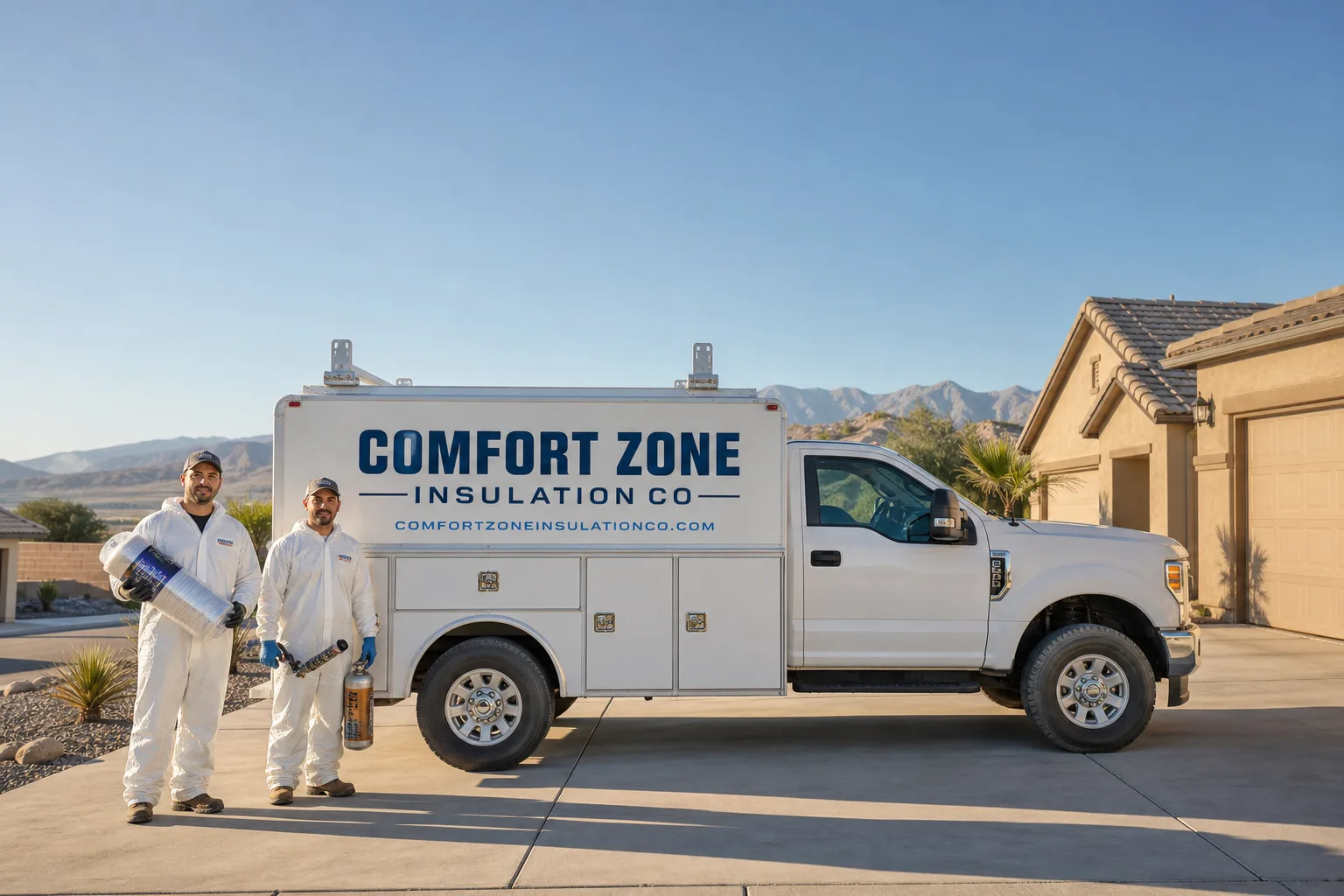
Fast, Reliable Spray Foam Insulation Across San Antonio Heights
Spray foam insulation in San Antonio Heights typically runs $2,800 – $6,500 for a standard attic or rim joist job, and we usually complete hillside homes in one to two working days. The real variable here isn’t square footage. It’s how the foam interacts with the Chapter 7A venting requirements that come with living in a High Fire Hazard Severity Zone. When you call Comfort Zone Insulation Co at (855) 341-7856, you’re not getting a crew that treats your home like a valley-floor tract house. You get an insulation-only specialist who understands what happens when closed-cell foam meets ember-resistant vents on a 1960s foothill ranch.
We’ve worked the sloped lots and winding drives above Upland long enough to know that San Antonio Heights homes punish shortcuts. A foam job that seals off the soffit-to-ridge path will fail inspection, trap heat, and put the house at risk. That’s why we plan every job around the venting first, then the foam, then the air-sealing. One trip, done right, no callbacks to fix what a generalist crew missed the first time.
Why Comfort Zone Insulation Co Is San Antonio Heights’s Preferred Spray Foam Insulation Company
Most insulation contractors drive up Euclid Avenue, look at your hillside lot, and quote you the same square-footage price they gave someone in Rancho Cucamonga. We don’t. Homes in the 91784 ZIP code sit at 1,500 to 2,000+ feet on the south slope of the San Gabriels, where the diurnal temperature swing pushes open-cell foam harder than anything the valley floor experiences. Our estimates account for that elevation, the wind exposure, and the fire-zone detailing your roof assembly has to meet.
Noel Carrasco built this company around a simple idea: install the right insulation and nothing else. We don’t pour concrete, we don’t frame additions, and we don’t take on roofing as a side hustle. Spray foam is one of three things we do all day, every day. That focus matters when the job involves Icynene closed-cell foam against a vaulted open-beam ceiling that has to keep its ember-resistant vent path intact.
Response time to San Antonio Heights is usually same-day for estimates and inside 48 hours for booked work. We stock the foam systems and vent-compatible materials for hillside homes locally, so we’re not waiting on a distributor in Ontario to ship something up the hill.
Open Cell Spray Foam in San Antonio Heights
Open Cell Spray Foam in San Antonio Heights is the most common choice for attics, interior walls, and crawlspace ceilings where the goal is air-sealing plus a solid R-value without the higher material cost of closed-cell. The foam expands roughly 100 times its liquid volume, filling the awkward rafter bays and irregular framing you find in mid-century custom ranch homes. In a shallow attic with minimal depth, open-cell applied directly to the roof deck stops the heat load at the top of the house before it pushes down into the living space.
For a typical 1,200 – 1,600 square foot attic in San Antonio Heights, open-cell spray foam runs $2,800 – $4,400. The price moves based on how much of the rafter depth you’re filling, whether we’re working around existing can lights and wiring, and how much air-sealing the top plates need. Homes on the lower slope near Base Line Road tend to have deeper attics than the perch homes closer to Mountain Avenue, and that geometry shows up in the estimate.
When Open-Cell Makes Sense Here
Open-cell works well in vented attics where the foam goes on the attic floor, not the roof deck. It seals the gaps around top plates, electrical penetrations, and the old fiberglass pulls that let Santa Ana wind pressure drive air through the ceiling plane. For raised foundations on sloped lots, open-cell in the floor assembly cuts the cold-air stack effect that climbs up from the pier-and-beam gap.
What to Watch With Shallow Rafter Bays
On 1950s – 70s ranches with shallow rafter bays, open-cell foam at full depth against the roof deck can trap moisture during winter snow dustings and the wide daily temperature swings this elevation sees. We spec open-cell carefully in those situations. If the deck needs full encapsulation, we’ll often recommend a hybrid approach or closed-cell to control the dew point rather than forcing open-cell where it’s the wrong product for the assembly.
Spray Foam Insulation Contractors in San Antonio Heights
Spray Foam Insulation Contractors in San Antonio Heights have to be comfortable with attics that don’t look like the ones in Upland. Raised foundations, pier-and-beam crawlspaces cut into the hillside, open-beam ceilings with no attic at all, and roofs that carry Chapter 7A ember-resistance requirements. The venting has to be right, or the foam doesn’t pass. We’re not a general contractor who subcontracts insulation to whoever’s available. Comfort Zone Insulation Co is staffed by insulation-only installers who know how foam behaves at this elevation.
What a San Antonio Heights homeowner needs from a contractor is sequencing. The foam has to go in after the ember-resistant vents are confirmed in place, and before the drywall or decking closes everything up. We coordinate that order, show up when we said we would, and finish the job in a single visit when the scope allows. Typical full-attic closed-cell or open-cell spray foam here runs $3,500 – $6,500 depending on square footage and access.
One-Trip Planning for Hillside Jobs
We plan San Antonio Heights jobs around the reality of your driveway. Steep access, narrow switchbacks, and parked equipment from your neighbor’s addition all matter. That’s why our crews arrive with the full material list for the day, not a guess. If we need a specific Icynene product or extra vent chutes, it’s on the truck before we start the climb up from the 210.
Venting Before Foam, Always
The thing that separates a passing inspection from a failed one up here is the vent path. Closed-cell foam sprayed tight to the underside of the roof deck blocks the soffit-to-ridge airflow that ember-resistant WUI vents depend on. We frame a dedicated vent chute or re-engineer the path before any foam goes down, so you get the thermal performance without compromising the fire-safety assembly your roof already has to meet.
Trusted Brands We Service in San Antonio Heights
We install a material portfolio built around finding the right fit, not clearing inventory. For San Antonio Heights attics and raised floors, we commonly turn to Icynene for open- and closed-cell foam systems that handle the heat cycling this elevation produces. Knauf and Rockwool give us mineral-wool options when customers want fire resistance and sound attenuation alongside thermal performance, which matters in a fire hazard zone. CertainTeed rounds out the lineup for jobs where the assembly calls for a fiberglass hybrid. Because we stock these products for hillside work locally, turnaround for San Antonio Heights stays short even during the pre-summer rush.
Common Spray Foam Insulation Problems We See in San Antonio Heights Homes
- Foam covering ember-resistant vents. Contractors who don’t work in High Fire Hazard Severity Zones will spray right over the soffit vents and seal the ridge path shut. That defeats the Chapter 7A venting the roof is required to have and forces a tear-out to fix.
- Moisture trapped in shallow rafter bays. 1950s – 70s hillside ranches often have minimal attic depth. Full-depth open-cell against the deck can hold condensation through the daily temperature swings and occasional winter snow at this elevation, which leads to deck rot over time.
- Skipping the rim and floor air-sealing. On pier-and-beam foundations cut into the slope, the biggest air leak is usually the rim joist and the floor penetrations, not the attic. Spraying the roofline without addressing the bottom of the house does little against Santa Ana wind-driven infiltration.
- Wrong foam for the assembly. Closed-cell and open-cell are not interchangeable. A vaulted open-beam ceiling with exposed rafters needs a product and depth that won’t change the look of the room, while a garage ceiling under a hot roof deck may need closed-cell to handle the thermal load.
Pricing for Spray Foam Insulation in San Antonio Heights, CA
What actually drives cost up here is access and venting, not just square footage. A standard open-cell attic in San Antonio Heights runs $2,800 – $4,400. Closed-cell roof deck work runs $4,000 – $6,500 for a typical hillside home. Rim joist spray foam on a raised foundation usually lands between $900 and $1,800 depending on the crawlspace depth and slope. The Chapter 7A venting details can add $300 – $800 to the project when we need to frame dedicated chutes or re-route existing vent paths, but that’s the money that keeps your roof assembly legal and safe. Call (855) 341-7856 for a free estimate based on your specific attic, foundation, and vent layout. You’ll get a number, not a range.
We Also Serve Cities Near San Antonio Heights
Our crews work the full foothill corridor from Upland and Claremont east through Rancho Cucamonga and Montclair, so we’re familiar with how the elevation and housing stock change block by block. If you’re in one of those nearby cities and need Spray Foam Insulation work, the same venting-first, product-fit approach applies. Our full service area and local details are covered on the San Antonio Heights page and the surrounding city pages.
Serving San Antonio Heights, CA — Our Local Coverage Area
We’re based in the San Antonio Heights area and know this community well. Use the map below to see our service coverage — if you’re nearby, we can almost certainly help.
FAQs About Spray Foam Insulation in San Antonio Heights
Yes, and it’s the most important question to ask before you hire anyone. Closed-cell foam sprayed tight to the roof deck blocks the soffit-to-ridge airflow path that ember-resistant vents require under Chapter 7A WUI detailing. That’s why we frame a dedicated vent chute or re-engineer the vent path before foam goes down, so the thermal performance and the fire-safety assembly work together instead of against each other. Call (855) 341-7856 and we’ll walk you through what your specific roof needs.
Yes, we can insulate a vaulted open-beam ceiling while keeping the beams visible. The approach depends on whether the ceiling is constructed as a conditioned attic over the deck or as a sandwich panel with the beams exposed on both sides, but both can be done with spray foam applied to the inward face of the assembly while the beams remain untouched. It’s a common detail on the mid-century custom ranches up here, and we spec the product and depth to preserve the look you bought the house for.
Closed-cell spray foam is usually the right call for a raised or pier-and-beam foundation on a San Antonio Heights slope. It air-seals the rim joist and floor penetrations and adds structural rigidity, which matters more as the grade gets steeper. Open-cell can work on the floor assembly when the crawlspace stays dry and vented, but for hillside lots with higher wind exposure, closed-cell on the rim is the upgrade that actually stops the Santa Ana infiltration. We’ll assess the crawlspace and quote the right product for your lot.
We don’t force full-depth foam into a shallow rafter bay and hope for the best. On 1950s – 70s San Antonio Heights ranches with minimal attic depth, we typically apply closed-cell foam at a controlled thickness against the deck to move the moisture boundary inward and stop condensation, then air-seal what remains from below. The goal is thermal performance without trapping moisture in a space that already runs hot and cold through the daily elevation swings.
Yes, we plan every San Antonio Heights job for a single visit when the scope allows. That means the full material load, the vent chutes, the foam system, and enough crew to finish the day’s work before we even start the climb up from the 210. It costs too much time and money to make two runs up a hillside driveway, so we don’t. Call (855) 341-7856 for a same-week estimate and we’ll give you a straight answer on timing.
Written by Noel Carrasco, Owner at Comfort Zone Insulation Co, serving San Antonio Heights and the surrounding foothill communities.