
Insulation Company in San Antonio Heights, CA
Blown in insulation is the go-to fix for most San Antonio Heights homes built between the 1950s and 1970s, where original attic batting has settled, compressed, or disappeared entirely under decades of heat cycling. Homes here sit between 1,500 and 2,000 feet on the San Gabriel foothills, which means the insulation has to work harder than it does on the Upland valley floor below. Wider temperature swings, dry Santa Ana winds, and the occasional snow dusting mean air movement through attics and crawlspaces is often the real problem, not just thin coverage. We’re Comfort Zone Insulation Co, an insulation-only specialist that’s served this foothill community since 2012. Call us at (855) 341-7856 when rooms stop holding temperature.
Why San Antonio Heights Homes Are Different
San Antonio Heights isn’t a tract neighborhood. It’s an unincorporated foothill community above Upland where homes follow ridge lines, canyons, and old citrus grove lots rather than a street grid. That terrain changes how insulation performs. Many of the original custom ranches from the 1950s through the 1970s went up with vaulted open-beam ceilings and very little attic depth, which is exactly the condition that makes standard fiberglass batting fail and blown in insulation the practical solution. Pier-and-beam foundations on sloped lots mean crawlspace air moves up through wall cavities. When we blow insulation into these homes, we’re often the first ones to point out where the old venting was never updated for current building code.
The bigger difference is the Wildland-Urban Interface. San Antonio Heights sits in a California High Fire Hazard Severity Zone, so any roof replacement or major retrofit can trigger Chapter 7A WUI requirements for ember-resistant vents and flame-resistant assembly details. Valley-floor homes in Upland and Ontario don’t face those triggers. When we install blown in attic insulation here, we’re thinking about how the venting, the insulation, and the air sealing all interact under fire exposure conditions, not just how many inches of material we can add. The elevation does the rest: colder winter nights than the valley, hotter summer days, and a diurnal swing that punishes any attic assembly with gaps.
Our Main San Antonio Heights Services
San Antonio Heights homeowners call us most often about two things: what’s happening in their attic and whether spray foam makes sense for their specific construction. Here’s what each involves in this foothill climate.
Attic Insulation in San Antonio Heights
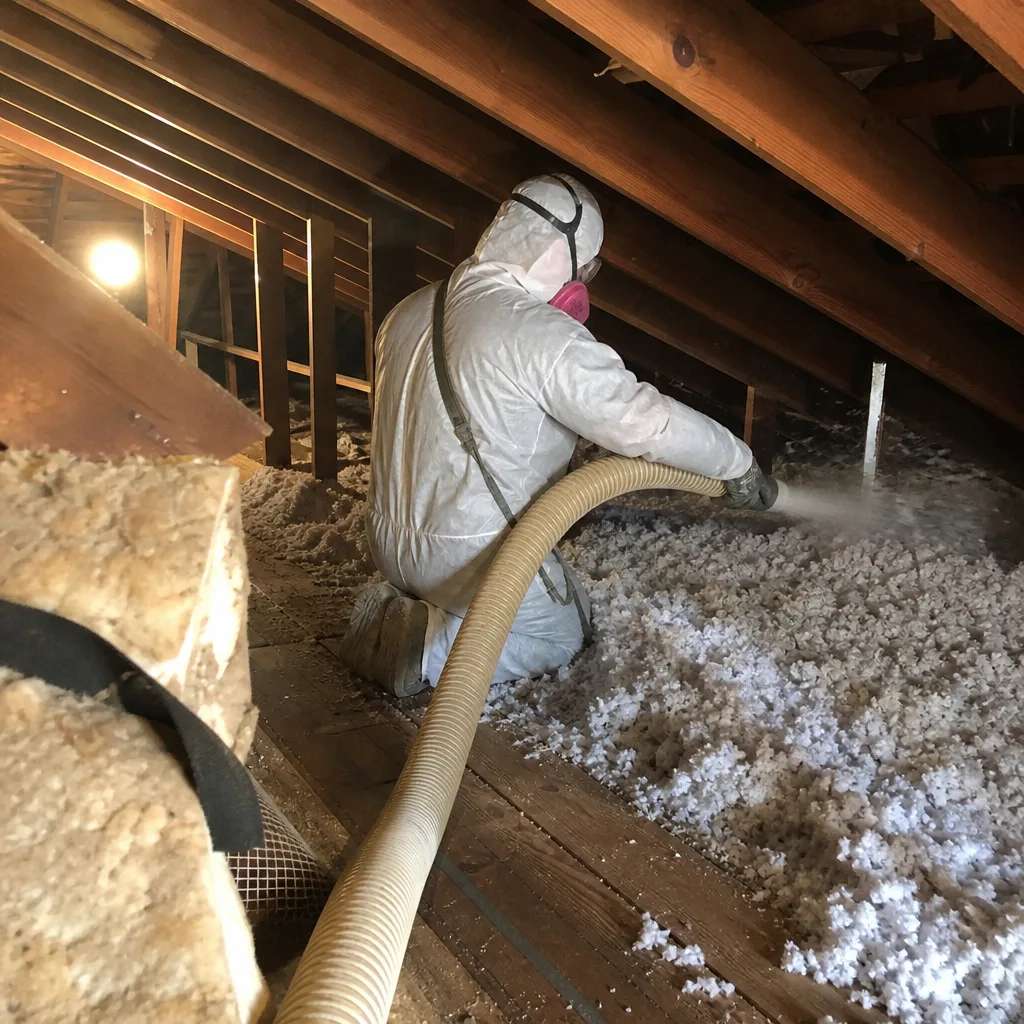
Attic work here starts with understanding what you actually have. Older San Antonio Heights homes often have shallow attics, open-beam sections, and venting that was never designed for WUI requirements. We inspect the existing assembly, identify bypasses where interior air leaks into the attic, and then recommend the right material, whether that’s blown in fiberglass, cellulose, or a hybrid approach. The goal is an attic that holds temperature, vents correctly, and meets the ember-resistance details this High Fire Hazard Severity Zone often requires. Read more on our dedicated Attic Insulation in San Antonio Heights page.
Spray Foam Insulation in San Antonio Heights
Spray foam earns its place in San Antonio Heights in specific situations: vaulted ceilings with minimal cavity depth, knee walls on hillside additions, raised foundations where air moves up through floor systems, and any area where air sealing matters as much as thermal resistance. Closed-cell foam from Icynene or Demilec adds strength and a vapor barrier, which matters when the Santa Anas drive dry air through wall assemblies. It’s not the right answer for every home, but when the construction calls for it, nothing else performs the same way. Details are on our Spray Foam Insulation in San Antonio Heights page.
What happens when you call
- 1
A real person answersNo phone trees — you reach a local pro.
- 2
You get an upfront price rangeHonest numbers before anyone is dispatched.
- 3
A background-checked tech heads outLicensed & insured, dispatched right away.
- 4
You approve before work beginsNothing starts until you say go.
Blown In Insulation in San Antonio Heights
Blown in insulation is the most called-for service in San Antonio Heights for a simple reason: older hillside homes with shallow attics, open-beam ceilings, and settled original insulation respond extremely well to dense-pack and loose-fill applications. Homes from the 1950s through the 1970s dominate this community, and almost all of them have lost R-value over the decades as fiberglass batts compressed and shifted. The local climate makes it worse: wide temperature swings between foothill nights and valley-floor afternoons create thermal cycling that pushes air through every gap in the attic floor. Blown in insulation fills those irregular cavities, gets into corners that batts never covered, and restores the thermal boundary where most of the heat loss actually happens. We install blown in products from Knauf, CertainTeed, and GreenFiber, selecting the material based on your home’s construction rather than what’s on the truck. Learn more about our full Blown In Insulation capabilities.
Cellulose Insulation
Signs you need it
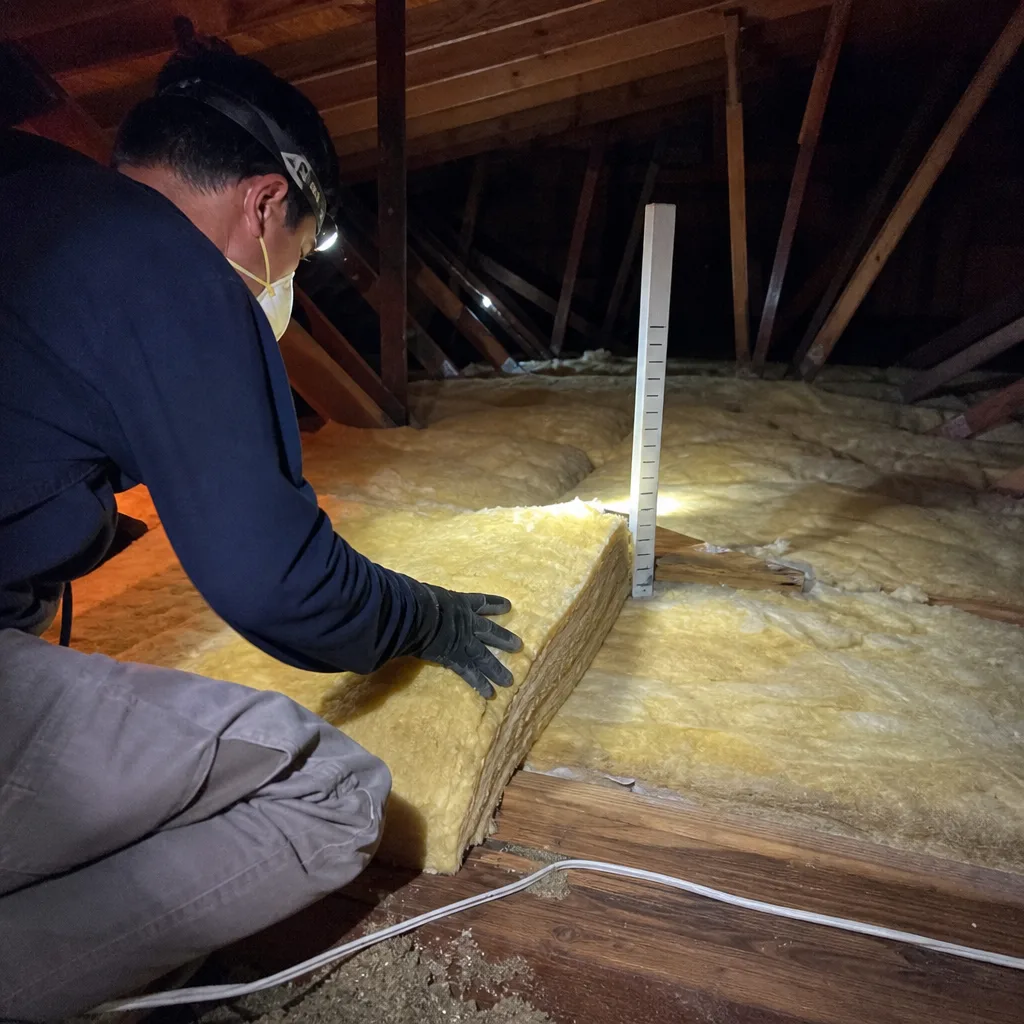
Old batts have settled into lumpy, uneven coverage with visible gaps along the eaves, or the attic smells dusty and you can feel temperature differences between rooms.
What it costs in San Antonio Heights
Blown in cellulose in San Antonio Heights typically runs $1,300 to $2,900, with GreenFiber recycled-content cellulose at the higher end and a separately quoted air-sealing component based on labor.
How we do it
We dense-pack wall cavities or loose-fill attic floors by running a hose from our truck-mounted blower, adjusting density and depth to your home’s existing assembly and venting details.
Blown In Attic Insulation
Signs you need it
The upstairs stays hot in summer even with the AC running, or you can see daylight through gaps around ceiling fixtures and the existing attic insulation measures under R-19.
What it costs in San Antonio Heights
A standard blown in attic insulation project in San Antonio Heights generally falls between $1,200 and $3,000, based on attic size, access difficulty, and whether air sealing is included.
How we do it
We locate the attic bypasses first, seal them where accessible, then blow loose-fill to a consistent depth across the entire attic floor, keeping venting clear and checking for WUI-related vent details as we go.
Loose Fill Insulation
Signs you need it
Your attic has awkward spaces: shallow joists, irregular framing, low-clearance eaves, or old knob-and-tube wiring that makes batting placement unsafe or impossible.
What it costs in San Antonio Heights
Loose fill insulation in San Antonio Heights typically costs $1,500 to $2,800, with the final number driven by how much prep work the existing attic needs.
How we do it
We map the attic dimensions, document the depth needed for your climate zone, and blow the material evenly so it settles into the target R-value without compressing under its own weight.
What Blown In Insulation Costs in San Antonio Heights
| Item | Typical range in San Antonio Heights |
|---|---|
| Blown in attic insulation (full attic, loose fill) | $1,200 – $3,000 |
| Blown in cellulose (dense-pack or loose-fill) | $1,300 – $2,900 |
| Loose fill insulation (irregular or shallow attics) | $1,500 – $2,800 |
How long does blown in insulation last in San Antonio Heights?
Cellulose and fiberglass blown in insulation last 20 to 30 years if dry and undisturbed, but San Antonio Heights attics exposed to high heat cycling and Santa Ana wind-driven dust benefit from an inspection every 10 years. Call (855) 341-7856 to schedule one.
Can you install blown in insulation if my attic has very little clearance?
Yes. Shallow attics and open-beam construction are common in San Antonio Heights, and loose fill blown through a hose reaches areas where batting simply cannot be placed. Call (855) 341-7856 for an attic-specific assessment.
Brands We Service in San Antonio Heights
We install insulation from Knauf, Rockwool, CertainTeed, and Icynene, along with four other manufacturer lines, and we stock the materials each Foothill job actually needs. Parts for common San Antonio Heights applications are available same week. See our brands for the full portfolio.
Pricing for Insulation Company in San Antonio Heights, CA
| Service | Typical range in San Antonio Heights |
|---|---|
| Spray foam insulation (full wall cavity) | $1,200 – $4,500 |
| Open cell spray foam (air sealing plus R-value) | $1,550 – $4,000 |
| Closed cell spray foam (vapor barrier and structural strength) | $2,400 – $5,000 |
| Spray foam rim joist / band joist air sealing | $650 – $1,600 |
| Attic air sealing (gap sealing, foam board, weatherstripping) | $650 – $1,900 |
| Attic insulation removal (old, soiled, or contaminated material) | $1,200 – $3,500 |
| Blown in attic insulation (full attic, loose fill) | $1,200 – $3,000 |
| Blown in cellulose (dense-pack or loose-fill) | $1,300 – $2,900 |
| Loose fill insulation (irregular or shallow attics) | $1,500 – $2,800 |
Prices in San Antonio Heights run toward the higher end when attics are shallow, access is tight on a sloped lot, or WUI venting details push a project into custom territory. We quote upfront and hold that number unless hidden conditions force a documented change.
Neighborhoods We Serve in San Antonio Heights
We work all through the 91784 ZIP code, from the lower streets near the Upland boundary up to the ridgeline properties where the lots get steeper and the construction gets more custom. Homes here follow old grove lines and canyon edges, so every job is a little different.
- Euclid Avenue corridor
- Mountain Avenue foothill lots
- Carnelian Street hillside
- 23rd Street bench area
- Amethyst Avenue upper slope
We typically reach any San Antonio Heights home within one business day for estimates, and often same-day when the schedule allows.
Service Area – Cities Near San Antonio Heights
Comfort Zone Insulation Co works throughout the Inland Empire foothills and valley, including Upland, CA, Claremont, CA, Rancho Cucamonga, CA, and Montclair, CA. If you’re in a neighboring community, the construction details may vary but the insulation specialist approach stays the same.
Serving San Antonio Heights, CA — Our Local Coverage Area
We’re based in the San Antonio Heights area and know this community well. Use the map below to see our service coverage — if you’re nearby, we can almost certainly help.
FAQs About Insulation Company in San Antonio Heights
We schedule estimates and service calls in San Antonio Heights within one business day in most cases. Because we run insulation crews out of the San Bernardino area regularly, same-day estimates are often possible. Call (855) 341-7856 and we’ll give you a specific time.
Insulation replacement itself rarely requires a permit, but San Antonio Heights sits in a Wildland-Urban Interface zone, so if your project is part of a roof replacement or retrofit that triggers Chapter 7A requirements, venting and assembly details may need to meet ember-resistance standards. We coordinate those details so the insulation work supports the code path rather than fighting it.
We serve the full San Antonio Heights area and the surrounding foothill and valley communities, including Upland, Claremont, Rancho Cucamonga, and Montclair. The local conditions change from hillside to valley floor, but our material selection process stays the same: diagnose first, recommend second, and install nothing but insulation.
What happens when you call
- 1A real person answersNo phone trees — talk to a local insulation pro.
- 2You get an upfront price rangeHonest numbers before anyone is dispatched. No surprises.
- 3A background-checked tech heads outLicensed & insured, typically within 1-hour.
- 4You approve before work beginsNothing starts until you say go.
What San Antonio Heights Customers Say
"Told me the crawlspace didn't need doing and only the attic did. Half the job, half the money."
— Doug Barrett"Plastic laid from the front door to the attic hatch and they vacuumed the hallway afterward."
— Vivian Kim"Attic was at maybe R-11 from the 1970s and blown in over the top would have just buried the problem. They removed the old material, air sealed the top plates and penetrations first, then blew in to R-49. The upstairs is a completely different house in August."
— Dustin Sullivan