
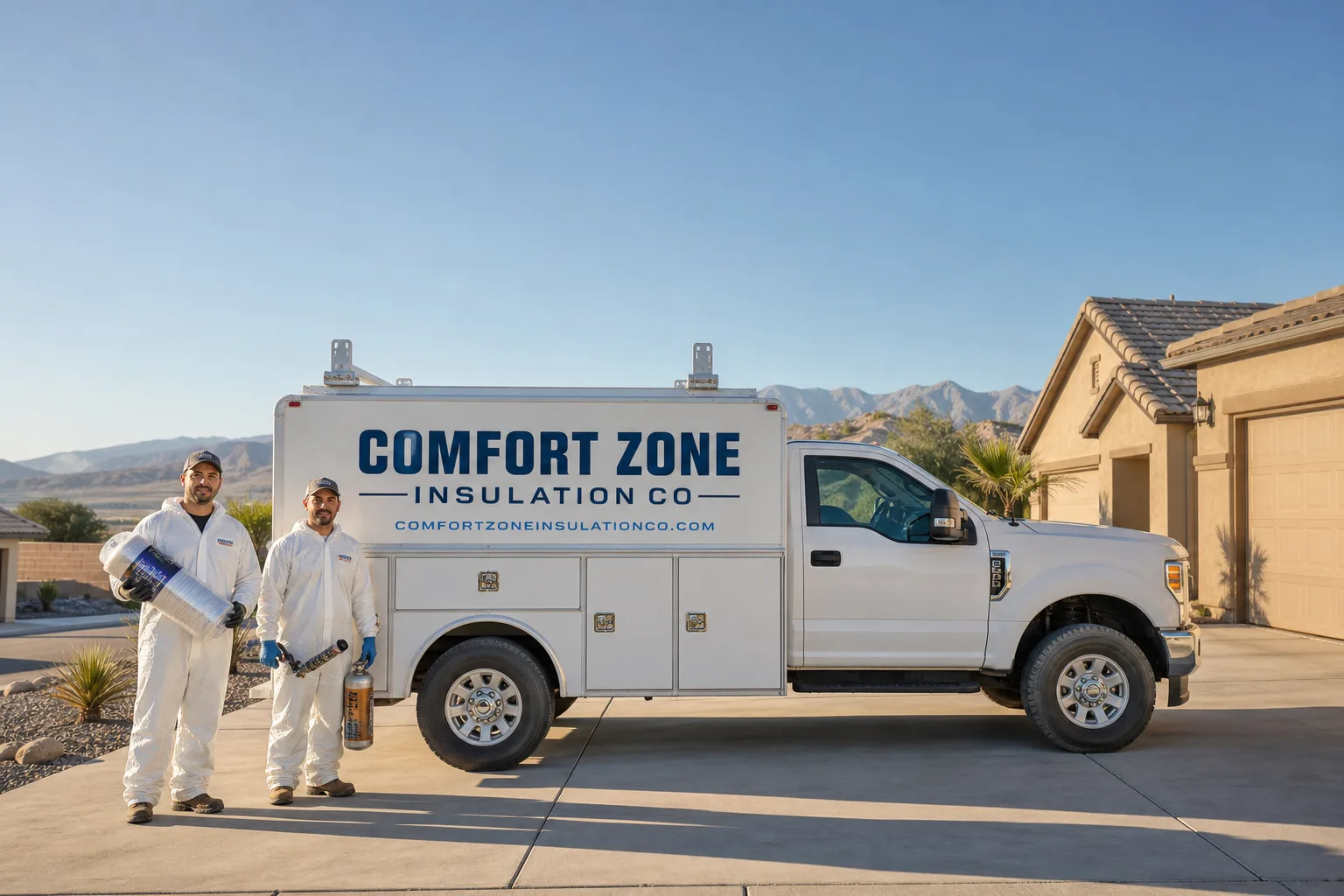
Fast, Reliable Spray Foam Insulation Across San Marino
Spray foam insulation in San Marino typically costs $3.50 to $7.50 per square foot for open-cell and $5.50 to $11.00 per square foot for closed-cell, with most attic projects running $4,800 to $14,000 depending on square footage and cavity complexity. We get to San Marino homes fast, usually within one to two business days for an assessment. If your rooms never hold temperature, your upstairs feels ten degrees hotter than the downstairs, or your energy bills climb every summer, we can tell you exactly what’s going on and what it’ll take to fix it. Call Noel and our team at (855) 341-7856 for a free estimate.
Why Comfort Zone Insulation Co Is San Marino’s Preferred Spray Foam Insulation Company
We’re insulation specialists. That’s the whole job. We’re not a general contractor who throws insulation into a bid as an afterthought; we install spray foam, blown-in, and attic systems every working day, and nothing else. San Marino homeowners call us because we understand what older lath-and-plaster houses actually need, and we carry eight brands including Icynene, Demilec, Rockwool, and Knauf, so the material is matched to the house, not to whatever’s on the truck. Noel Carrasco runs every job with the same standard: the right product, the right depth, no shortcuts.
We’ve worked throughout the 91108 and 91118 ZIP codes, from estates near Lacy Park up to the streets off Huntington Drive. Homeowners here don’t want a sales pitch. They want a straight answer about why their 1920s or 1950s house can’t hold temperature, and they want work done that won’t trigger a preservation review headache. That’s what we do. Our Spray Foam Insulation team knows these houses because we’ve been inside them, in the attics and the wall cavities, dealing with what’s actually there.
Spray Foam Attic Insulation in San Marino
Spray foam attic insulation in San Marino is often the only retrofit that satisfies Title 24 air-sealing requirements without changing the look of a finished attic space. For a typical 1910s-to-1950s estate, open-cell foam on attic floors runs $4,800 to $9,500, while closed-cell foam applied directly to rafter bays of a finished attic runs $8,000 to $14,000. The choice between them comes down to whether the attic is living space or storage, whether the rafter tails are exposed, and what the city’s design review will let you touch. In the 91108 core especially, invisible cavity work beats visible depth every time.
Finished Attics and Rafter Bays
When an attic is already a habitable room, with plaster on the rafters and original windows, you can’t just pile blown-in insulation on the floor. Closed-cell spray foam applied directly to the underside of the roof deck turns the whole attic into conditioned space without changing the roofline or adding a single visible inch. We’ve done this on homes throughout San Marino where the attic doubles as a study or guest room, including a 1920s estate off Lorain Road where the homeowners’ preservation review explicitly prohibited new vent penetrations. The Icynene closed-cell foam sealed the rafter bays from inside, and the rafter tails stayed exactly as they were.
Air Sealing Top Plates and Penetrations
Most heat loss and heat gain in older San Marino homes happens at the top plate, the gap where the wall meets the attic floor. Open-cell foam seals that seam, along with wiring penetrations, recessed light housings, and attic hatch frames. Homeowners in San Marino feel the difference within a day of the job finishing, and the cooling load drops because the stack effect is broken. We treat this as a required step on every attic spray foam job we do in San Marino, not an upsell.
Spray Foam Wall Insulation in San Marino
Spray foam wall insulation in San Marino usually means working with lath-and-plaster walls over original wood framing or double-wythe masonry, and it runs $4,000 to $11,000 for a typical exterior wall retrofit depending on access and cavity depth. In the 91108 core, we often inject foam through small access holes drilled from the interior or exterior, then patch and blend to match the surrounding plaster. In the 91118 neighborhoods near Huntington Drive, where 1950s wood-frame houses share the same uninsulated wall problem, the work is more straightforward. Most wall retrofits in San Marino pay for themselves in cooling savings within six to nine years.
Lath-and-Plaster Cavity Fills
Lath-and-plaster walls hide cavity after cavity with no insulation at all. Closed-cell foam is the only retrofit material that both insulates and air-seals those cavities in a single pass, and it’s the right call for San Marino estates where you want to avoid tearing out original plaster. We inject at low pressure, one cavity at a time, until the wall is full and dense. The house stops breathing through the walls, and the thermal boundary finally matches what the architecture always promised.
Double-Wythe Masonry Walls
For the 1910s – 1930s San Marino estates with double-wythe brick or hollow clay tile walls, open-cell foam injected into the cavity is sometimes the only retrofit that doesn’t require furring out the interior. The foam fills the irregular cavity, slows air movement, and pairs with the masonry’s thermal mass to hold temperature far better than the empty wall ever did. We always inspect the original single-pane windows in the same visit and tell you honestly if they’ll keep working against the rest of the retrofit, because sometimes they won’t, and you should know that before we start.
Trusted Brands We Service in San Marino
We install Icynene and Demilec spray foam systems, and we carry Knauf and Rockwool for jobs where a mineral option makes more sense. That matters in San Marino, where a 1920s estate with original plaster and a preservation-sensitive exterior might call for one product while a 1950s Huntington Drive rancher calls for another. We don’t shoehorn a single brand into every house. We keep our crews current on the application specs for each product line, and because we’re insulation-only, we’re accountable for the result. If you’re in San Marino and want a straight answer about what belongs in your walls or attic, we’ll tell you, and we’ll tell you why. Serving San Marino homes with the right material for the actual house is the whole point of what we do.
Common Spray Foam Insulation Problems We See in San Marino Homes
- Knob-and-tube wiring buried in foam. On 1910s – 1930s San Marino estates, legacy wiring in wall cavities and attic floors must be capped or replaced before foam goes in. Burying live knob-and-tube in spray foam creates a real fire risk, and we won’t do it. If we find it, we stop and tell you what the options are.
- Foamed walls fighting single-pane windows. We’ve seen wall cavities foamed on San Marino homes while original steel-frame or wood single-pane windows stayed in place. The afternoon sun through that glass undoes much of the wall work. We flag the window problem before quoting the foam, not after.
- Thick closed-cell foam in unvented rafter assemblies. On original plaster-and-rafter roofs, applying closed-cell too thick or too fast into bays that were never designed for foam traps moisture. The result is soffit condensation and sometimes peeling paint. We size the foam depth to the assembly, not to the maximum R-value chart.
- Fall downslope winds exposing air leaks. The dry winds coming off the San Gabriel Mountains in October and November push air through unsealed top plates, attic hatches, and electrical penetrations. If the air-sealing part of the job is skipped, San Marino homeowners feel dust and temperature swings every fall. We seal the boundary, not just the big holes.
Pricing for Spray Foam Insulation in San Marino, CA
Open-cell spray foam in San Marino runs $3.50 to $7.50 per square foot installed. Closed-cell runs $5.50 to $11.00 per square foot. A full attic retrofit on a 2,200-square-foot 1920s estate typically lands between $8,500 and $13,500, while a wall cavity fill on the same house runs $5,000 to $9,000 depending on access. Finished attics with exposed rafter tails and preservation restrictions add cost because we work from the interior side and move slower. Blow-in ceiling work that doesn’t involve foam runs $2.75 to $4.25 per square foot, and we’ll tell you honestly if that’s the better fit. Call (855) 341-7856 and Noel will give you a free, itemized estimate for your San Marino home, based on actual measurements, not a square-footage guess.
We Also Serve Cities Near San Marino
If you’re in San Gabriel, East San Gabriel, Alhambra, or East Pasadena, we cover those areas with the same fast response times and the same brand lineup. The housing stock changes block by block out here, and we carry the full material range to match it. Call (855) 341-7856 and we’ll schedule an assessment wherever you are.
Serving San Marino, CA — Our Local Coverage Area
We’re based in the San Marino area and know this community well. Use the map below to see our service coverage — if you’re nearby, we can almost certainly help.
FAQs About Spray Foam Insulation in San Marino
Yes, in most cases a finished attic without existing soffit or ridge ventilation will trigger Title 24 requirements when you add insulation in the rafter bays. The workaround we use in San Marino is closed-cell spray foam applied directly to the underside of the roof deck, which creates an unvented, conditioned attic assembly that meets Title 24 without cutting new vent openings. That’s the approach that keeps original rafter tails and plaster detailing intact. Call (855) 341-7856 and we’ll check your attic assembly and tell you which path applies.
Only after the knob-and-tube wiring has been decommissioned or replaced. Spray foam traps heat around legacy conductors, and burying live knob-and-tube creates a fire hazard. We inspect every wall cavity before foam goes in, and if we find live legacy wiring, we’ll stop and give you a clear list of what a licensed electrician needs to address first. That’s non-negotiable on our jobs in San Marino.
Open-cell spray foam can work in double-wythe masonry cavities, but only when the cavity is continuous and unblocked. On many San Marino estates, the cavity is partially filled with mortar droppings or brick ties, so we run a borescope inspection before recommending foam. If the cavity is too irregular, blow-in cellulose or a mineral-wool option via Knauf or Rockwool may be the cleaner fit. We’ll show you the inspection footage and let you decide with the facts in front of you.
No, not when we apply closed-cell foam from the interior side of the rafter bays, between the framing members. The foam fills the cavity and stops at the inner face of the roof sheathing, so the exposed rafter tails and any wood detailing stay completely visible and untouched. On the Lorain Road estate we mentioned, the homeowner’s preservation review passed with no visible change to the attic study. That’s the whole reason closed-cell beats blown-in here. Call (855) 341-7856 to schedule an attic assessment.
The dry fall winds push air through every unsealed penetration, including top plates, attic hatches, recessed lights, and sidewall gaps, which is why air sealing is the highest-value part of any spray foam job in San Marino. We foam the cavity and seal the boundary at the same time. If the sealing is skipped, you’ll get insulated walls that still feel drafty every October. We test the air boundary with a blower door on every attic and wall job we do in San Marino, before and after.
Written by Noel Carrasco, Owner at Comfort Zone Insulation Co, serving San Marino and the San Gabriel Valley with insulation-only expertise.