
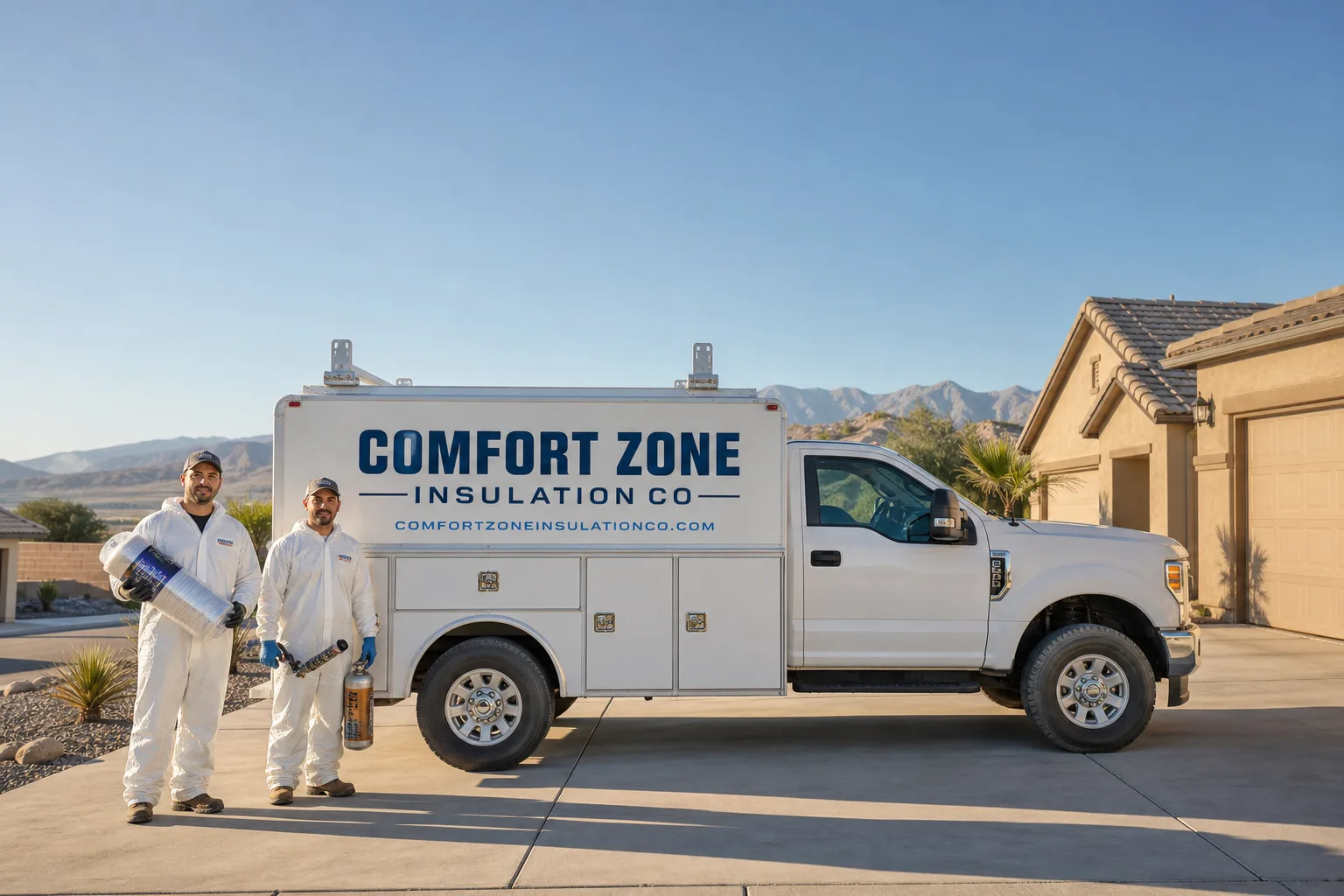
Fast, Reliable Spray Foam Insulation Across Running Springs
Spray foam insulation in Running Springs typically runs $3.50 to $7.00 per board foot installed, with most attic and rim joist projects landing between $2,400 and $6,800 depending on cavity depth and square footage. Homes here at 6,000 feet fight winter temperatures that drop below freezing for weeks at a time, and a properly foamed roof deck or crawlspace is what stops ice dams, frozen pipes, and heating bills that climb all winter. We’re based in San Bernardino and send crews up Highway 330 and 18 to Running Springs every week, so we know what older mountain cabins need when the thermometer drops. Call (855) 341-7856 and we’ll give you a straight answer on what your home actually needs.
Why Comfort Zone Insulation Co Is Running Springs’s Preferred Spray Foam Insulation Company
We install insulation and nothing else. That matters in Running Springs because most of the homes here weren’t built for the winters they now endure. A general contractor might foam an attic and call it done. We look at the whole thermal envelope: the shallow roof cavity, the knee walls behind the living room, the exposed crawlspace floor that was never meant to hold heat above a frozen void. Running Springs homeowners call us because we’ve been through enough 1920s cabins and 1960s A-frames to know where the cold enters before we ever open a can of foam.
Noel Carrasco runs our crews, and he’s spent years working on mountain homes from Crestline to Lake Arrowhead. The difference shows when a tech arrives and immediately checks the roof cavity depth before recommending a foam type. Reviews from Running Springs customers consistently mention the same thing: we showed up when we said we would, we found heat-loss paths the homeowner didn’t know existed, and the house finally held temperature after other insulation attempts failed. If you’re tired of cold floors and a furnace that runs all night, call us. We’ll look at your home the way a specialist should.
Spray Foam Insulation Contractors in Running Springs
Spray foam insulation contractors in Running Springs handle the work that keeps a mountain cabin livable year-round: sealing the thermal boundary so heated air stays inside and snowmelt doesn’t turn into ice dams on the roof. When the roof deck gets foamed, it stops the freeze-thaw cycle that wrecks shingles and sheathing. In a town where weekend cabins are becoming permanent homes, this isn’t optional; it’s the difference between a house that holds 68 degrees and one that drops to 55 by midnight.
Knee Wall and Crawlspace Sealing
Most Running Springs cabins built before 1980 have knee walls with zero insulation behind them. Closed-cell foam applied to those walls and the crawlspace floor stops the stack effect that pulls cold air up through the floorboards. On a home off Rim of the World Highway, that’s often where half the heat loss lives.
Open-Cell vs. Closed-Cell for Mountain Homes
Closed-cell foam adds structural strength and a vapor barrier, which matters in a climate where snow piles against walls for months. Open-cell is better for interior cavity fill where the roof deck already has a solid barrier. We carry both, including Icynene and Demilec systems, so we’re not pushing one product type on every house.
Spray Foam Attic Insulation in Running Springs
Spray foam attic insulation in Running Springs is usually the first fix a cabin needs, because the attic is where most of the heat leaves and where ice dams begin. Many of these older mountain homes have shallow roof cavities that can’t accept deep blown-in cellulose without baffles and venting work first. Foam applied directly to the roof deck seals that cavity, adds R-value in six inches of space, and stops the melt-refreeze cycle that creates the ice dams every January.
Ice Dam Prevention at the Roof Deck
When the roof deck is foamed, warm air from the living space can’t reach the snow on the roof, so the snow melts evenly instead of in patches that refreeze into dams. We see this all the time on homes around Running Springs School Road and the steeper lots near Green Valley Lake Road. The foam solves the root cause, not the symptom.
Attic Air Sealing Before Foam
Air sealing is a separate step we never skip. Recessed lights, plumbing chases, and wiring penetrations leak warm air into the attic cavity even after insulation goes in. On a 1960s chalet with original tongue-and-groove ceilings, sealing those gaps first is what makes the foam actually perform. We treat attic insulation as its own service, with its own checklist, because the attic deserves that focus.
Trusted Brands We Service in Running Springs
We carry foam systems from Icynene and Demilec, and for homeowners who want fiber or mineral options we work with Rockwool, Johns Manville, and Knauf. That means a Running Springs customer isn’t limited to whatever one brand the crew happened to load that morning. A cabin that needs fire-resistant detailing near wildland-adjacent zones gets a different recommendation than a year-round home focused on thermal performance. We stock the materials for Running Springs jobs specifically: cold-weather installation kits, fire-rated intumescent coatings, and foam formulas rated for low-temperature application.
Common Spray Foam Insulation Problems We See in Running Springs Homes
- Shallow roof cavities under-insulated for the climate. A 1950s A-frame with six inches of roof depth can’t take R-38 blown-in without major reframing. Closed-cell foam at R-7 per inch turns that six inches into R-42 of actual thermal barrier, which is the only realistic path to a warm ceiling.
- Knee walls that were never insulated at all. Behind the sloped ceilings of a chalet, the short vertical walls under the roofline are often just drywall over studs facing the outside air. Foam applied there addresses a heat loss path that attic insulation alone can’t touch.
- Ice dams forming on roofs over heated living spaces. When a running springs cabin’s roof deck gets warm enough to melt bottom-layer snow, that water runs to the cold eave, refreezes, and backs up under the shingles. Foam at the deck stops the heat transfer and the dam.
- Ember intrusion through vented attics. Fire season in the San Bernardino Mountains means a vented attic is a liability. Foam-sealed roof decks with ember-resistant detailing reduce the pathways wildfire embers use to reach combustible framing.
Pricing for Spray Foam Insulation in Running Springs, CA
Open-cell spray foam in Running Springs typically runs $2.50 to $4.00 per board foot, while closed-cell runs $4.50 to $7.00. A full attic roof deck on a 1,200-square-foot cabin usually lands between $3,200 and $5,500. Rim joist work runs $1,100 to $2,400, and crawlspace sealing runs $1,800 to $3,600 depending on access and square footage. The biggest cost variable is cavity access: a steep driveway off a mountain-grade road or a low-slope roof that requires staging adds labor. We give free estimates and our quotes are line-item specific, so you’ll see exactly what each part of the job costs before you sign. Call (855) 341-7856 for a number on your specific home.
We Also Serve Cities Near Running Springs
Our Spray Foam Insulation crews work throughout the San Bernardino Mountains. Beyond Spray Foam Insulation in Running Springs, we regularly serve Lake Arrowhead, Crestline, Highland, and Mentone. If you’re anywhere in the mountain corridor, call us and we’ll schedule a visit.
Serving Running Springs, CA — Our Local Coverage Area
We’re based in the Running Springs area and know this community well. Use the map below to see our service coverage — if you’re nearby, we can almost certainly help.
FAQs About Spray Foam Insulation in Running Springs
Yes. Closed-cell spray foam applied directly to the roof deck is the most effective option for shallow cavities, hitting R-7 per inch where blown-in insulation would require baffles and added framing. We’ve foamed dozens of A-frames in Running Springs where the cavity measured under seven inches, and the result is a ceiling that finally holds heat. Call (855) 341-7856 and we’ll measure your cavity and give you a spec.
In a Running Springs cabin, the knee walls and crawlspace are often the largest heat-loss surfaces, so at minimum both should be evaluated alongside the attic. Attic-only insulation on a cabin with uninsulated knee walls leaves the biggest gap open. We inspect all three zones before recommending where to spend the budget first.
Spray foam that seals the attic and roof deck reduces the number of open vent pathways that allow embers to enter the structure during a wildland fire event. It’s not a fireproofing system, but it closes the gaps. Combined with ember-resistant vent detailing, it meaningfully lowers ignition risk. Ask us about Class A fire-rated coatings during your estimate.
Yes, because the air-sealing benefit of foam improves comfort even before you replace windows. Foamed walls and roof deck cut the drafts that single-pane windows magnify, which buys time to budget window replacement later.
We apply foam directly to the underside of the roof deck so warm interior air can’t reach the roof surface, which eliminates the melt-refreeze cycle that creates ice dams. This is a permanent fix, not a heat-cable bandage. For a roof that’s already showing dam damage, call (855) 341-7856 and we’ll inspect the deck before recommending foam placement.
Contact Comfort Zone Insulation Co for a Free Estimate
If your Running Springs cabin or year-round home fights to hold temperature, we’ll find the exact heat-loss path and recommend the right foam system for the job. We carry Icynene and Demilec closed- and open-cell products, plus Rockwool and GreenFiber options for customers who want mineral or recycled-content alternatives. One call gets you a free inspection of your roof cavity, knee walls, and crawlspace. Call (855) 341-7856 to schedule a visit to Running Springs this week.
Written by Noel Carrasco, Owner at Comfort Zone Insulation Co, serving Running Springs, CA mountain homes and cabins.