
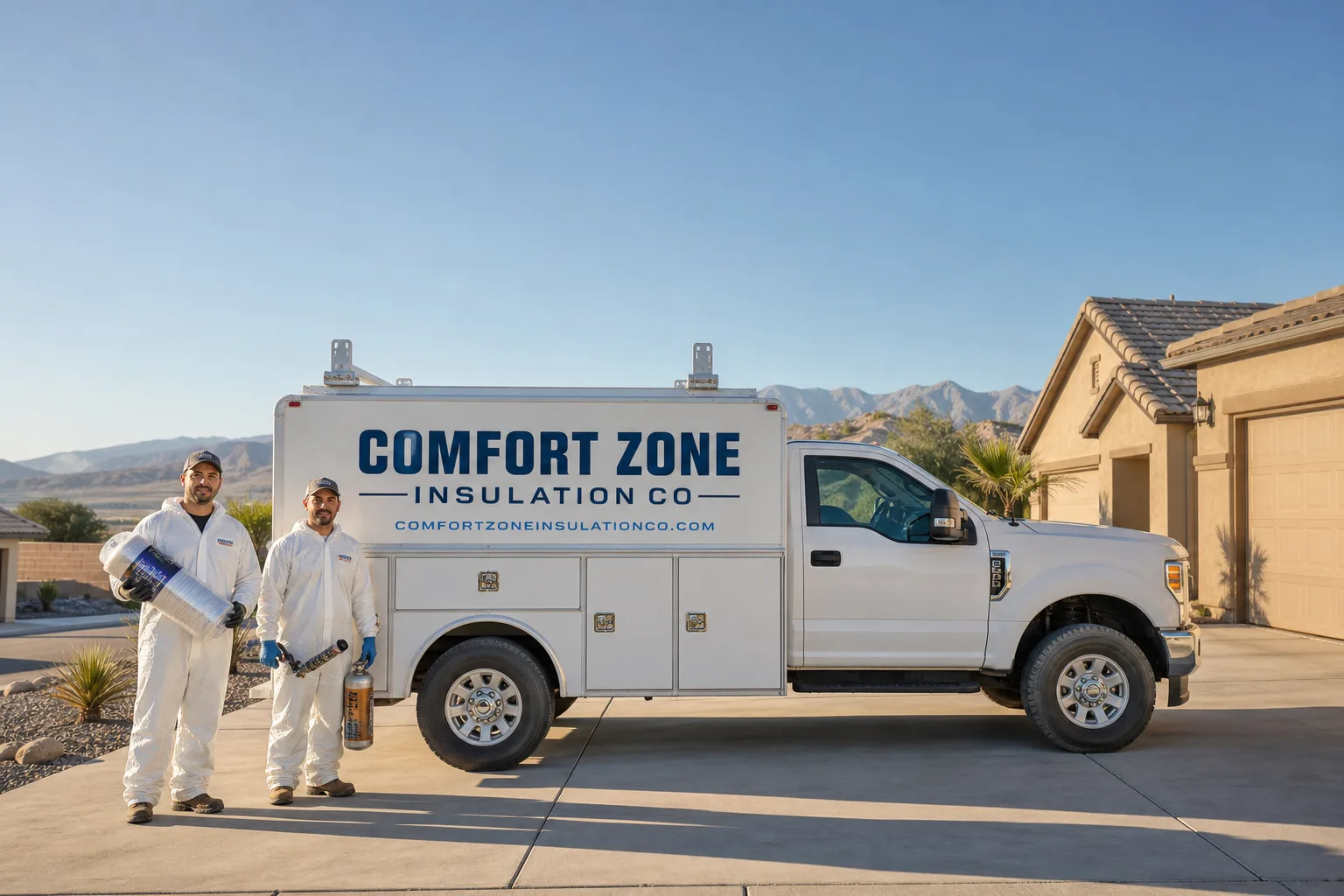
Spray Foam Insulation in Manhattan Beach, CA
Spray foam insulation in Manhattan Beach typically runs $3.50 to $7.50 per board foot for closed-cell and $1.80 to $3.90 for open-cell, with whole-attic jobs landing between $4,200 and $11,000 depending on depth and access. Most Manhattan Beach homes we assess can get same-week scheduling because we stage crews out of our San Bernardino shop and route coastal jobs on tight, predictable days. If you’re in 90266 or 90267 and tired of fog-season condensation on interior walls or a second floor that never cools down, call (855) 341-7856 and we’ll walk the house with you.
Manhattan Beach is not a heating-degree-day town. Nobody here is fighting a Minnesota winter. What we fight is marine-layer humidity, salt air, and the fact that half your neighbors are close enough to hear your kitchen conversation. That changes what spray foam is actually for on this particular stretch of coast. Our Spray Foam Insulation team gets that the spec on The Avenues is different from the spec in Torrance, and we specify accordingly.
Key Takeaways
- Closed-cell foam is the default on Pacific-facing or wind-exposed Manhattan Beach walls because open-cell traps marine moisture instead of stopping it.
- Walk-street and Avenue lots set inches apart mean half our local jobs are driven by party-wall sound isolation, not thermal R-value alone.
- Older 1940s to 60s beach bungalows often have settled, damp blown-in attic product that must come out before new foam goes in.
- We carry eight manufacturer lines, so the material is matched to the house condition, not to whatever happens to be on the truck.
Fast, Reliable Spray Foam Insulation Across Manhattan Beach
We work in Manhattan Beach often enough that the streets don’t surprise us anymore. We know what a walk-street lot feels like when you’re trying to get a hose through a side yard that’s five feet wide. We know that Marine Avenue and Rosecrans can add twenty minutes to a route on a summer Saturday, so we schedule around that. And we know the housing stock: original beach bungalows with zero wall insulation sitting next to three-story custom rebuilds with floor-to-ceiling glass. Both need spray foam, but for completely different reasons. The bungalow needs moisture control and air sealing. The rebuild needs acoustic isolation at the party wall and vapor control at the glazed openings. That diagnostic distiction is the whole job. Call (855) 341-7856 for a free estimate, and we’ll tell you which problem your house actually has.
Why Comfort Zone Insulation Co Is Manhattan Beach’s Preferred Spray Foam Insulation Company
We install insulation and nothing else. That sentence alone puts us in a different category than a general contractor who sends a framing crew to blow some fiberglass and call it a day. Manhattan Beach homeowners tend to be specific about what they want, because they’ve usually lived in the house through one fog season already and they know exactly which wall sweats and which bedroom never holds temperature. We show up with eight brand lines in our portfolio (Owens Corning, Johns Manville, Knauf, Rockwool, CertainTeed, Icynene, Demilec, GreenFiber), so the recommendation is driven by the house, not by our inventory. Noel Carrasco, who runs our crews, has the material-agnostic language down cold: he’ll tell you when closed-cell Icynene is worth the premium and when a Rockwool batt layer does more for your acoustic spec than another inch of foam. That kind of honesty builds a local reputation in a town where neighbors talk.
Response time to Manhattan Beach is same-week for most assessments and installs. We stage out of San Bernardino but route the South Bay as a dedicated coastal day, which keeps our travel cost predictable and our arrival windows tight. When a homeowner on The Strand calls about fog-season condensation on a west-facing bedroom wall, they usually want answers now, not in three weeks.
Spray Foam Insulation Contractors in Manhattan Beach
Spray Foam Insulation Contractors in Manhattan Beach deal with a housing stock that runs from 1940s wood-frame beach bungalows to brand-new multi-story custom builds, and the material choice on each end of that spectrum is practically opposite. A damp old bungalow a block off The Strand needs closed-cell foam to stop marine-layer moisture from moving through the wall assembly. A new build with large glazed areas needs foam at the rim joists and around window and door openings to keep the envelope continuous. Neither of those clients needs the same product, and both will know within six months if the contractor guessed wrong.
Closed-Cell for Fog-Exposed Walls
Pacific-facing and wind-exposed elevations take the worst of Manhattan Beach’s marine layer. Closed-cell foam acts as a vapor retarder and an air seal, which is what you want when the air is damp for half the year. We run Icynene and Demilec closed-cell systems for exactly this condition.
Open-Cell for Interior Cavities
Open-cell foam makes sense on interior partition walls and ceilings where you want sound absorption more than vapor control. It fills the cavity tightly and cuts down on room-to-room noise transfer, which matters more in a three-story custom place than most people expect.
Spray Foam Attic Insulation in Manhattan Beach
Spray Foam Attic Insulation in Manhattan Beach is where we find the most failures that predate us. Old bungalows and even mid-century stucco places in the Hill Section have attics that were blown with cellulose forty years ago. That material settles, and in marine air it absorbs moisture and goes flat and useless. Homeowners call us because summer heat gain through the ceiling is brutal, and they assume they need more insulation. What they actually need is removal of the damp, settled product and a fresh closed-cell spray foam application at the roof deck, which seals the attic and stops the thermal bypass. Typical attic jobs here run between $4,200 and $11,000 depending on square footage, depth, and whether old material has to come out first.
Attic First, Always
We lead with the attic in Manhattan Beach because it’s the single highest-impact zone in a beach house. A sealed attic deck with closed-cell foam changes how the entire second floor behaves in August. Before we touch a wall cavity, we look at the attic. If it’s damp, settled, or just thin, that’s where the money goes first.
Removal Before Reapplication
You cannot foam over old damp blown-in product and expect a good result. The moisture gets trapped under the new foam, and a ceiling that was already under-insulated now has a hidden problem underneath a fresh surface. We remove and dispose first, then apply. It costs more upfront and saves you from a re-do in three years.
Trusted Brands We Service in Manhattan Beach
We install products from Owens Corning, Johns Manville, Knauf, Rockwool, CertainTeed, Icynene, Demilec, and GreenFiber, so a Manhattan Beach customer is never limited to whatever single line a franchise happens to carry this month. For coastal houses, we lean heavily on Rockwool’s mineral wool where fire resistance and sound attenuation matter, and on Icynene and Demilec spray foam systems where moisture control is the priority. Parts and materials arrive on our schedule, not a distributor’s, and we stage coastal jobs so a homeowner on 90266 or 90267 doesn’t wait extra days for product to show up.
Common Spray Foam Insulation Problems We See in Manhattan Beach Homes
- Open-cell foam on Pacific-facing walls. This is the most common spec mistake we correct. Open-cell absorbs moisture, and a west-facing wall in Manhattan Beach is practically pressing against the marine layer for half the year. You get fog-season condensation on interior finishes and a wall assembly that never dries.
- Value-engineered party walls on walk-street lots. The foam depth on a shared wall gets cut to save money, and the sound-isolation spec everyone paid for quietly fails. Neighbors hear conversations. Nobody’s happy. We see this enough on The Avenues that we start every inches-apart lot with an acoustic conversation.
- Foam applied over settled, damp attic product. A 1940s bungalow with original blown-in cellulose has no business getting new foam on top. The moisture is trapped, the ceiling sags, and summer heat gain persists. Removal has to come first.
- Rim joist gaps in mid-century stucco homes. The hill section and the flats have plenty of 1950s and 60s stucco-over-wood-frame houses where the rim joist was never sealed. Air moves through the floor system, drafts show up at baseboards, and no amount of wall insulation fixes it until the rim is foamed.
Pricing for Spray Foam Insulation in Manhattan Beach, CA
Open-cell spray foam in Manhattan Beach runs $1.80 to $3.90 per board foot. Closed-cell runs $3.50 to $7.50 per board foot. A full attic with closed-cell foam typically lands between $4,200 and $11,000. A rim joist package on a typical 2,000 square foot stucco home runs $900 to $2,200. A party-wall sound isolation job on a walk-street rebuild runs $2,800 to $6,400 depending on wall area and foam depth. These are the numbers we quote on the ground here. What moves the price: removal of old material, access difficulty (which on a walk street is real), and whether you need the wall assembly to hit a specific sound rating. Call (855) 341-7856 for a free estimate, and we’ll give you an exact number for your house.
We Also Serve Cities Near Manhattan Beach
We run the same crews through Redondo Beach, Rolling Hills Estates, Palos Verdes Estates, and Torrance, so the coastal knowledge we bring to Manhattan Beach applies across the whole South Bay. If you’re a few blocks over the line, you’re still in our normal routing. The marine layer doesn’t stop at the city boundary, and neither do we.
Serving Manhattan Beach, CA — Our Local Coverage Area
We’re based in the Manhattan Beach area and know this community well. Use the map below to see our service coverage — if you’re nearby, we can almost certainly help.
FAQs About Spray Foam Insulation in Manhattan Beach
Yes, often more. When houses sit inches apart on walk-street and Avenue lots, the party wall between two homes is doing as much acoustic work as thermal work. Closed-cell foam at a proper depth adds mass and seals air gaps, which cuts sound transfer far better than fiberglass batts. We spec party-wall foam depth based on the neighbor’s actual proximity, and on lots where two exterior walls nearly touch, sound isolation is the deciding factor in material choice. Call (855) 341-7856 if your rebuild plans show a shared wall under five feet from the next house.
Closed-cell spray foam is the right call for a damp bungalow near The Strand because it acts as a vapor retarder and stops marine-layer moisture from moving through the wall cavity. Open-cell would absorb that moisture and cause condensation on interior finishes. The old blown-in attic product in that bungalow also needs removal before foaming, otherwise you’re sealing damp material in place. We use Icynene and Demilec closed-cell systems for exactly this condition.
Yes, and it’s standard on custom rebuilds in the Hill Section and on The Avenues. The key areas are the rim joists, the openings around large window and door frames, and any continuous exterior wall where the glazing breaks the envelope. Closed-cell foam at those transition points keeps the open-plan great room from leaking conditioned air. We also flash glazed openings before foam goes in, so the smart-home wiring and trim work goes on clean.
We install products from Owens Corning, Johns Manville, Knauf, Rockwool, CertainTeed, Icynene, Demilec, and GreenFiber. For Manhattan Beach coastal houses, we lean on Icynene and Demilec spray foam systems for moisture control, and Rockwool mineral wool where fire resistance and sound attenuation are priorities. That multi-brand access means you get the right material for your specific wall assembly, not whatever one installer happens to stock.
Yes, if the old damp product is removed first and the roof deck is sealed with closed-cell foam, fog-season condensation on ceilings and upper walls will stop. The condensation happens because warm interior air hits a cold, damp attic surface and drops its moisture. Sealing the attic with closed-cell foam breaks that cycle. If you skip removal and foam over the old blown-in, the problem just moves and gets worse. We do removal and application as one job, so the fix is permanent.
Manhattan Beach Spray Foam That Fits the Lot You Actually Have
On a narrow Avenues walk-street rebuild a few feet off the neighbor’s wall, we foamed the shared party wall and the fog-exposed west exterior with closed-cell Icynene to lock out marine-layer moisture and deaden sound between the two homes, then sealed the attic deck where the old blown-in had settled and gone damp. Our tech flashed the large glazed openings and rim joists before the smart-home wiring went in so the open-plan great room stayed quiet and condensation-free through fog season. We also matched a Rockwool batt layer at the interior partition where the homeowners wanted a softer acoustic than rigid foam alone. That is the kind of job Manhattan Beach hands you every month: two competing priorities, one of them sound, one of them moisture, and an insulation choice that has to serve both. We’re set up for that work. If your house fights the marine layer, leaks air through the ceiling, or sits close enough to the neighbors that you can hear their garage door, call (855) 341-7856 and we’ll figure out the right material for your specific situation.
Written by Noel Carrasco, Owner at Comfort Zone Insulation Co, serving Manhattan Beach and the South Bay.