
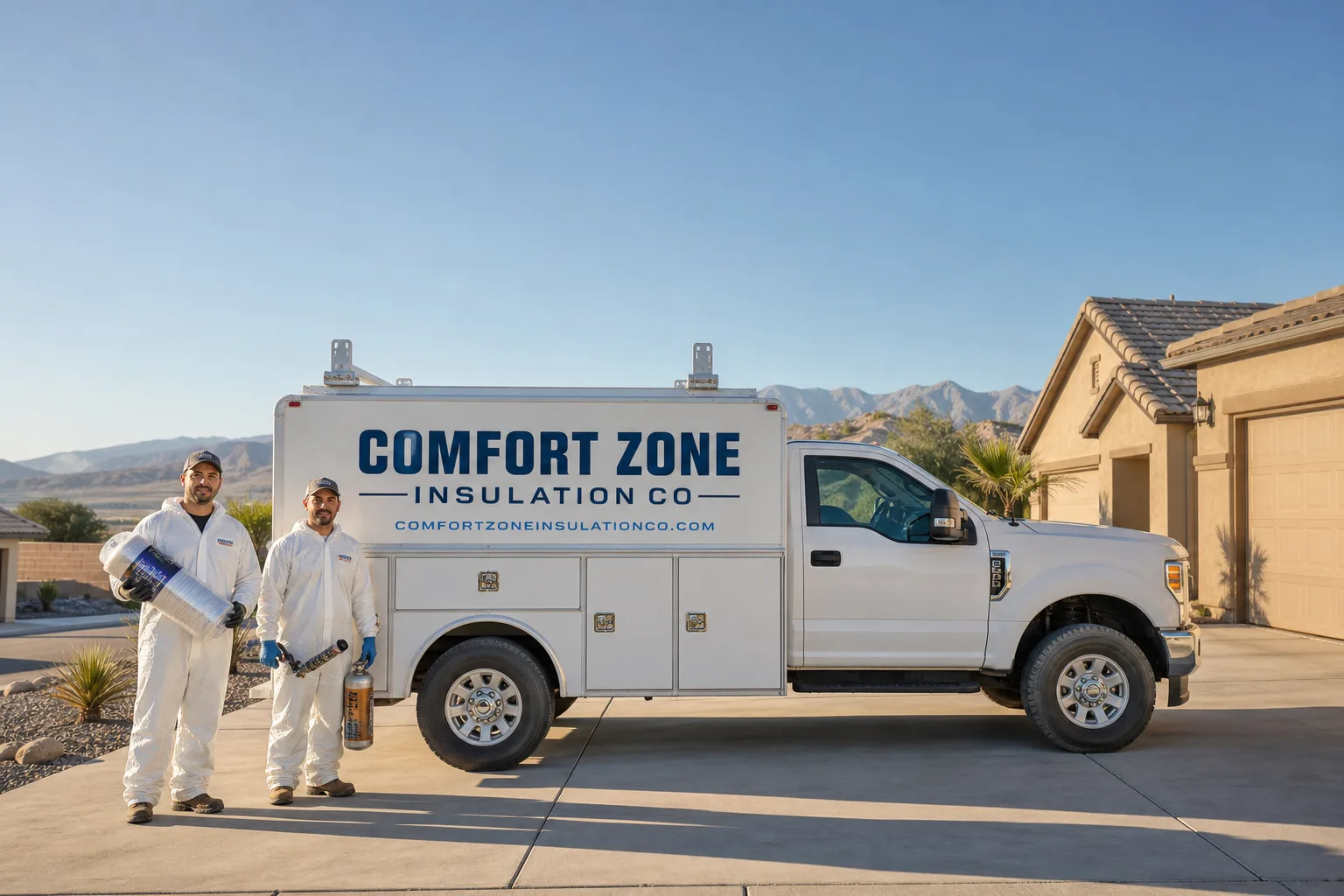
Fast, Reliable Spray Foam Insulation Across Costa Mesa
Spray foam insulation in Costa Mesa typically costs $2.50 to $6.50 per square foot installed, with most attic projects landing between $3,800 and $9,200 depending on foam type and square footage. We’re Comfort Zone Insulation Co, and we install insulation and nothing else. Our team knows the difference between a 1950s Eastside bungalow and a 1970s two-story in 92626, because that difference changes how the foam should be applied, where the air leaks actually are, and what moisture management the house needs. Call (855) 341-7856 for a free estimate and we’ll tell you straight what your Costa Mesa home needs.
If you’ve been fighting rooms that never hold temperature, or your attic smells faintly of damp cardboard every June, the answer is rarely just more insulation. It’s usually the wrong insulation, or air leaks nobody found yet. That’s the work we do here.
Why Comfort Zone Insulation Co Is Costa Mesa’s Preferred Spray Foam Insulation Company
Costa Mesa homeowners call us because we show up knowing their side of town. The Westside bungalows off Baker and the Eastside tract homes near the high school were built when nobody thought about air sealing. The 92626 two-stories with vaulted ceilings and recessed lights have their own set of problems. We’ve worked all of it, and we’ve learned what fails first in each housing stock.
We’re an insulation-only contractor. No roofing side hustle, no general remodel crew. Noel Carrasco runs our team, and his whole career has been about one thing: making homes hold temperature. When we recommend open-cell Icynene over closed-cell Demilec, or Rockwool over foam, it’s because that material fits your specific situation, not because it’s what we happened to order this week.
Response time to Costa Mesa is usually same-day for inspections and within a week for most installations. We quote honestly, show up when we said we would, and leave the attic cleaner than we found it.
Spray Foam Attic Insulation in Costa Mesa
Spray Foam Attic Insulation in Costa Mesa is less about chasing R-value and more about stopping the marine layer from turning your attic into a mold incubator. The June Gloom dampness that rolls in off the Pacific settles into attics all over 92627 and 92626, and in older homes with settled blown-in insulation, that dampness turns musty fast. Sealing the attic with spray foam creates a moisture-tolerant, airtight barrier that condensation can’t get through.
Roof Deck Sealing
We apply open-cell foam directly to the underside of the roof deck, turning the attic into conditioned space. In Costa Mesa’s climate, this matters more than the R-value because it stops the daily condensation cycle that feeds mold on the north-facing roof sheathing.
Air-Sealing Attic Bypasses First
Before any foam goes in, we seal the holes: recessed can lights, top plates, plumbing vents, and the gaps around the chimney chase. In 1970s 92626 two-stories, these bypasses leak so much air that foam alone would just trap moisture behind the leaks. Sealing first, then foaming, is the only order that works here.
Attic spray foam in Costa Mesa runs $4,200 to $9,200 for a typical 1,200 to 2,000 square foot home, depending on whether you’re sealing the roof deck or the attic floor, and which foam type fits your moisture situation.
Spray Foam Wall Insulation in Costa Mesa
Spray Foam Wall Insulation in Costa Mesa shows up most often in the 1950s and 60s Eastside and Westside bungalows where original wall cavities are thin to begin with and whatever insulation existed has long since settled or degraded. In these homes, exterior walls face two problems: thermal loss through thin cavities, and moisture intrusion from damp coastal air that condenses inside the wall assembly.
Open-Cell for Older Wall Cavities
In older Costa Mesa bungalows with 2×4 wall cavities, open-cell foam often fits better than closed-cell because it allows some vapor movement. In our climate, trapping moisture inside a thin wall cavity is a recipe for hidden rot. Open-cell foam air-seals without creating a moisture barrier your walls can’t handle.
Retrofit Wall Foam for Two-Stories
For 1970s 92626 two-stories, wall foam is usually paired with attic work because the two problems compound each other. We dense-pack or inject foam into wall cavities from the exterior or interior depending on siding type, and we always check the rim joists and band boards while we’re at it.
Wall spray foam in Costa Mesa runs $2.50 to $4.50 per square foot of wall area, with full wall retrofits of an older bungalow typically landing between $6,000 and $14,000 depending on cavity access and foam type.
Trusted Brands We Service in Costa Mesa
We install Icynene and Demilec spray foam systems, carry Rockwool for customers who want mineral wool’s fire resistance and sound attenuation, and can quote Knauf and CertainTeed products when the job calls for them. That’s the point of carrying eight leading brands: you’re not limited to whatever we happened to order this week. If your Costa Mesa home needs an open-cell foam that breathes with the coastal climate, we’ll quote Icynene. If you need a closed-cell vapor barrier for a crawlspace on a damp lot in 92627, we’ll quote Demilec. The material follows the diagnosis, never the other way around.
Common Spray Foam Insulation Problems We See in Costa Mesa Homes
- Musty settled attic insulation in Eastside bungalows. Original blown-in fiberglass from the 1950s and 60s has settled to a few inches and absorbed decades of marine-layer dampness. Foaming over it without removing or moisture-testing it first just traps that wet, musty material in place.
- Recessed can light air leaks in 1970s 92626 two-stories. Those can lights punch straight through the attic envelope, and if they aren’t air-sealed before foam goes on the roof deck, the foam’s performance drops dramatically and the leaks push moisture into the foam itself.
- Closed-cell foam trapped in thin bungalow walls. In older Eastside and Westside homes with 2×4 cavities, closed-cell foam acts as a vapor barrier. In Costa Mesa’s cool damp climate, that can trap condensation inside the wall assembly. Open-cell is often the safer, more moisture-tolerant choice.
- Vaulted ceiling air bypasses. The 92626 housing stock has a lot of vaulted ceilings, which means short, angled cavities where air sneaks around the insulation. These require careful sealing and usually a hybrid approach rather than just blasting foam into the cavity.
Pricing for Spray Foam Insulation in Costa Mesa, CA
Here are honest numbers for the Costa Mesa market. Attic spray foam runs $4,200 to $9,200 for most homes. Wall cavity spray foam runs $2.50 to $4.50 per square foot of wall area. Rim joist sealing runs $900 to $2,800 depending on access and linear footage. Garage ceiling spray foam runs $1,800 to $4,500. Roof deck spray foam on a 1,200 square foot attic runs $4,800 to $7,500. Factors that shift the price: which foam type your moisture situation actually needs, how much demolition or access work is required, and whether we’re sealing bypasses first. Call (855) 341-7856 and we’ll give you a real number, not a range that balloons later.
We Also Serve Cities Near Costa Mesa
We take regular calls from Newport Beach, Fountain Valley, Huntington Beach, and San Joaquin Hills, and our Spray Foam Insulation team keeps trucks stocked for the whole coastal corridor. If you’re in Costa Mesa or any surrounding city, the same crew and the same straight answers apply.
Serving Costa Mesa, CA — Our Local Coverage Area
We’re based in the Costa Mesa area and know this community well. Use the map below to see our service coverage — if you’re nearby, we can almost certainly help.
FAQs About Spray Foam Insulation in Costa Mesa
Yes, spray foam works well in Costa Mesa’s marine layer climate when the right foam type is matched to the moisture situation. Open-cell foam air-seals while allowing vapor to move, which prevents the trapped condensation that feeds mold in damp coastal attics. Closed-cell foam is better for crawlspaces and flood-prone areas where a vapor barrier is actually needed. The real question isn’t whether foam works here, it’s which foam, and whether the air leaks are sealed first. Call (855) 341-7856 and we’ll assess your exact moisture exposure.
Your attic insulation is musty because decades of marine-layer dampness have soaked into settled blown-in fiberglass, and the attic never dries out. This is one of the most common findings we see in 1950s and 60s Eastside bungalows. The fix is removal, moisture testing, air-sealing the bypasses, and then installing spray foam or another moisture-tolerant system. Musty insulation won’t dry out on its own in Costa Mesa’s climate. Call (855) 341-7856 to schedule an attic inspection.
Yes, spray foam can fix air leaks from recessed lights, but only if the can lights are sealed properly before the foam goes in. We use rated covers or seal boxes around each fixture, then foam the attic floor or roof deck. In 92626 two-stories with vaulted ceilings, this sealing step is the difference between a foam job that works and one that leaks conditioned air straight through the ceiling. Call (855) 341-7856 for a free attic air leak assessment.
Open-cell spray foam is usually the better choice for older Costa Mesa homes with thin 2×4 wall cavities. It air-seals and insulates without creating a vapor barrier that can trap condensation inside the wall assembly, which matters in a climate with cool damp mornings. Closed-cell foam has its place, but in thin coastal bungalow walls it often creates more moisture risk than it solves. Call (855) 341-7856 and we’ll tell you which foam actually fits your walls.
Spray foam outperforms traditional fiberglass or settled blown-in insulation in Costa Mesa because it air-seals while it insulates. Traditional batts and loose-fill leave air gaps that let marine-layer dampness circulate through the attic and walls. Spray foam creates a continuous air barrier that stops that circulation. In this specific climate, that air sealing is more important than the R-value number. Call (855) 341-7856 to discuss whether your home is a foam candidate or a better fit for another material.
Written by Noel Carrasco, Owner at Comfort Zone Insulation Co, serving Costa Mesa and surrounding Orange County cities.