
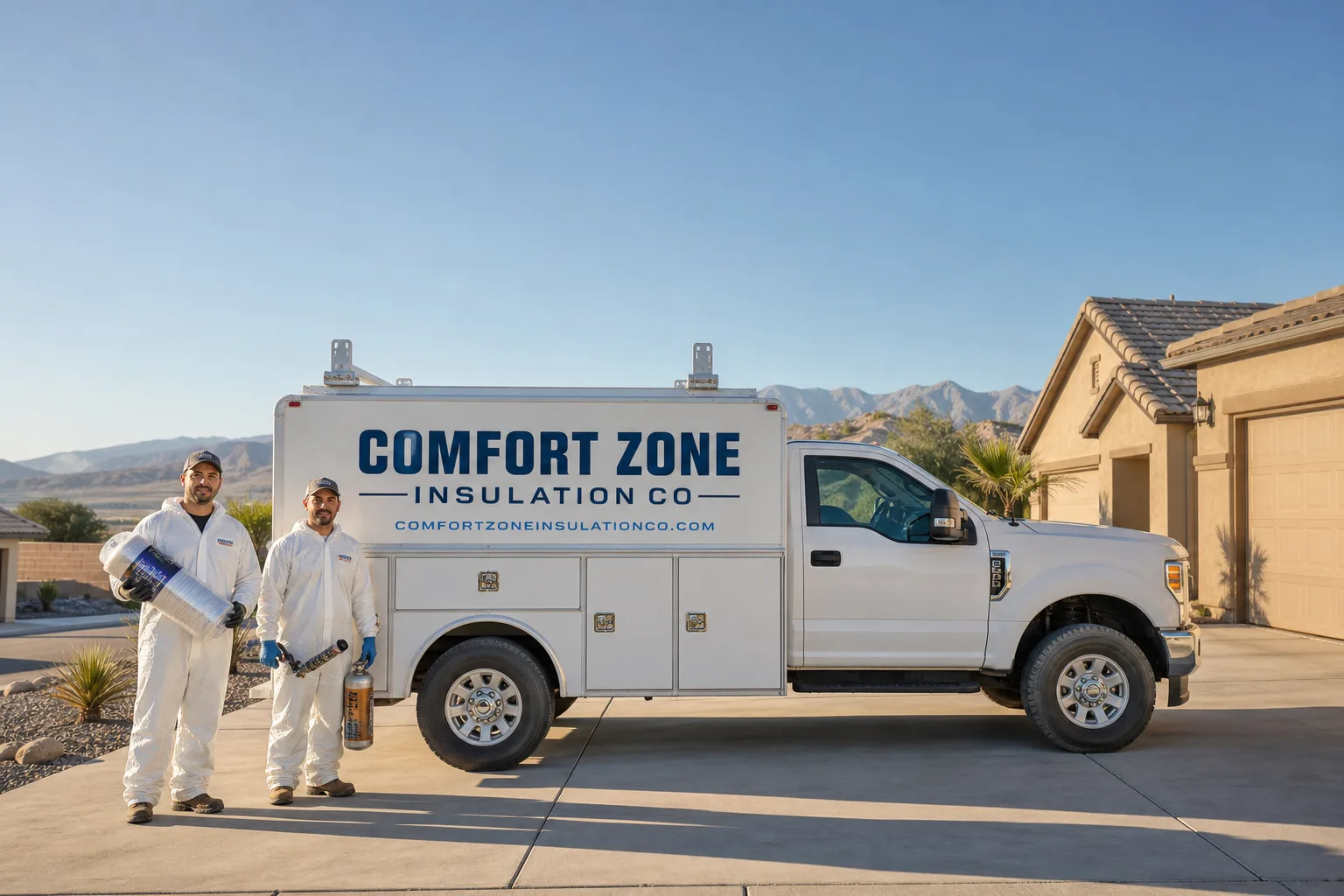
Fast, Reliable Spray Foam Insulation Across Burbank
Spray foam insulation in Burbank usually runs between $2.75 and $6.50 per board foot installed, with most whole-wall projects in older bungalows landing in the $4,200 to $9,800 range depending on cavity depth and whether we’re also addressing sound control. Our crews work Burbank neighborhoods every week, from the 91505 flats to Magnolia Park and the hills above Glenoaks, and we can typically be on-site within two to three business days. If you’re fighting a bedroom that bakes all summer or a wall that lets every departing flight from Hollywood Burbank Airport bleed through, call (855) 341-7856 and we’ll walk you through what makes sense for your specific house.
What makes Burbank different from most of the San Fernando Valley isn’t the heat. It’s the sound. Homes in the 91501 and 91502 corridors sit under airport approach and departure paths, and a meaningful share of our Burbank clients work in production or post-production, editing audio from a converted garage or spare bedroom on the 91505 side. That changes the math on insulation. You’re not just buying R-value; you’re buying a quieter wall assembly, and the product spec has to account for both.
Why Comfort Zone Insulation Co Is Burbank’s Preferred Spray Foam Insulation Company
We install insulation and nothing else. That matters in Burbank because the city’s housing stock is unusually demanding: 1920s – 1950s bungalows and Spanish-stucco homes with thin walls, knob-and-tube wiring, and noise loads that most insulation contractors never think about. A general contractor who handles insulation as an afterthought is going to quote you R-value and leave. We’re looking at your wall cavities, your wiring, and which direction your windows face relative to the flight corridor off Bob Hope Airport.
Led by Noel Carrasco, our team carries eight industry brands including Johns Manville, Rockwool, and CertainTeed, which means we’re not locked into whatever foam happened to be on the truck this week. For a 1940s stucco home in the 91526 ZIP needing cavity fill plus acoustic isolation, we might spec a closed-cell product from Demilec for the sound-facing walls and a mineral wool option from Rockwool for interior partitions where fire resistance matters. For a newer infill build in the Burbank hills, the conversation shifts to open-cell for ceiling deck performance. The right material for your specific situation. That’s the whole job.
Burbank homeowners regularly tell us two things: the room never cools down, and the noise from the airport or the neighbor’s home studio is inescapable. Both usually trace back to the same culprits: uninsulated or thinly insulated cavities, gaps at the top plates, and stucco exteriors that hold heat into the night. We handle all three.
Closed Cell Spray Foam Insulation in Burbank
Closed Cell Spray Foam Insulation in Burbank is the product we recommend to homeowners in airport-contour neighborhoods like the 91501 and 91502 corridors and around the Rancho and Magnolia Park edges who need both thermal performance and acoustic isolation. Closed-cell foam cures rigid, adds structural strength to the wall, and acts as an effective air barrier at about R-6.5 to R-7 per inch. In Burbank terms, expect to pay $1.10 to $2.30 per board foot more for closed-cell than open-cell, with a typical 2×4 wall cavity running $3.40 to $4.90 per board foot installed.
Where closed-cell earns its cost
If your home sits under the departure path and you want to actually reduce the cabin noise inside the bedroom, closed-cell foam in the sound-facing stud bays is the highest-performing option we install. The density stops more low-frequency rumble than open-cell, which matters when a 737 is climbing out over the Verdugos. In Burbank’s older flats, it also reinforces lath-and-plaster walls that have had decades to loosen.
When to skip closed-cell
Not every wall in a Burbank house needs closed-cell. Interior partitions, non-sound-facing exterior walls, and attic ceiling deck work can often use open-cell at a lower price point and still meet code. We’ll tell you where closed-cell is worth the money and where it isn’t. Most Burbank jobs mix the two.
Open Cell Spray Foam in Burbank
Open Cell Spray Foam in Burbank runs $0.90 to $1.90 per board foot installed and is our default recommendation for attic ceiling decks, interior partition walls, and anywhere the primary goal is stopping air movement rather than adding wall mass. Open-cell foam is vapor-permeable, which means it lets moisture move through the assembly, and that’s generally the safer choice in older Burbank homes where we can’t always guarantee how the wall was originally wrapped.
Attic ceiling and top-plate sealing
In the east San Fernando Valley, summer heat builds in the attic all afternoon and radiates into the house after sunset. Sealing the top plates and applying open-cell foam to the underside of the roof deck keeps that heat from ever entering the conditioned space. For a typical 950 to 1,400 square-foot Burbank bungalow, attic deck open-cell work runs $3,800 to $7,200 depending on access and depth.
Where open-cell saves money
Open-cell foam expands dramatically, so it fills odd-shaped cavities and hard-to-reach bays at a lower material cost than closed-cell. If your Burbank home has a converted garage studio or a finished attic with sloped ceilings and irregular framing, open-cell often turns out to be the smarter spend. We’ll spec it where the thermal and acoustic goals don’t require the rigidity and density of closed-cell.
Trusted Brands We Service in Burbank
We’re authorized installers for Johns Manville, Knauf, Rockwool, and CertainTeed products, alongside foam systems from Icynene and Demilec. What that means for a Burbank homeowner is straightforward: the product spec follows the job, not the other way around. If your home needs mineral wool for fire-rated separation between a garage studio and living space, we use Rockwool. If you need closed-cell foam for an airport-facing wall, we use the Demilec system that fits the cavity depth and the STC target. We stock materials for fast turnaround on Burbank projects, so a spec issue doesn’t turn into a two-week delay.
Common Spray Foam Insulation Problems We See in Burbank Homes
- Foam sprayed over live or brittle knob-and-tube wiring. Burbank’s 1920s – 1950s stock still carries original knob-and-tube in many walls. Spraying foam directly over deteriorated conductor insulation traps heat and creates a real fire-safety concern. The wiring has to be evaluated and often sleeved or rewired before any foam goes in.
- Closed-cell spec’d only on R-value in airport-contour homes. A contractor who doesn’t live in Burbank might quote closed-cell for the thermal gain and ignore the flanking paths and penetrations that let aircraft noise bleed around the assembly. Without addressing the ceiling, outlets, and top plates, the STC improvement falls far short of what the homeowner expected.
- Over-spraying shallow stucco cavities. Many Burbank Spanish-stucco homes have 2×4 or even shallower original wall cavities. Thick closed-cell lifts can blow out aged plaster or leave uncontrolled expansion gaps. Depth has to be measured per wall, not assumed from the floor plan.
- Sealing the wrong side of a mixed wall assembly. Burbank’s older homes often have original construction on one side and a stucco re-skin or room addition on the other. Foaming without checking whether the assembly can still dry in one direction traps moisture inside the wall, which shows up later as peeling paint or musty bedrooms.
Pricing for Spray Foam Insulation in Burbank, CA
For planning purposes, open-cell spray foam in Burbank runs $0.90 to $1.90 per board foot, closed-cell runs $2.40 to $4.90 per board foot, and rim joist sealing on a typical crawlspace home runs $850 to $1,700. Garage ceiling spray foam, a common Burbank request for converted studios under the flight path, typically lands between $1,800 and $3,400. The dominant variables are cavity depth, access, whether knob-and-tube wiring needs sleeving first, and how much acoustic isolation you’re actually chasing. A whole-wall retrofit on a 1940s stucco bungalow in Magnolia Park will sit at the higher end because of the prep work. Every estimate is free, and we’ll itemize exactly what you’re paying for before we start. Call (855) 341-7856 for an exact number on your house.
We Also Serve Cities Near Burbank
Our crews work Burbank every week and regularly cross into Burbank-adjacent service areas including Universal City, North Hollywood, Glendale, and Studio City. If you’re in one of those neighborhoods, the same Spray Foam Insulation team and the same eight-brand portfolio applies. Road time from the same dispatch point means response times are nearly identical.
Serving Burbank, CA — Our Local Coverage Area
We’re based in the Burbank area and know this community well. Use the map below to see our service coverage — if you’re nearby, we can almost certainly help.
FAQs About Spray Foam Insulation in Burbank
Yes, closed-cell spray foam measurably reduces aircraft noise transmission when applied to the sound-facing wall cavities and combined with ceiling assembly sealing, though it’s most effective as part of a full assembly that addresses top plates, penetrations, and window gaps rather than as a wall-only fix. We typically pair closed-cell foam with mineral wool or double-drywall on the noisiest exposures near the 91501 and 91502 corridors. Call (855) 341-7856 and we’ll walk you through what a realistic STC gain looks like for your specific wall.
In many cases yes, but only after the wiring is evaluated and properly sleeved or replaced where it sits exposed in wall cavities. Spraying foam directly over aging knob-and-tube conductors traps heat against the insulation and creates a fire hazard, so we never skip that step. Noel Carrasco flags any wiring that needs an electrician’s attention before foam goes in, not after.
Yes, and in Burbank it’s often the highest-value insulation upgrade available precisely because the valley floor traps heat overnight and attics in the 91523 and 91526 ZIP codes regularly hit 140°F plus by mid-afternoon. Air sealing plus foam at the top plates and roof deck stops that heat from migrating into the house after sunset, which is what actually resets your cooling load. A sealed assembly keeps the cool air you paid for inside the rooms you’re actually using.
Open-cell is usually the better fit for shallow or uneven Burbank stucco cavities, because it expands to fill irregular spaces without the rigid pressure that can blow out aged plaster. That said, if the same wall faces an airport flight path or a heavy traffic corridor, a thin closed-cell lift with the correct depth control is sometimes the right call. We measure each cavity before we spec anything, and we’ll tell you what we’d do if it were our house.
Most insulation-only retrofit work in Burbank does not require a city permit, but if the project involves re-sleeving wiring, attic access modifications, or structural cavity exposure, a permit may be pulled depending on scope. Older Burbank homes, especially 1920s – 1950s bungalows with original stucco, need more prep and more careful product selection because the wall assemblies were not designed for modern air-sealing. We handle the specifics for your house and tell you upfront if any city paperwork is required.
Written by Noel Carrasco, Owner at Comfort Zone Insulation Co, serving Burbank and the surrounding San Fernando Valley communities.