Insulation Company in East Los Angeles, CA
Blown in insulation solves the core comfort problem in East Los Angeles: walls that were never insulated when the house went up in the 1930s, or batt insulation that has settled into a thin, useless layer over 80 years. We’re Comfort Zone Insulation Co, an insulation-only contractor, and we work on the stucco bungalows and Spanish Revival cottages that dominate the 90022 ZIP code. Most of these homes have original lath-and-plaster walls with no cavity insulation at all, which is why rooms heat up by 3 p.m. and never cool down until midnight. Call (855) 341-7856 and we’ll tell you what’s actually inside your walls.
Why East Los Angeles Homes Are Different
East Los Angeles isn’t a tract-home suburb. The housing stock here was built between roughly 1920 and 1955, when builders used stucco over wood framing, lath-and-plaster interiors, and no insulation in exterior walls. A few got thin paper-faced batts that have since slumped to the bottom of the stud bays, leaving the upper half of each wall empty. That means the afternoon sun beats on unshaded stucco, transfers straight through the wall cavities, and turns bedrooms into ovens by late afternoon. The problem isn’t your air conditioner. It’s that your walls have zero resistance to heat gain.
The Mediterranean climate shapes how we approach insulation work here. Summer highs in the 90s are routine, and the real enemy is radiant heat from the sun hitting east- and west-facing walls, plus attic temperatures that can climb to 140 degrees or more. Winter is mild, so we’re not designing for freezing conditions. We’re designing to keep heat out. That shifts the material conversation: dense-packed cellulose in exterior walls does a strong job of slowing heat transfer, while attic work focuses on blocking radiant gain from the roof deck.
There’s also the access issue. Homes off Whittier Boulevard and around the 710 sit close together, often with shared driveways and alley access. Running a blower hose to a second-story wall or maneuvering around a narrow side yard takes planning. We’ve done enough East Los Angeles jobs to know that scheduling work around alley rights and neighbor access isn’t a complication, it’s just how the neighborhood works.
Our Main East Los Angeles Services
The two services East Los Angeles homeowners call us about most are attic insulation and spray foam, each with its own dedicated page.
Attic Insulation in East Los Angeles
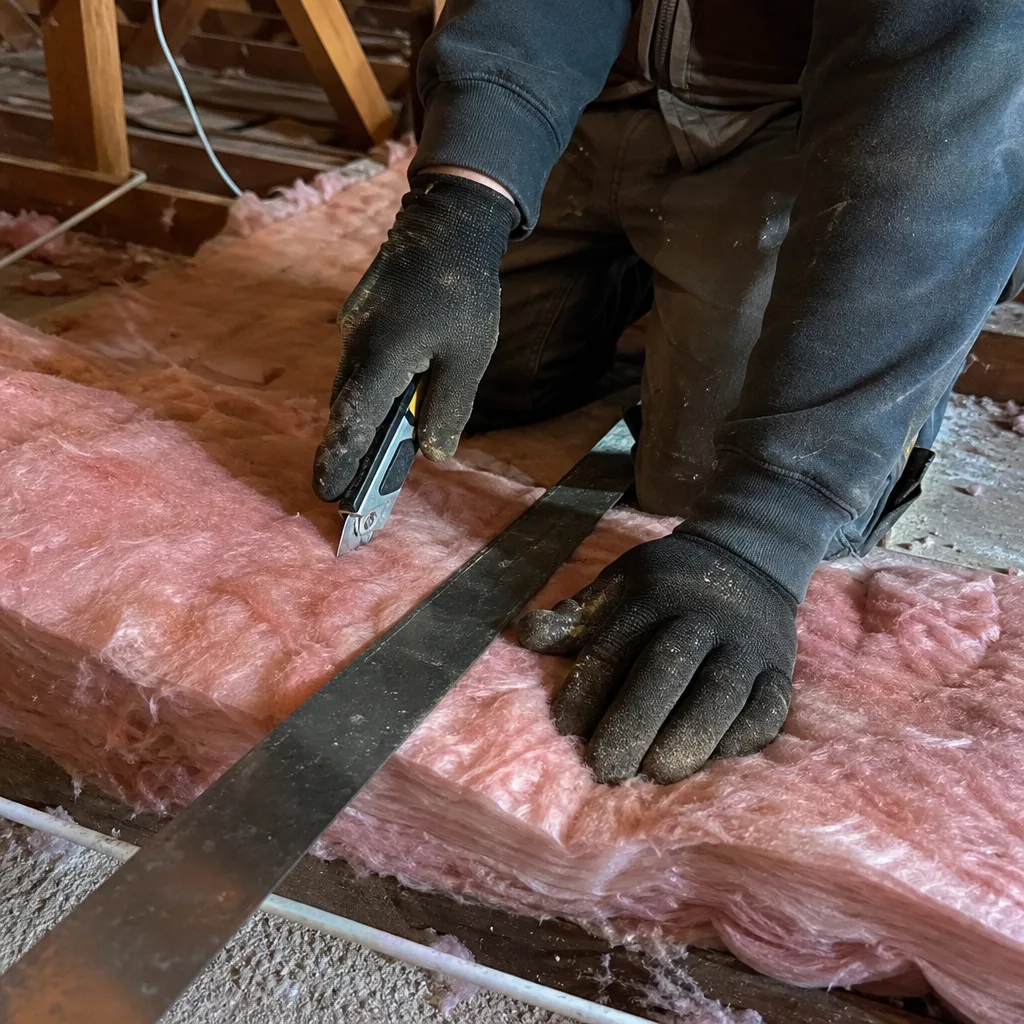
Attic work in East Los Angeles starts with the fact that most 1920s to 1950s homes here have vented attics with little more than a dusting of old insulation, if any. The attic is the single biggest heat gain zone in these stucco homes, and adding blown-in coverage or upgrading the existing layer changes how the whole house feels within a day. We also look for attic bypasses: gaps around chimneys, plumbing vents, and the old knob-and-tube-era framing that let superheated air pour into the living space. Attic Insulation in East Los Angeles.
Spray Foam Insulation in East Los Angeles
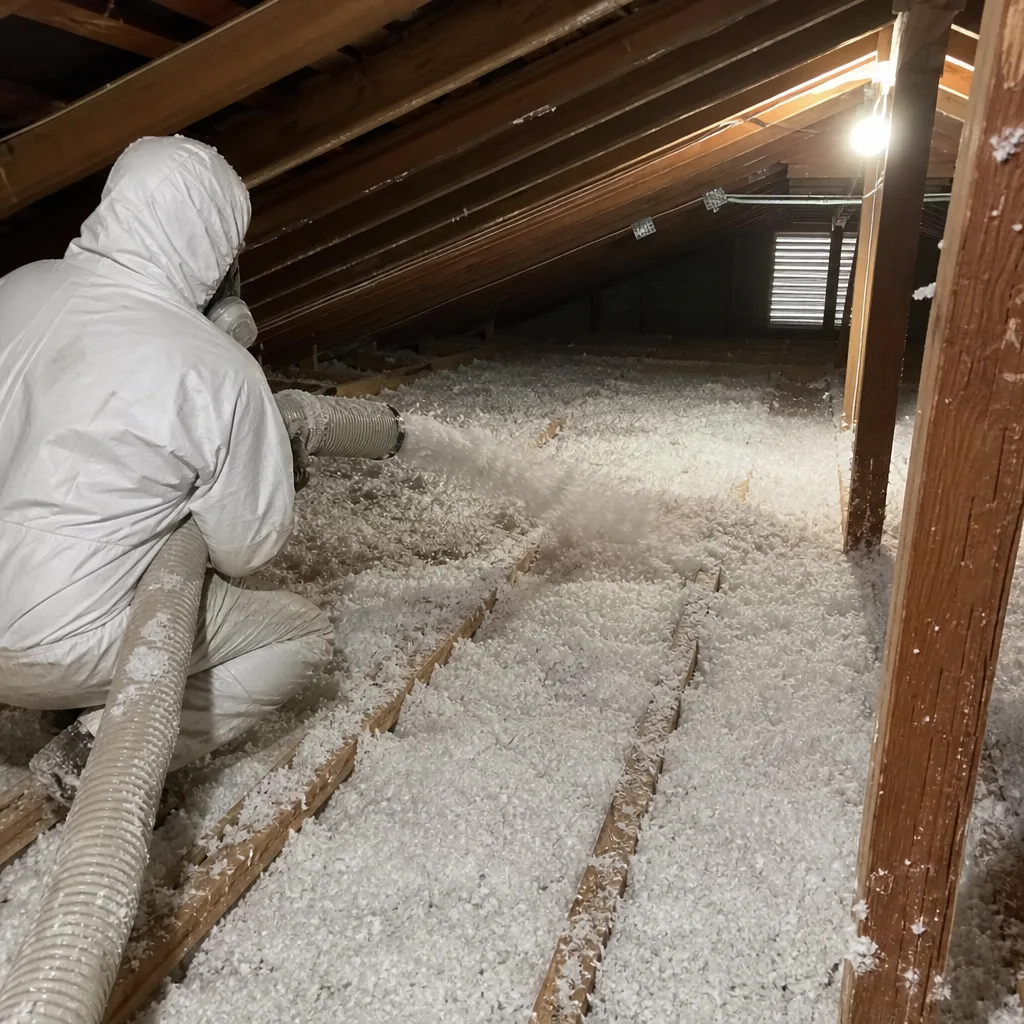
Spray foam is the right call for specific East Los Angeles situations, especially when we’re working on enclosed cavities, rim joists, or underside-of-roof applications where air sealing matters as much as R-value. On stucco homes with no sheathing, spray foam can also help seal wall cavities from the inside before new drywall goes up during renovations. We install Icynene and Demilec systems, both open-cell and closed-cell, selected for the specific job. Spray Foam Insulation in East Los Angeles.
What happens when you call
- 1
A real person answersNo phone trees — you reach a local pro.
- 2
You get an upfront price rangeHonest numbers before anyone is dispatched.
- 3
A background-checked tech heads outLicensed & insured, dispatched right away.
- 4
You approve before work beginsNothing starts until you say go.
Blown In Insulation in East Los Angeles
Blown in insulation is the most practical retrofit option for the pre-war and early-postwar homes that fill East Los Angeles. Dense-packed cellulose or blown fiberglass can be installed into existing wall cavities through small access holes without tearing out original lath-and-plaster, which matters when you’re preserving a 1930s Spanish Revival interior. In the older stucco bungalows off Whittier Boulevard, blown-in wall insulation often has to be installed through holes patched over original horsehair plaster, and we’ve handled enough of those to know how to patch cleanly. For attics, blown-in coverage is the fastest way to cut the 90-degree afternoons from radiating through the ceiling. We install blown in insulation and nothing else, so we’ve dialed in the techniques for these specific houses. Blown In Insulation is our most-requested service in East Los Angeles.
Cellulose Insulation
Signs you need it
Rooms that gain 10 to 15 degrees by mid-afternoon even with blinds closed, especially on the west side of the house, usually mean the wall cavities are empty or the old batts have settled flat.
What it costs in East Los Angeles
Blown-in cellulose for walls in East Los Angeles typically runs $1.50 to $3.50 per square foot of wall area, so a 1,200-square-foot bungalow with three exterior walls usually lands between $2,500 and $5,500.
How we do it
We drill small access holes through the stucco or interior plaster, dense-pack cellulose into each stud bay at 3.5 pounds per cubic foot, then patch the holes so they disappear.
Blown In Attic Insulation
Signs you need it
An attic floor with less than 6 inches of insulation, or bare spots where older material has shifted, is the single biggest heat gain problem in East Los Angeles homes.
What it costs in East Los Angeles
Blown-in attic insulation for a typical 900-to-1,200-square-foot attic in East Los Angeles runs $1,800 to $4,200 depending on depth and material, which covers most bungalows and duplex units.
How we do it
We air-seal the bypasses around vents, chimneys, and wiring penetrations first, then blow a consistent layer of cellulose or fiberglass to the target depth across the entire attic floor.
Blown In Cellulose Insulation
Signs you need it
If your attic insulation looks shredded, flattened, or full of gaps around the eaves, blown-in cellulose fills those inconsistencies better than re-rolling batts.
What it costs in East Los Angeles
Blown-in cellulose for a full attic retrofit in East Los Angeles typically falls between $1,800 and $4,200, with wall cavity dense-pack work adding $1.50 to $3.50 per square foot of wall area.
How we do it
We run a blower hose into the attic or wall cavity and install the cellulose at the correct density for the application, whether that’s loose-fill for an attic or dense-pack for a wall.
Blown In Fiberglass Insulation
Signs you need it
Attics with old, compressed fiberglass batts that are gray, dusty, and sitting below the joist tops are prime candidates for a blown-in fiberglass upgrade.
What it costs in East Los Angeles
Blown-in fiberglass for an East Los Angeles attic averages $1,200 to $2,500 depending on square footage and target R-value, making it the most budget-friendly attic retrofit option we install.
How we do it
We verify the attic is dry and vented, then blow loose-fill fiberglass to an even depth across the entire attic floor, checking depth markers as we go.
What Blown In Insulation Costs in East Los Angeles
| Item | Typical range in East Los Angeles |
|---|---|
| Blown-in attic insulation | $1,800 – $4,200 |
| Blown-in fiberglass attic | $1,200 – $2,500 |
| Dense-pack cellulose walls | $1.50 – $3.50 per sq ft |
What’s the best blown in insulation for an East Los Angeles attic?
Cellulose or fiberglass both work well here. Cellulose handles the dry heat better and resists air movement through the material, while fiberglass costs less per inch. The right answer depends on your attic’s condition and your target R-value.
How long does blown in insulation take to install in East Los Angeles?
Most attic jobs finish in one day. Wall dense-packing on a typical East Los Angeles bungalow takes one to two days because we’re working through small access holes and patching plaster afterward.
Brands We Service in East Los Angeles
We carry insulation from Owens Corning, Johns Manville, Knauf, and Rockwool, and we stock the common densities and widths for East Los Angeles’s pre-war wall cavities. Most products are available within a day or two, so jobs don’t stall waiting on material. See our brands.
Pricing for Insulation Company in East Los Angeles, CA
| Service | Typical range in East Los Angeles |
|---|---|
| Blown-in attic insulation | $1,800 – $4,200 |
| Blown-in fiberglass attic | $1,200 – $2,500 |
| Dense-pack cellulose walls | $1.50 – $3.50 per sq ft |
| Whole-home air sealing | $1,000 – $3,500 |
| Attic air sealing | $600 – $1,800 |
| Crawl space encapsulation | $4,000 – $12,000 |
| Spray foam rim joist | $2.25 – $4.75 per linear ft |
| Spray foam attic (open-cell) | $2.25 – $4.75 per sq ft |
| Spray foam attic (closed-cell) | $3.50 – $7.00 per sq ft |
| Spray foam walls (new construction) | $1.90 – $4.60 per sq ft |
Two things push prices up in East Los Angeles: access and prep. Tight lot spacing and shared driveways mean we’re often running a longer blower hose or staging equipment in an alley, and opening original lath-and-plaster walls takes more care than drilling through drywall. Whatever the number is, we give it to you before we start, and it doesn’t change unless the scope does.
Neighborhoods We Serve in East Los Angeles
We work throughout the 90022 ZIP code and the surrounding blocks, from the streets off Whittier Boulevard to the pockets near Belvedere Park and the 710 corridor. Most East Los Angeles calls get a same-week visit, and many attic jobs can be scheduled within a few days.
- Belvedere
- Eastmont
- Whittier Boulevard corridor
- Saybrook Park area
- Estrada Courts vicinity
Service Area – Cities Near East Los Angeles
Beyond East Los Angeles, our crews regularly work in neighboring communities with similar housing stock and climate. We serve Boyle Heights, CA to the west, Commerce, CA to the south, Montebello, CA to the east, and South San Gabriel, CA to the northeast. The same crews and the same material access cover all of them.
Serving East Los Angeles, CA — Our Local Coverage Area
We’re based in the East Los Angeles area and know this community well. Use the map below to see our service coverage — if you’re nearby, we can almost certainly help.
FAQs About Insulation Company in East Los Angeles
Most East Los Angeles calls get an estimate visit within three to five business days, and we can usually schedule the actual insulation work within a week or two after you approve the quote. Attic jobs are often faster because they don’t require opening walls.
For most retrofit insulation work, no permit is required from Los Angeles County. The exception is when insulation is part of a larger remodel that already requires permits, in which case the general permit covers the insulation scope. We’ll flag it if your project falls into that category.
Yes. Dense-packed cellulose and blown fiberglass can be installed through small access holes cut into stucco or interior plaster, then patched to blend with the original surface. We’ve worked on many 1920s and 1930s East Los Angeles homes where preserving the original lath-and-plaster mattered to the homeowner.
Comfort Zone Insulation Co has served East Los Angeles since 2012. Call (855) 341-7856 for a free estimate on blown in insulation, attic work, or spray foam, and we’ll tell you exactly what your walls and attic need.
What happens when you call
- 1A real person answersNo phone trees — talk to a local insulation pro.
- 2You get an upfront price rangeHonest numbers before anyone is dispatched. No surprises.
- 3A background-checked tech heads outLicensed & insured, typically within 1-hour.
- 4You approve before work beginsNothing starts until you say go.
What East Los Angeles Customers Say
"Told me the crawlspace didn't need doing and only the attic did. Half the job, half the money."
— Doug Barrett"Plastic laid from the front door to the attic hatch and they vacuumed the hallway afterward."
— Vivian Kim"Attic was at maybe R-11 from the 1970s and blown in over the top would have just buried the problem. They removed the old material, air sealed the top plates and penetrations first, then blew in to R-49. The upstairs is a completely different house in August."
— Dustin Sullivan