Last updated October 30, 2026
Seasonal Insulation Care for San Bernardino: Year-Round Homeowner’s Guide
San Bernardino’s insulation system faces more thermal stress in a single July week than a Seattle home faces in an entire summer, yet most seasonal maintenance advice written for California homeowners treats the state as one uniform climate. That’s a costly mistake. This guide walks through what actually happens to insulation in San Bernardino’s three distinct seasonal stress periods: the brutal heat loading months, the fire and smoke shoulder season, and the occasional but punishing cold snaps. For more guides & resources, see our other articles. You’ll learn what to check, when to check it, and which problems need a specialist’s eye before they become expensive failures.
Quick Answer
Seasonal insulation care in San Bernardino means checking your attic before summer heat makes it unsafe to enter, monitoring indoor comfort signals during peak heat, sealing against smoke infiltration in late summer and fall, and inspecting pipe-adjacent insulation before winter cold snaps. Most homeowners should do a full attic inspection twice a year: once in April or early May, and once in late October. The goal is catching degraded insulation, blocked ventilation, and air leaks before the season they’ll matter most.
Table of Contents
- Pre-Summer Protocol: The April – May Attic Inspection
- Peak-Heat Monitoring: June Through September
- Fire and Smoke Season Readiness: August Through October
- Winter Cold-Snap Prep: November Through February
- Year-Round Moisture and Pest Intersection
- How Insulation Type Affects Seasonal Performance
- Common Mistakes to Avoid
- When to Call a Professional
- Frequently Asked Questions
Pre-Summer Protocol: The April – May Attic Inspection
By mid-May, a San Bernardino attic can reach 140°F or higher. Working in that heat isn’t just uncomfortable, it’s physically dangerous. That’s why the most important seasonal insulation task in San Bernardino happens in April, before the heat loading starts. We’ve talked to too many homeowners who put off their attic check until June and then can’t safely enter the space until October.
Here’s what to look for in your pre-summer inspection:
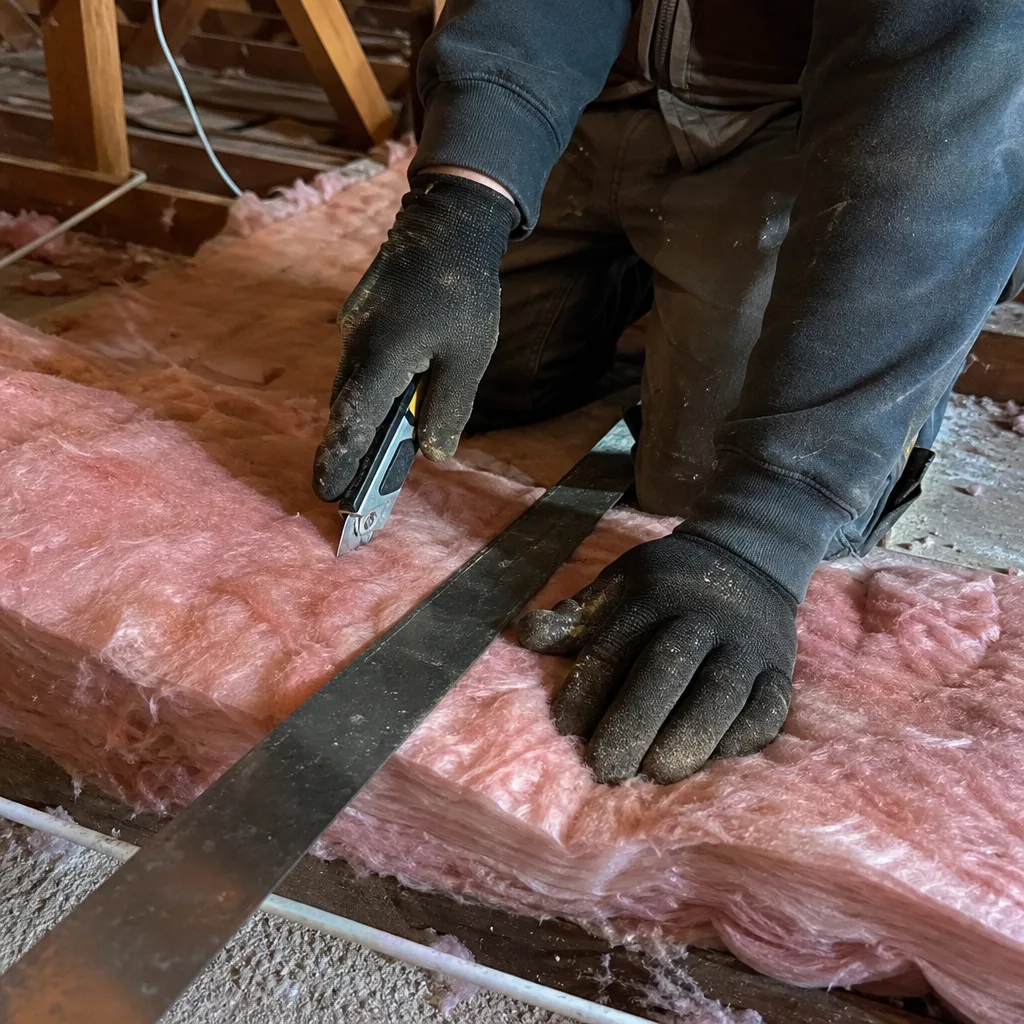
- Check insulation depth and distribution. Walk the attic perimeter. Look for spots where insulation has shifted, compressed, or gone missing entirely, especially near the eaves and around any recessed lighting.
- Inspect radiant barrier condition. If your attic has a radiant barrier, check for tears, sagging, or dust accumulation. A dusty radiant barrier loses significant reflectivity, which translates directly to higher attic temperatures.
- Verify ventilation pathways. Soffit vents, ridge vents, and gable vents need unobstructed airflow. Insulation that’s been blown or shifted over soffit vents blocks the intake air your attic needs to flush out heat.
- Look for rodent or pest activity. Spring is when rodents nest. Check for droppings, chewed insulation, or burrowed tunnels through batt or blown-in material.
- Scan for water staining on the roof deck. Winter and early-spring rains may have left their mark. Dark stains, mold spots, or warped sheathing mean moisture got in, and wet insulation performs dramatically worse than dry insulation.
One thing we notice in San Bernardino specifically: many older homes in neighborhoods like Del Rosa, Arrowhead, and north San Bernardino were built before current energy codes, and their attic insulation has settled far below what’s needed for today’s heat patterns. If you can see the tops of your ceiling joists, you’re under-insulated for this climate. In our experience as an insulation-only contractor, that’s the single most common issue we find in attics across the city.
Peak-Heat Monitoring: June Through September
Once summer heat arrives in San Bernardino, you can’t safely spend much time in the attic. But you don’t need to. Your home will tell you if the insulation is underperforming. The key is knowing which signals to read.
The most reliable early-warning indicators that your insulation isn’t keeping up with heat loading:
- Uneven room temperatures. When your living room stays comfortable but the west-facing bedroom runs 5 – 8 degrees warmer, that’s not an HVAC problem. That’s a thermal envelope problem, usually caused by uneven insulation coverage or air leaks in that zone.
- HVAC runtime creep. If your air conditioner is running 30 – 40 minutes longer per cycle than it did last summer, or cycling on more frequently, the heat load on the home has increased. Insulation degradation is a common culprit.
- Hot ceilings. Place your hand flat on the ceiling in the late afternoon. If it feels warm to the touch, your attic insulation isn’t stopping radiant heat transfer the way it should.
- Indoor temperature drops fast after sunset. A home that loses cool air quickly in the evening has both insulation and air sealing gaps. The cool air your AC produced all day is escaping into the attic.
Here’s the counterintuitive part: your energy bill confirms the problem after it’s already cost you money. These comfort signals show up weeks before the utility bill does. By monitoring them, you can catch insulation failures in June instead of discovering them in September.
For homes with spray foam insulation in San Bernardino, heat-season performance issues are rarer because closed-cell foam air-seals as it insulates, blocking the hot attic air from leaking into the living space. That air sealing benefit matters enormously during heat waves, when the temperature differential between attic and living space is at its widest.
Fire and Smoke Season Readiness: August Through October
San Bernardino sits downwind of multiple wildfire corridors. When the Santa Ana winds push smoke into the Inland Empire, the air quality outside can become hazardous for days at a time. What most homeowners don’t realize is that their insulation and air sealing quality directly determines how much of that particulate finds its way indoors.
Smoke particles are extremely fine, often between 0.3 and 0.7 microns. They don’t need a visible gap to enter your home. They follow air currents through the same invisible pathways that leak conditioned air all year: around recessed light fixtures, through top plates, around attic access hatches, and through any penetration in the ceiling plane.
What matters for smoke season specifically:
- The ceiling plane is the primary barrier. The attic is under negative pressure during hot weather. That means attic air, including smoke that’s settled in the attic space, gets pulled down into your living areas through even tiny gaps.
- Air sealing matters more than R-value for particulate. A thick layer of loose fiberglass might slow heat transfer but won’t stop smoke infiltration. A continuous air barrier, like a properly installed spray foam system, blocks the air movement that carries particles indoors. We install Icynene and Demilec spray foam products specifically because they perform both functions simultaneously.
- Attic access hatches are a common weak point. An unsealed attic hatch or pull-down stair is effectively a hole in your ceiling. During smoke events, it’s a direct conduit for contaminated attic air.
Preparation for smoke season should happen before August. The same air sealing work that improves your summer cooling efficiency and winter heat retention also reduces smoke infiltration. It’s one investment with three seasonal payoffs. A specialist who understands attic insulation in San Bernardino can identify and seal the bypasses that let outside air enter your home, whether it’s 100-degree air in July or smoke-laden air in September.
Winter Cold-Snap Prep: November Through February
San Bernardino winters are mild compared to the mountains, but every few years the city experiences freezing overnight temperatures. When that happens, a specific category of insulation failure gets exposed: pipe-adjacent gaps that have been invisible all summer.
During hot months, a small insulation gap near a water pipe costs you a little cooling efficiency. During a cold snap, that same gap can lead to a burst pipe and thousands of dollars in water damage. The stakes are different, even though the defect is the same.
Here’s what to check before winter arrives in San Bernardino:
- Insulation around exterior wall plumbing. Look under sinks, especially in kitchens and bathrooms on exterior walls. Feel for cold air coming through the wall penetrations. If you can feel a draft, the wall cavity insulation has a gap.
- Attic pipe penetrations. Vents and plumbing stacks that pass through the attic floor need insulation around them and sealed openings. Cold air can follow these pipes down into the home.
- Garage-adjacent walls. In homes with attached garages, the shared wall often has less insulation than true exterior walls. Pipes running through that wall are at higher freeze risk.
- Crawl space plumbing. If your San Bernardino home has a crawl space, check that under-floor insulation is still in place and that any plumbing in the crawl space is wrapped or the floor cavity is adequately insulated.
The specific product matters less than the continuity of coverage. We’ve seen homes with high-quality insulation in most of the wall cavity but a two-foot gap around a plumbing run, and that’s all it takes for a freeze event to cause damage. This is where material fit comes into play: blown-in insulation from brands like GreenFiber can be dense-packed into wall cavities to eliminate the voids that batt insulation sometimes leaves around pipes and other obstructions.
If your home shows signs of uneven heating during mild winter days, it’s worth getting an inspection before the temperature drops further. A Comfort Zone Insulation Co assessment looks at the entire thermal envelope, not just the visible insulation, because winter performance depends on how the whole system works together.
Year-Round Moisture and Pest Intersection
San Bernardino’s rainfall isn’t heavy by national standards, but when storms do arrive, they often come with intensity. The same atmospheric river events that cause flooding in the foothills can drive water into insulation cavities through small roof or flashing leaks. Once insulation gets wet, the damage timeline is unforgiving.
What happens when insulation gets wet in San Bernardino:
- Within 24 – 48 hours: Fiberglass and cellulose insulation begin losing R-value. Fiberglass batts compress and the trapped air pockets, which are what actually do the insulating, collapse or fill with water.
- Within 1 – 2 weeks: Mold growth becomes likely in cellulose and organic materials, especially in a warm attic. San Bernardino’s heat accelerates mold colonization compared to cooler climates.
- Within 30 – 60 days: Structural wood elements in contact with wet insulation may begin to show mold staining or early decay. The insulation itself typically cannot be dried and restored to original performance; replacement is the standard solution.
Pests compound the moisture problem. Rodent urine and droppings in insulation introduce biological contaminants and moisture. Rodents also tunnel through insulation, creating channels where air moves freely, effectively erasing the thermal barrier in those zones. In San Bernardino, roof rats are active year-round, and their favorite nesting site is attic insulation.
The seasonal trigger to watch for: after any heavy rain event, check interior ceilings for water staining. If you see a stain, get into the attic and assess the insulation above it. The longer wet insulation sits, the more extensive the remediation becomes.
How Insulation Type Affects Seasonal Performance
Not all insulation behaves the same way through San Bernardino’s seasonal swings. Understanding the differences helps you make informed decisions when repairs or upgrades are needed.
Fiberglass batts are the workhorse of residential construction. They’re affordable and code-compliant when installed properly, but they’re highly dependent on installation quality. Gaps around electrical boxes, pipes, and framing members create thermal bypasses. Over the heat season, these bypasses matter more because the temperature differential between attic and living space is so extreme. CertainTeed produces high-quality fiberglass batt products that perform well when installed with attention to continuity.
Blown-in cellulose and fiberglass solve many of the gap problems inherent to batts. Dense-packed blown-in insulation in San Bernardino fills cavities and around obstructions more completely. Cellulose, like the recycled-content products from GreenFiber, also has a slight edge in air infiltration resistance because the material’s density reduces airflow through the insulated cavity.
Spray foam takes a fundamentally different approach. Closed-cell spray foam, like the Demilec and Icynene systems we install, creates an air barrier and insulation layer in one application. See our Spray Foam Insulation Maintenance Checklist for San Bernardino Homeowners for seasonal care tips. That air sealing means the seasonal temperature swings in San Bernardino have less opportunity to drive air exchange between the attic and living space. For homes in fire-prone, smoke-prone, or extreme heat-loading areas, this combined performance is worth considering.
Mineral wool, such as Rockwool products, offers fire resistance and sound attenuation in addition to thermal performance. For San Bernardino homeowners concerned about fire defense or road noise from nearby freeways, this material class addresses multiple priorities.
The right choice depends on your home’s construction, your existing insulation condition, and which seasonal stress matters most to you. What matters most is having access to all of these options rather than being limited to whatever a single-product contractor happens to carry. Our guide on Choosing the Right Insulation Brand: A Buyer’s Guide for San Bernardino can help you compare. We install insulation and nothing else, which means our recommendations are based on what your home actually needs, not what we happen to have in the warehouse.
Common Mistakes to Avoid
- Adding insulation on top of a moisture problem. If your attic has a roof leak or condensation issue, piling more insulation on top traps the moisture and accelerates damage. Fix the moisture first, then insulate.
- Blocking ventilation in the name of more R-value. Pushing insulation tight against the roof deck without proper baffles chokes off ventilation. A hot, unventilated attic in San Bernardino can reach 160°F and cook your roof from below.
- Ignoring the attic access hatch. A quarter-inch gap around a 30-inch hatch moves as much air as a six-inch hole in the ceiling. Many homeowners treat the hatch as irrelevant; it’s often the single largest air leak in the ceiling plane.
- Waiting until summer to inspect attic insulation. By the time San Bernardino hits 95°F, attic entry becomes risky. The inspection window is April and early May, not July.
- Treating insulation as a once-every-30-years purchase. Insulation degrades. Rodents damage it. Moisture compromises it. Settling reduces it. Homes that haven’t had an insulation assessment in 15 years often need more than a simple top-off.
- Assuming more insulation fixes an air leakage problem. If air is moving through your ceiling plane, adding R-value without air sealing gives you a thicker blanket with holes in it. Air sealing and insulation are complementary, not interchangeable.
- Skipping the smoke-season preparation because “it won’t happen this year.” San Bernardino has experienced smoke events in nearly every recent fire season. The same air sealing work that improves comfort also protects indoor air quality during these events.
When to Call a Professional
Some insulation issues are visible and simple: a shifted batt, an obvious gap. Others require a trained eye and the right testing equipment. Our Spray Foam Insulation Troubleshooting: Common Problems and How to Fix Them covers what to look for. Call a professional when you notice persistent uneven temperatures between rooms that don’t resolve with HVAC adjustments, when your energy bills climb despite no change in usage patterns, when you see moisture staining on ceilings, when you find rodent activity in the attic, or when you’re preparing the home for a major seasonal shift and want an expert assessment before problems surface. Comfort Zone Insulation Co offers free estimates in San Bernardino. Call (855) 341-7856 and we’ll evaluate your insulation system as a whole, identify what’s working, what isn’t, and what makes sense to address first.
Frequently Asked Questions
Twice a year is the right cadence for San Bernardino: once in April or early May before summer heat, and once in late October before winter cold snaps. These two checks align with the seasonal stresses that most affect insulation performance, and they happen before attic temperatures become dangerous or uncomfortable for entry.
Current California energy code (Title 24) requires attic insulation of at least R-38 for most new construction and major remodels in San Bernardino’s climate zone. Many older homes in San Bernardino have R-19 or less. If you can see ceiling joists above the insulation, you’re below modern standards. Call (855) 341-7856 for a free attic assessment to see exactly what you have and what upgrading would mean for your comfort and energy use.
In many cases, yes. Blown-in fiberglass or cellulose can be added directly over existing insulation to reach current R-value standards. The exceptions are when the existing insulation is wet, moldy, or heavily contaminated by rodents, in which case removal and replacement is necessary. A professional inspection determines which path is appropriate for your attic.
Spray foam’s air-sealing properties reduce the air exchange between your attic and living space, which means fewer smoke particles enter the home. Products like Icynene and Demilec are specifically designed to function as air barriers as well as insulation. The smoke mitigation is an additional benefit of the same air sealing that improves energy performance year-round.
Attic insulation projects in San Bernardino typically range from $1,800 to $4,500 depending on attic size, existing insulation condition, material type, and whether air sealing is included. Blown-in cellulose from GreenFiber trends toward the lower end; closed-cell spray foam from Icynene or Demilec trends toward the higher end but delivers air sealing performance that loose-fill doesn’t. Call (855) 341-7856 for an exact quote. Estimates are free.
Repair is cheaper when damage is localized: one wet section, one rodent-damaged corner, one compressed area. Replacement is the better value when damage is widespread, the insulation has settled significantly, or the original installation quality was poor. In our experience, homes with 20-year-old insulation that’s been through multiple San Bernardino heat cycles and at least one pest event usually benefit more from replacement than from ongoing patch repairs. A free inspection gives you an honest answer for your specific situation.
The Bottom Line
San Bernardino doesn’t have four equal seasons, and your insulation shouldn’t be treated like it does. The city’s insulation needs three things: a pre-summer inspection before attic heat makes entry unsafe, smoke-season air sealing that blocks particulate infiltration, and cold-snap prep that protects pipes and plumbing from freeze risk. Seasonal vigilance, combined with understanding which insulation type serves your home best, keeps your home holding the temperature you set through every season. The team at Comfort Zone Insulation Co inspects, diagnoses, and repairs insulation systems across San Bernardino year-round. Call (855) 341-7856 for a free estimate and a clear, honest assessment of what your home needs next.
Written by the team at Comfort Zone Insulation Co, serving San Bernardino since 2012.