
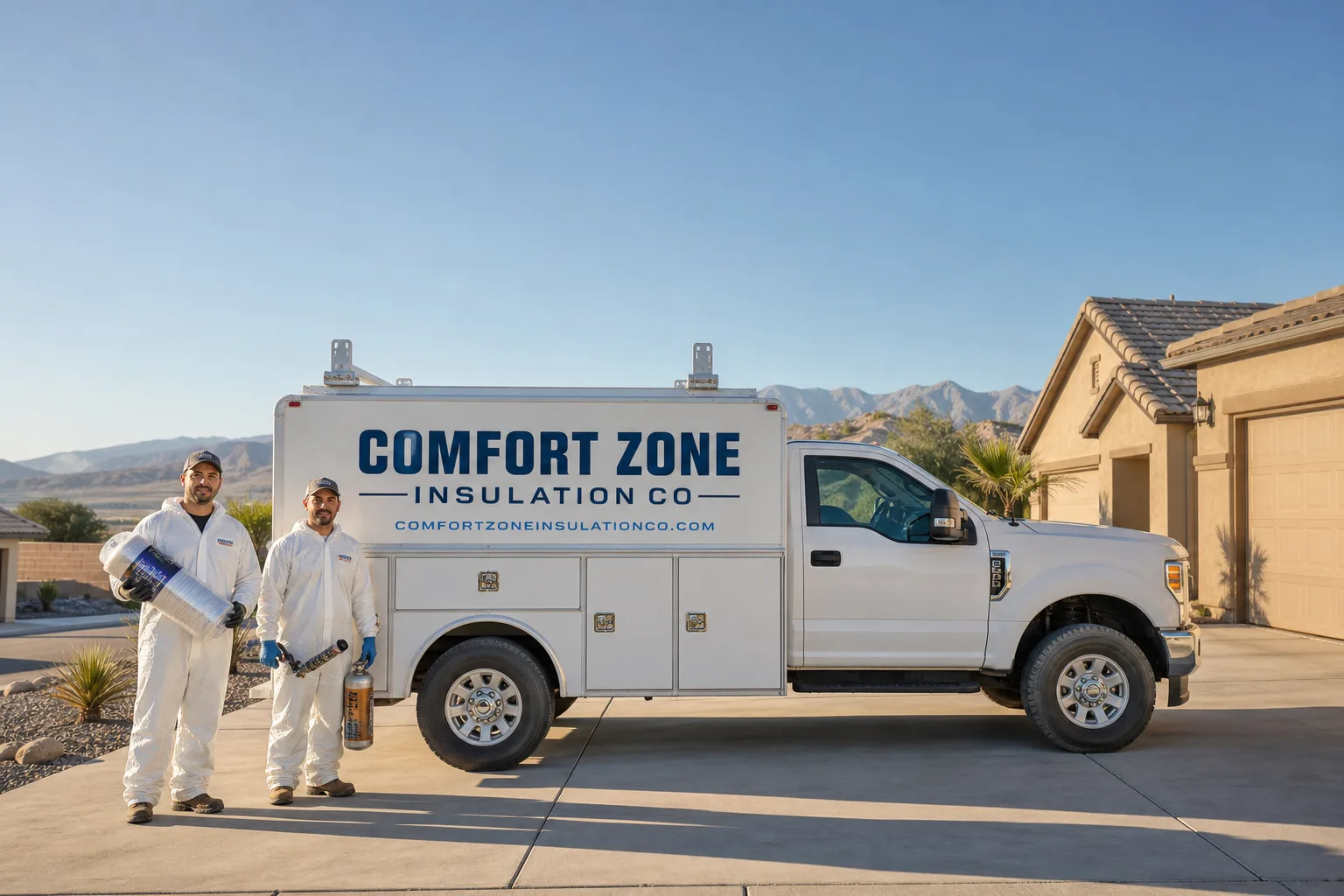
Fast, Reliable Attic Insulation Across Coto De Caza
Attic insulation replacement in Coto De Caza typically runs $2,800 to $6,500 for a standard 3,000-square-foot estate home, with same-week scheduling available. We know the guard-gated entry process, the ARB review timelines, and how to work fast once we’re through the gates. Our team works throughout the 92690 zip code, and we answer our own phones at (855) 341-7856. If your upstairs rooms bake in July or your air conditioner runs nonstop through August, the attic is almost always where the problem starts.
The homes here are not one-size-fits-all. They’re custom Mediterranean and Santa Barbara-style builds from the 1980s through 2000s, most with tile roofs and vaulted ceilings that punish insulation mistakes. At Comfort Zone Insulation Co, we install insulation and nothing else. That focus matters here, because a Coto De Caza attic usually needs more than a quick top-up. It needs someone who reads the roofline, checks the soffit vents, and knows what the architectural review board will flag before the first batt gets laid.
Why Comfort Zone Insulation Co Is Coto De Caza’s Preferred Attic Insulation Company
We’re not a general contractor who does insulation on the side. We think about air sealing, venting, and thermal boundaries all day, which is what a home in this community deserves. Our Attic Insulation work in Coto De Caza has taken us into nearly every neighborhood inside the gates, from The Forest to The Village to The Wagon Wheel. We know the layouts, the access points, and the kind of construction quirks that come with homes built across three different decades.
We show up with a plan and the right material, not a truck full of whatever fiberglass we happened to over-order last week. We’re authorized installers for Owens Corning, Rockwool, Johns Manville, and Knauf, among others, so we select the insulation that fits the specific attic profile. For a vaulted ceiling with limited depth, Rockwool batts make sense. For a wide-open truss attic where long-term stability matters, Owens Corning float-style fiberglass holds its R-value. The choice changes from house to house, and that’s the point.
Noel Carrasco leads our crew with the belief that the attic comes first in any comfort conversation. He trained our team to diagnose roof-level problems before chasing wall or crawl-space fixes. In Coto De Caza’s inland summer heat, that diagnostic order saves homeowners thousands in misdirected work. Call us at (855) 341-7856 and you’ll speak with someone who has actually been inside a Wagon Wheel attic in August, not a call center reading from a script.
Attic Ventilation in Coto De Caza
Attic ventilation work in Coto De Caza is typically the difference between an insulation job that holds R-value and one that quietly fails. When hot air is trapped under a tile roof with no path out, it heats the insulation from the top down. In a place where summer afternoons push attic temperatures past 140°F, ventilation becomes an installation requirement rather than a recommendation.
The work involves checking soffit and ridge vent balance, clearing blocked pathways, and in many cases adding intake area so the roof geometry can actually breathe. It costs between $450 and $1,800 depending on the complexity of the roof lines and how much corrective venting is needed. On a 1980s Mediterranean-style home where ridge vents were never part of the original design, we often see a 15 to 20-degree attic temperature drop once ventilation is corrected. That translates to air conditioning demand that finally matches what the equipment was sized to handle.
Balancing intake and exhaust airflow
A tile roof on a custom Coto De Caza home frequently has plenty of exhaust relief at the ridge but almost no intake at the soffits. That imbalance pulls air from conditioned living space instead, which means the AC fights itself all afternoon. We measure the vent area, calculate the ratio against the attic floor square footage, and fix the intake side before adding insulation on top.
Coordinating with existing rooflines
We have had to match vent profiles to the ARB-approved look on more Coto De Caza homes than anywhere else we work. If the soffit is stucco-wrapped with minimal openings, adding intake requires careful placement that works visually and functionally. We install low-profile vents that blend in and still deliver the airflow the attic needs.
Radiant Barrier in Coto De Caza
Radiant barrier installation in Coto De Caza is one of the highest-return upgrades for tile-roofed, high-ceiling estate homes that bake in the inland sun, and it pairs well with Reflectix repair in Coto De Caza for complete radiant heat control. The material works by reflecting radiant heat emitted by the roof deck before it has a chance to soak into the insulation below. That matters most when sun exposure is direct and afternoon temperatures stay elevated for hours, which is exactly what the 92690 climate delivers from June through October.
The cost varies by roof complexity and attic accessibility, but most Coto De Caza homes fall between $1.50 and $3.20 per square foot for material and installation. That range reflects how much of the attic floor area gets covered, whether we are working around ducting, and whether the roof is a simple barrel tile or a multi-plane custom design. For a large open-truss attic, a full radiant barrier install usually changes the upstairs feel inside the first week.
How it works with your existing insulation
Radiant barrier and blown-in insulation solve two different problems. The barrier keeps radiant heat from penetrating into the attic space in the first place, while insulation slows conductive heat from moving into the living areas below. In Coto De Caza’s summer climate, doing one without the other leaves performance on the table. We recommend pairing them on most jobs here, especially when the upstairs runs five to eight degrees warmer than the main floor.
ARB-conscious placement
We have seen radiant barrier jobs in Coto De Caza get flagged because the reflective surface was visible through existing vent openings. The ARB cares about roofline appearance, and a bright silver reflection can draw attention. We install the barrier on the attic floor or underside of the roof deck where it performs best without creating any exterior visual change, which keeps HOA review clean and the thermal benefit in place.
Trusted Brands We Service in Coto De Caza
We stock and install more than one brand so the material matches the house, not the other way around. Coto De Caza homes are varied enough that a single product line would be a compromise, and we do not make compromises in a home that costs this much to build. Owens Corning fiberglass is our go-to for deep attic spaces where R-value needs to stay stable over years of heat exposure. Rockwool batts work well in vaulted ceiling cavities where we need density and fire resistance without sag. Knauf and Johns Manville give us flexibility on standard retrofit work. We keep the most common sizes and vapor-barrier accessories available locally so a Coto De Caza job does not stall waiting on special orders.
Common Attic Insulation Problems We See in Coto De Caza Homes
- Sagging fiberglass in vaulted bays. On 1980s and 1990s Mediterranean-style homes, original batts in cathedral ceilings often lose loft under relentless attic heat. The R-value drops from the advertised R-30 to something closer to R-11 in the worst bays, which explains why one upstairs bedroom never cools down even when the AC runs all day.
- Radiant barrier visible through vents. A previous install might have been done without thinking about the tile roof profile. If reflective sheen is visible from the street or through gable vents, the ARB can issue a correction notice. We replace or reposition the barrier so it works and the roofline stays unchanged.
- Detached barn insulation without vapor barriers. In The Wagon Wheel, tack rooms and guest casitas get treated like residential spaces by some contractors. Without a proper vapor boundary between the conditioned area and the agricultural side, condensation forms inside the wall assembly and ruins both insulation and framing over time. We repair those failures correctly.
- Blocked soffit vents under stucco overhangs. Custom homes from the 1980s sometimes have soffits that were originally built with minimal venting and later covered by new paint or stucco patches. When attic airflow drops to zero, insulation becomes a heat sponge. We restore intake first, then reassess the thermal layer.
Pricing for Attic Insulation in Coto De Caza, CA
Most attic insulation replacement jobs in Coto De Caza range from $2,800 to $6,500, depending on attic square footage, whether we’re matching existing vent architecture, and how much old material needs removal first. A straightforward blown-in top-up over an existing layer runs $1,200 to $2,400. Adding a radiant barrier typically adds $1.50 to $3.20 per square foot to the project.
What drives cost higher in this community compared to nearby cities is the roof complexity. Barrel tile profiles, vaulted ceiling bays, multiple roof planes, and detached structures all add labor. We give you a fixed, written price before we start, and we will never invent a surprise line item after the fact. Call (855) 341-7856 and we will walk your attic with you, take measurements, and hand you a real number while we are still on site.
We Also Serve Cities Near Coto De Caza
Our team covers the surrounding South Orange County area, including Mission Viejo, Lake Forest, Laguna Hills, and Rancho Santa Margarita. If you are in any of those communities and want the same specialist approach to Attic Insulation, the process and the pricing are the same. We schedule Coto De Caza and nearby appointments in the same week whenever possible.
Serving Coto De Caza, CA — Our Local Coverage Area
We’re based in the Coto De Caza area and know this community well. Use the map below to see our service coverage — if you’re nearby, we can almost certainly help.
FAQs About Attic Insulation in Coto De Caza
Most interior attic insulation work does not require ARB approval because it doesn’t change the exterior appearance of the home. However, any change to venting, roof sheathing, or anything visible from the street can trigger a review. We can tell you during the estimate whether your specific job needs paperwork, and we handle the documentation ourselves so you’re not left guessing. Call (855) 341-7856 to get a read on your specific roofline.
The key is maintaining an air gap between the insulation and the roof deck so moisture that gets under the tile has somewhere to go. We use dense batt materials like Rockwool or high-density fiberglass in vaulted bays, never loose-fill. We also check that the original vapor retarder, if one exists, is still intact, and we add one where local building practice calls for it. Most vaulted ceiling condensation we see here traces back to blocked ventilation, not the insulation itself.
For most attics in the 92690 zip code, R-38 to R-49 is the right target, with R-49 being the better choice for large open-volume homes where the attic floor is accessible. Vaulted ceiling cavities may realistically max out lower depending on the available depth, and that’s fine if the ventilation and air sealing are done correctly. We measure the existing cavity depth and tell you exactly what R-value your home can hold before we recommend a material. Call (855) 341-7856 for an attic reading.
Yes, and we treat those structures differently than main-house attics. Tack rooms and guest casitas above detached barns need a vapor boundary between the conditioned space and any agricultural area, plus insulation that handles the wider temperature swings those structures see. We’ve re-insulated tack rooms in Coto De Caza that were originally done as basic residential work, and the difference in condensation control is immediate. The same crew handles the main house and the barn in one visit.
Poor ventilation turns even high-quality insulation into a heat sink. When a tile roof attic in Coto De Caza reaches 140°F or more, the insulation below absorbs that heat and slowly releases it into the home all evening. We treat ventilation and insulation as one system, which means we measure airflow before adding material. That’s the only way to guarantee the R-value you paid for actually performs through a Coto De Caza summer.
Written by Noel Carrasco, Owner at Comfort Zone Insulation Co, serving Coto De Caza and surrounding Orange County communities.