
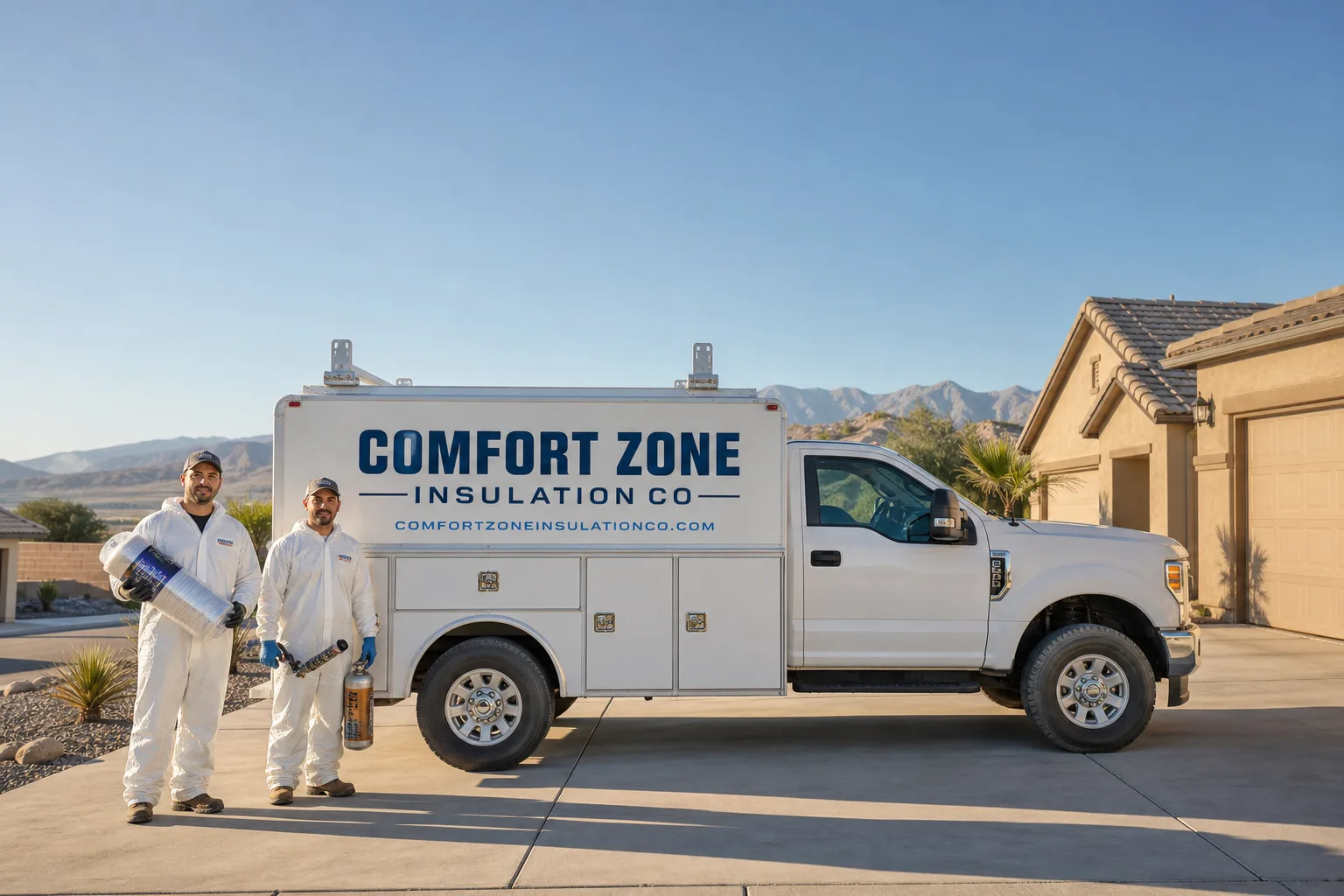
Fast, Reliable Attic Insulation Across Costa Mesa
Attic insulation in Costa Mesa is a moisture-control job before it’s a temperature job. The marine layer that rolls in off the Pacific most mornings pushes cool, damp air into attics across 92626, 92627, and 92628, and that changes what belongs up there and what doesn’t. Our crews work in Costa Mesa weekly, from the Eastside bungalows near 17th Street to the two-story subdivisions off Baker. We’re insulation-only specialists, so when we open an attic hatch here, we know what decades of June Gloom dampness does to old blown-in and what’s needed to make the house hold temperature again. Call (855) 341-7856 and we’ll have someone out to look, usually within a day or two.
Why Comfort Zone Insulation Co Is Costa Mesa’s Preferred Attic Insulation Company
We install insulation and nothing else. That matters in Costa Mesa because the right call here is often the opposite of what a general contractor would default to, since most attics we open west of the 55 don’t need more R-value stacked on a damp problem. They need the old material out, the air leaks sealed, and a moisture-tolerant product put back in. Costa Mesa homeowners tell us the same thing: rooms that never hit the set temperature, a faint musty smell near the ceiling, energy bills that drift higher each summer. We trace it to the attic first, because in this city that’s where the problem usually starts.
Noel Carrasco leads our team, and the standard he sets is simple: diagnose before you quote. We don’t sell square footage. We sell a home that holds the temperature you set, and that begins with figuring out whether the attic is still doing its job or quietly failing.
Attic Mold Removal in Costa Mesa
Attic mold removal in Costa Mesa is one of the most common calls we take from 92627, and it’s almost always tied to the marine layer rather than a roof leak. Cool, damp morning air settles into poorly ventilated attics, condenses on the underside of the roof deck, and feeds mold on the sheathing, rafters, and any exposed insulation. We remove contaminated material, treat the affected framing, correct the airflow or vapor problem that caused it, and leave the attic dry. In the older Eastside bungalows, this often means pulling original blown-in that has absorbed years of coastal moisture.
Removal and Treatment
We pull out the contaminated insulation first. Then we treat the mold on the framing and sheathing so spores stop circulating through the ceiling plane into the living space. Finally we address the moisture driver, usually a venting or air-sealing issue, before any new insulation goes back in.
Moisture Source Correction
Killing mold without fixing the moisture just means it comes back. In Costa Mesa, the fix is often adding soffit-to-ridge airflow or sealing the attic floor so damp indoor air stops rising into the cavity. We do both as part of the same job.
Attic Insulation Removal in Costa Mesa
Attic insulation removal in Costa Mesa is frequently the right starting point in homes built before 1980, especially on the Eastside and Westside of 92627. Decades of marine-layer dampness leave original blown-in settled thin, compacted, and often musty, so adding new material on top just buries the problem. We vacuum out the old insulation, expose the attic floor, and give you a clean surface for air-sealing and fresh insulation. The job typically includes hauling the old material out and leaving the attic ready for whatever comes next.
When Removal Makes Sense
You need removal when the existing insulation is damp, moldy, pest-damaged, or compressed to the point it no longer insulates. You also need it before air-sealing, because unless the attic floor is clean, you can’t see the top plates, wire penetrations, and plumbing chases that leak conditioned air.
Prep for New Insulation
After removal, we inspect the attic floor from hatch to eaves. We seal penetrations, box any recessed light housings, and confirm the venting path is open. Only then do we blow or bat in new material. That sequence is what turns a damp Costa Mesa attic into one that actually performs.
Trusted Brands We Service in Costa Mesa
We carry eight leading insulation brands so you’re not limited to whatever a contractor happened to order that week. For Costa Mesa attics, we specify GreenFiber blown-in cellulose for its recycled content and moisture tolerance, Owens Corning batts for clean cavity fills in 1970s-era framed attics, and Rockwool when a homeowner wants fire resistance and sound control in addition to thermal performance. Johns Manville and Knauf round out the fiberglass options for retrofit and top-up work. Because we stock material from multiple manufacturers, turnaround for Costa Mesa jobs stays fast, and the right product is selected for your attic, not for our inventory.
Common Attic Insulation Problems We See in Costa Mesa Homes
- Settled, musty blown-in in 92627 bungalows. Original 1950s and 60s blown-in compresses to a couple of inches and absorbs coastal dampness. It insulates poorly and smells like a damp crawlspace.
- Recessed can lights punching through the envelope. 1970s and 80s two-stories in 92626 often have original can lights that are vented straight into the attic. They leak conditioned air all year and make the attic hot in what little summer heat we get.
- Thin original cavities that hold moisture. Older Eastside and Westside homes have shallow wall and ceiling cavities. When damp marine air condenses inside them, it feeds mold instead of holding R-value.
- Vaulted ceilings with no insulation path. Some 92626 homes have vaulted or cathedral ceilings where the original build left almost no room for insulation. These attics often need a targeted retrofit strategy, not a blanket fix.
Pricing for Attic Insulation in Costa Mesa, CA
A typical attic insulation job in Costa Mesa runs $1,800 to $4,500 for removal and re-insulation of a standard 1,000 to 1,500 square foot attic with blown-in product. Insulation removal alone usually runs $1.20 to $2.00 per square foot, depending on depth and condition. Top-up work over existing insulation is cheaper, often $900 to $1,800 when the old material is dry and just under depth. Air-sealing as part of the same job adds $400 to $1,200, and boxing recessed lights runs $40 to $90 per fixture. These are Costa Mesa market ranges, not inland numbers. Call (855) 341-7856 for an exact quote, and estimates are free.
We Also Serve Cities Near Costa Mesa
Comfort Zone Insulation Co serves Costa Mesa and the surrounding coastal and inland communities. We work regularly in Newport Beach, Fountain Valley, Huntington Beach, and San Joaquin Hills. If you’re nearby and your attic has the same marine-layer moisture issues, our Attic Insulation team can help.
Serving Costa Mesa, CA — Our Local Coverage Area
We’re based in the Costa Mesa area and know this community well. Use the map below to see our service coverage — if you’re nearby, we can almost certainly help.
FAQs About Attic Insulation in Costa Mesa
The marine layer pushes cool, damp air into attics most mornings, and without enough airflow or air-sealing, that moisture condenses on framing and gets absorbed by insulation. It’s not a heat problem here, it’s a condensation problem. The fix is removal, air-sealing, and a venting strategy before new insulation goes in. Call (855) 341-7856 and we’ll tell you what’s actually happening up there.
Usually not. If that original blown-in has settled, gone musty, or absorbed decades of coastal dampness, adding new material on top just seals the problem in. We recommend removal first in most 92627 bungalows, then air-sealing, then fresh blown-in. It costs more than a simple top-up, but it actually solves the problem.
Original can lights from the 1970s and 80s are vented to the attic by design, which means they punch open holes through the attic floor. Conditioned air leaks out of the living space, and damp attic air can migrate down around the trim. We box and seal them before insulating. Call (855) 341-7856 for an estimate and we’ll count the cans while we’re quoting.
No. Costa Mesa’s mild, damp climate means the priority is moisture control, not maximum R-value. Air-sealing and moisture-tolerant material matter more here than stacking R-60 on top of a damp attic. A well-sealed R-38 in Costa Mesa outperforms a leaky R-60 every time.
We use GreenFiber blown-in cellulose for moisture tolerance, Owens Corning batts for framed cavities, and Rockwool when fire resistance and sound control matter. The right material depends on your attic, not on what we have in the truck. That’s the whole point of carrying eight brands.
Written by Noel Carrasco, Owner at Comfort Zone Insulation Co, serving Costa Mesa and surrounding Orange County communities.