
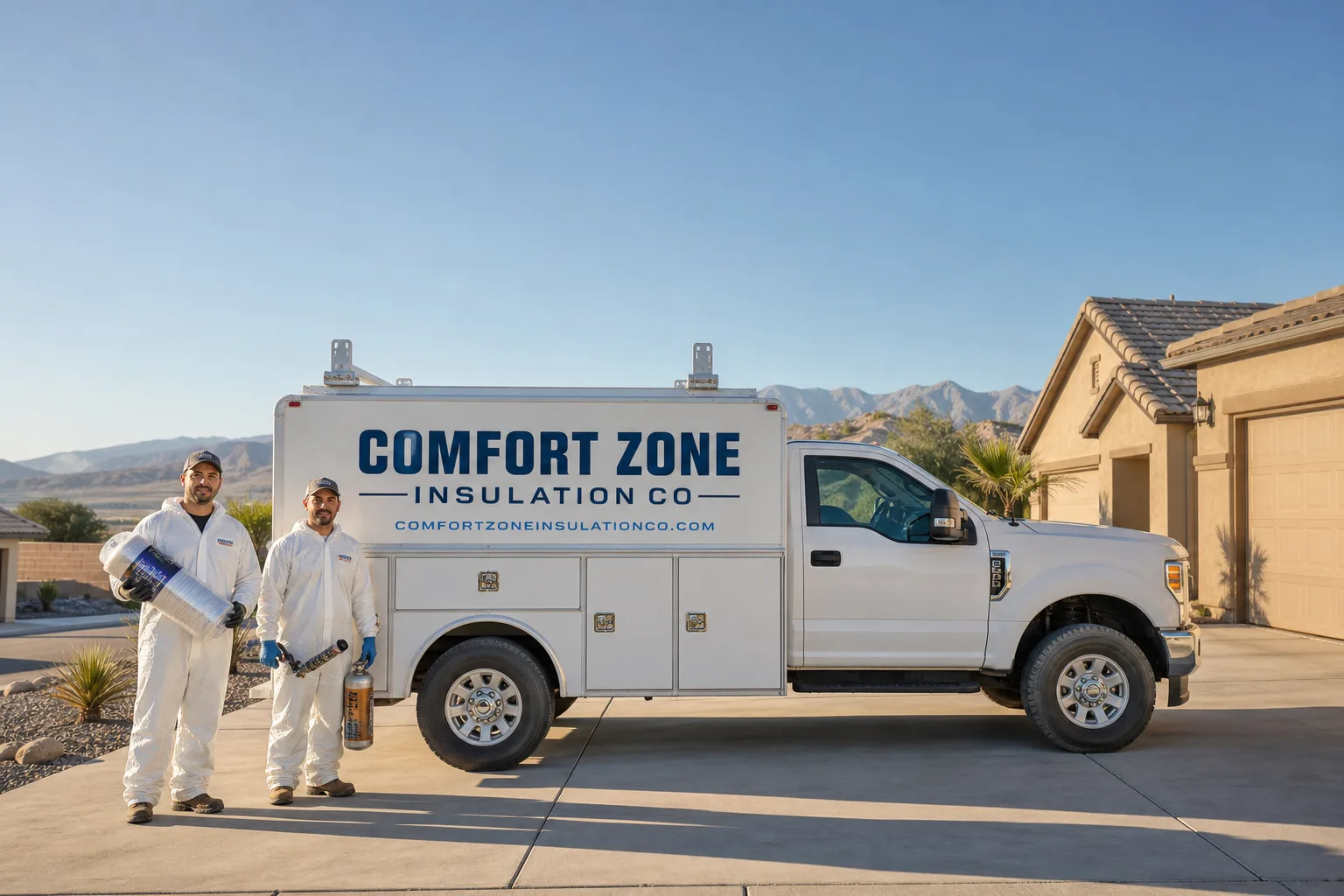
Fast, Reliable Spray Foam Insulation Across San Bernardino
Spray foam insulation in San Bernardino typically runs $2.80 to $6.50 per board foot installed, with most attic deck projects landing between $4,200 and $9,800 depending on square footage and foam type. We respond to most San Bernardino neighborhoods within 48 hours for estimates and can often schedule installation within the same week. The real question here isn’t whether spray foam works. It’s whether your specific attic is ready for it. In San Bernardino’s inland heat, the answer depends on your roof deck temperature, your venting, and what’s already sitting up there from the Eisenhower administration. Call (855) 341-7856 and we’ll walk the attic with you before quoting a single number.
Why Comfort Zone Insulation Co Is San Bernardino’s Preferred Spray Foam Insulation Company
We insulate. That’s the whole job. No roofing side hustle, no HVAC add-on, no general contracting. When you call us about spray foam in San Bernardino, you’re talking to someone who thinks about air sealing and thermal boundaries all day, every day. Noel Carrasco leads our crew, and he’s been in enough San Bernardino attics to know the difference between a 1958 tract home off Baseline and a 1920s bungalow near downtown. That matters here because the housing stock changes block by block.
Our San Bernardino customers repeatedly tell us the same thing: their west-facing rooms bake by 3 PM no matter what the thermostat says. We hear it from homeowners near Arrowhead Country Club, up by Kendall Drive, and out in the older blocks near Mount Vernon Avenue. The fix is rarely just adding insulation. It’s diagnosing why the heat is winning. We carry spray foam systems from Icynene and Demilec alongside fiber and mineral options from Rockwool, Knauf, and Johns Manville. That means when we walk your attic, the recommendation fits your house, not our inventory sheet.
Open Cell Spray Foam in San Bernardino
Open Cell Spray Foam in San Bernardino is the workhorse for sealing low-pitch attics on 1950s-70s tract homes where the roof deck is getting baked all afternoon. Open-cell foam expands to fill irregular cavities, air-seals the sloped ceiling plane, and lets moisture move through so you aren’t trapping condensation in a 1960s roof assembly that was never designed to be airtight. In this market, an open-cell attic deck application generally runs $2.80 to $4.50 per board foot, which puts most San Bernardino attics in the $4,500 to $8,000 range depending on depth and access.
When the Attic Becomes Conditioned Space
Open-cell works best when you want to bring the attic inside the home’s thermal envelope. That’s often the right move for San Bernardino homes with ductwork running through a scorching attic. When the attic hits 140°F in August, your AC is fighting to push cool air through ducts sitting in an oven. We spray the deck, the attic cools down, and the system stops working against itself.
Venting Checks Before Foam Touches Wood
We won’t spray open-cell against a sun-baked west-side roof deck until we’ve confirmed ridge and eave venting is actually moving air. Blocked soffit intakes are common in San Bernardino tract homes from the 1960s. If those are sealed shut, the foam seals the attic too, and you’ve locked the heat in instead of out.
Spray Foam Insulation Contractors in San Bernardino
Spray Foam Insulation Contractors in San Bernardino aren’t all the same, and the difference shows up in how they handle old housing stock. We walk the attic before quoting because San Bernardino’s pre-1980 homes have quirks: settled batts hiding under plywood, knob-and-tube remnants in pre-war bungalows, bathroom fans venting into the attic instead of outside. A contractor who quotes by phone doesn’t see any of that. Our process is diagnosis first, foam second.
What the Crew Actually Does
We start by checking attic temperature and airflow. On a 1962 tract home off Mount Vernon, our crew found original fiberglass batts settled to a few inches and the roof deck spiking well over 140°F on an August afternoon. We corrected the blocked soffit intakes, verified ridge vent flow, then applied open-cell Icynene to the sloped deck. The west-facing rooms stopped baking by mid-afternoon, and the AC no longer ran flat-out from noon.
Closed-Cell for Specific San Bernardino Conditions
Some jobs call for closed-cell instead. Rim joists, crawl spaces, and any area with potential moisture exposure benefit from the denser, vapor-retarding properties of closed-cell. For a San Bernardino attic with roof deck facing full afternoon sun, closed-cell’s higher R-value per inch helps, but only if ventilation is addressed first. Otherwise you’re paying premium per board foot to trap heat.
Trusted Brands We Service in San Bernardino
We install Icynene and Demilec spray foam systems, two of the most proven open- and closed-cell product lines in North America. For San Bernardino customers who prefer mineral or fiber options, we also carry Rockwool, Knauf, and Johns Manville. Carrying multiple brands matters here because one product doesn’t fit every attic. A tight 1950s low-pitch roof over the west side wants a different solution than a newer build near Highland. We keep our San Bernardino installs moving without delays waiting on product because we’re authorized with eight manufacturers. The right material for your specific situation, not whatever we happened to order this week.
Common Spray Foam Insulation Problems We See in San Bernardino Homes
- Foam sprayed over a sun-baked west-side roof deck without venting checks. The deck hits 140°F-plus in August, the foam seals the attic, and the Cajon Pass wind can no longer flush the space. Result: a hot attic that never cools down. We check ridge and eave airflow before any foam goes in.
- Original settled fiberglass batts left in place and sealed over. The old insulation adds nothing once compressed and buried under foam. We remove or top it up first so you aren’t paying to seal in dead material.
- Low-pitch 1950s-70s attics sealed too tight during open-cell application. These roof assemblies weren’t designed for airtight conditions. Condensation builds, wood gets damp, and the homeowner discovers the problem years later. Venting strategy has to be designed in, not assumed.
- Bathroom fans and dryer vents dumping into the attic. Common in older San Bernardino homes. Once foam seals the attic, that moisture has nowhere to go. We locate and correct these before spraying.
Pricing for Spray Foam Insulation in San Bernardino, CA
Expect open-cell attic deck spray foam in San Bernardino to run $2.80 to $4.50 per board foot, with closed-cell running $4.50 to $6.50 per board foot. A typical 1,200 to 1,800 square foot attic deck lands between $4,200 and $8,500 for open-cell, or $6,000 to $11,000 for closed-cell. Factors that move your number: attic accessibility, existing insulation removal, venting corrections, and whether we’re doing rim joists or crawl space work at the same time. We give free estimates and quote exact numbers after walking the attic. Call (855) 341-7856 to schedule yours.
We Also Serve Cities Near San Bernardino
Along with San Bernardino, our crews cover Muscoy, Highland, Loma Linda, and Rialto. If you’re in one of those nearby communities and dealing with the same inland heat loading your attic, call (855) 341-7856. We treat every attic the same way: diagnose first, then recommend the right Spray Foam Insulation material for your specific roof.
Serving San Bernardino, CA — Our Local Coverage Area
We’re based in the San Bernardino area and know this community well. Use the map below to see our service coverage — if you’re nearby, we can almost certainly help.
FAQs About Spray Foam Insulation in San Bernardino
Yes, but only with ventilation addressed first. These low-pitch attics bake in the inland sun, and spray foam against the deck brings the attic into conditioned space. That works when ridge and eave venting is confirmed working. Skip that step and you’ve sealed heat in. Call (855) 341-7856 for a free attic assessment of your specific roofline.
Because a hot roof deck can push San Bernardino attic temperatures past 140°F, which defeats even decent batt insulation. Ventilation carries that heat out before it sits against your ceiling. Spray foam changes the ventilation equation by sealing the attic, so airflow has to be verified and often improved before foam goes in.
Yes. Closed- and open-cell spray foam adhesively bond to the roof deck and won’t blow around like loose fiberglass. The real concern with Santa Ana winds is what they used to do: flush hot attic air out. Once foam seals the attic, that passive flushing is gone, so mechanical venting or conditioned-space design has to replace it. We account for that on every San Bernardino job.
No. Settled fiberglass batts from the 1960s have lost most of their R-value and compress further under foam. They also hide problems like old wiring or moisture stains. We remove the old material, address what’s underneath, then apply fresh insulation. That’s the only way the foam performs as designed. Call (855) 341-7856 for an attic inspection before you decide.
Open-cell usually fits better for attic decks because it allows moisture to pass and air-seals irregular 1950s-70s framing. Closed-cell makes sense for rim joists, crawl spaces, or if you need maximum R-value per inch. The right answer depends on your attic’s temperature, venting, and existing condition. We walk it with you and show you what we see before recommending either.
If your San Bernardino attic runs hot all summer and your AC runs harder than it should, let’s look at it together. Call Comfort Zone Insulation Co at (855) 341-7856 for a free estimate. We’ll walk the attic, check the venting, measure the deck temperature, and tell you exactly what your house needs. No guessing, no pressure, just a clear answer.
Written by Noel Carrasco, Owner at Comfort Zone Insulation Co, serving San Bernardino and the surrounding Inland Empire.