
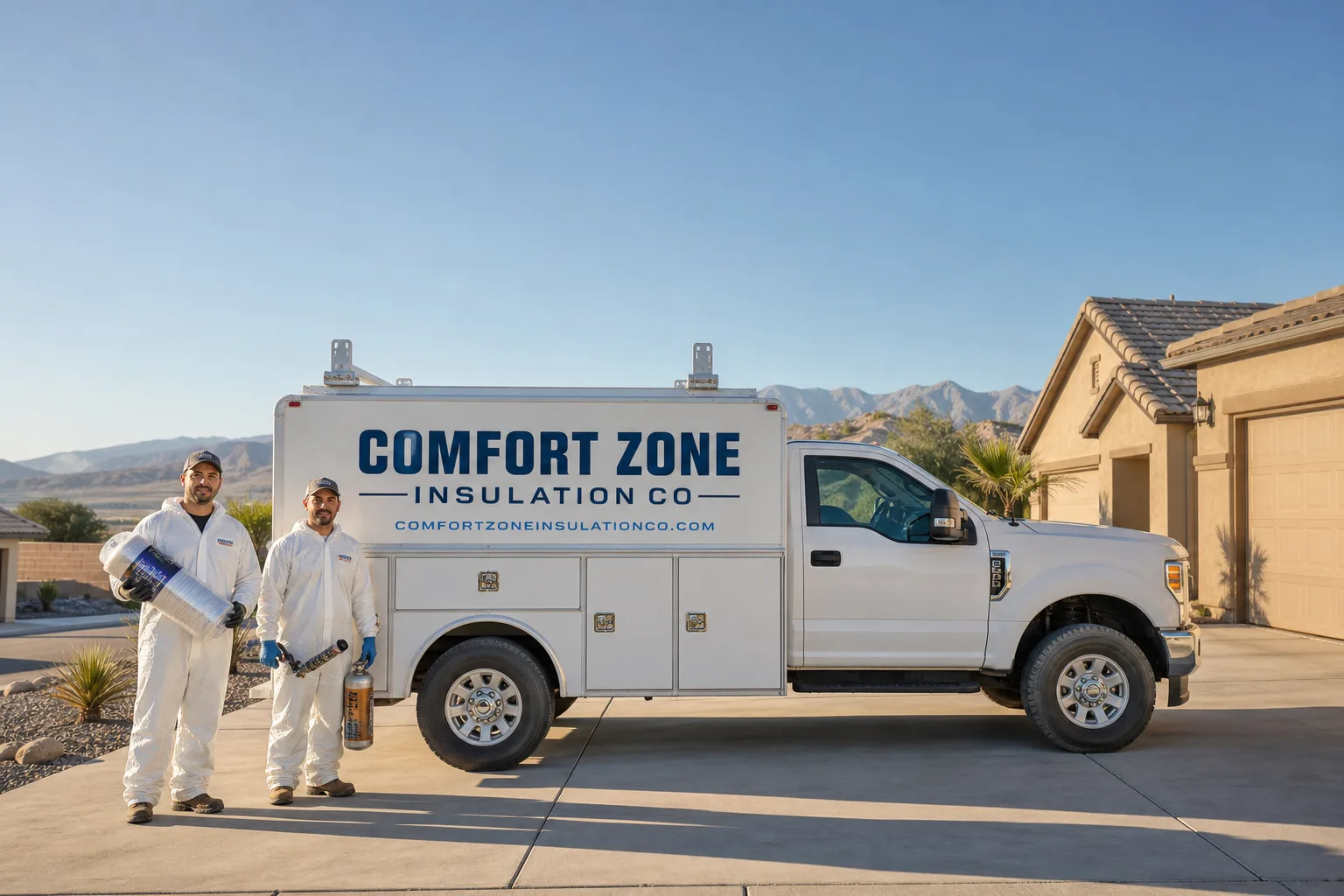
Fast, Reliable Spray Foam Insulation Across Redondo Beach
Spray foam insulation in Redondo Beach is a different spec than what works 10 miles inland. The marine layer and salt air off the Santa Monica Bay push moisture into attics and crawlspaces in the 90277 and 90278 coastal band, which means the foam has to manage vapor and corrosion, not just R-value. That’s the difference between a sealed envelope that stays dry and a foam job that traps fog-driven moisture against your sheathing. If your bungalow near the Esplanade or up in the Golden Hills runs damp, mold-tinged, or just never holds temperature on foggy summer mornings, call us at (855) 341-7856 and we’ll diagnose what’s actually happening before we ever touch a hose.
Why Comfort Zone Insulation Co Is Redondo Beach’s Preferred Spray Foam Insulation Company
We install insulation and nothing else. That focus matters in Redondo Beach because the housing stock here demands diagnostic discipline: 1950s stucco bungalows on Knob Hill sit two blocks from new three-story townhomes in 90278, and the right foam spec for one is wrong for the other. Noel Carrasco leads our crew with a simple rule: find the moisture path first, then choose the material. We carry eight leading brands including Johns Manville, Rockwool, and Knauf, plus Reflectix service in Redondo Beach, so the recommendation that comes out of a Redondo Beach attic inspection is based on what that specific home needs, not whatever we happened to order this week.
Redondo Beach customers call us because they’re tired of rooms that swing five degrees between morning and afternoon. The fog rolls in off the bay, the damp air works through soffit vents, and a 1962 attic with compressed fiberglass batts turns into a condensation chamber. Our Spray Foam Insulation team has worked enough of these coastal bungalows to know that the first question is rarely “how much foam” and almost always “where is the water coming from.”
Open Cell Spray Foam in Redondo Beach
Open cell spray foam in Redondo Beach plays a specific role in the coastal spec: it’s the right choice for interior cavity fill and sound attenuation in interior walls where you want a vapor-open assembly to let the house breathe. A typical open-cell job in Redondo Beach runs $1.10 to $1.90 per board foot installed, which for a standard 1,200-square-foot bungalow attic or wall cavity puts most projects between $2,800 and $5,400. The marine layer makes open-cell on the roof deck a poor fit, but for interior walls in a 1950s beach bungalow or a townhome near the Riviera, it deadens street noise from Aviation Boulevard while letting humidity equalize.
Interior wall cavity fill
Older Redondo Beach homes have next to nothing in the walls. Open-cell injected into stud bays on a 1950s stucco home off Artesia Boulevard cuts both sound transfer and air movement without trapping moisture behind the original plaster. The foam conforms to old dimensional lumber that’s shifted over 70 years, which is something rigid products can’t do.
Sound control for dense lots
Redondo Beach lots are tight. A neighbor’s air conditioner, PCH traffic, or a barking dog three feet from your bedroom wall travels straight through an uninsulated cavity. Open-cell’s density blocks a meaningful amount of that mid-frequency noise better than fiberglass ever will, and it’s specced differently than closed-cell: here you want the vapor-open product so the wall assembly keeps drying toward the interior on damp coastal days.
Spray Foam Insulation Contractors in Redondo Beach
Spray foam insulation contractors in Redondo Beach aren’t all the same, and the difference shows up on 1950s framing. Most older bungalows in 90277 and 90278 still have original knob-and-tube wiring runs in the attic, and any contractor who sprays foam over live legacy wiring is creating a fire hazard and a future rewire nightmare. Our crew flags, isolates, and documents every knob-and-tube run before the foam goes in; we won’t encapsulate it. That’s the kind of job-site discipline that separates an insulation-only specialist from a general contractor who sprays foam as a side line.
Closed-cell spray foam against a coastal roof deck in Redondo Beach typically runs $1.80 to $2.60 per board foot installed, with most whole-attic retrofits landing between $4,500 and $9,000 depending on square footage and deck condition. The salt air means we also check fasteners and metal penetrations at the sheathing before applying. Foam over corroded nail plates will debond, and no R-value fixes that.
Roof deck sealing against marine fog
This is the signature Redondo Beach job. Unvented bungalow attics take in fog through soffit vents, soak existing insulation, and sweat at the sheathing. We spec closed-cell here precisely because it’s vapor-closed: the foam becomes the air and moisture barrier, and the attic stops breathing salt-laden air. Homes that get this treatment stop the damp-batt cycle for good.
Rim joist and crawlspace encapsulation
Beach-adjacent crawlspaces in the South Redondo flats are perpetually damp. Closed-cell on rim joists and foundation walls seals the boundary, and because it doesn’t wick water, it’s the only product that survives what a typical June morning does to a crawlspace near the Esplanade. Open-cell in that environment would hold water like a sponge.
Trusted Brands We Service in Redondo Beach
We spec materials for the job, not for the shelf. In Redondo Beach that matters because coastal moisture management calls for specific product characteristics. Johns Manville and Knauf give us closed-cell options with the vapor-closed performance the marine layer demands, while Rockwool mineral wool becomes the right call when homeowners near the beach want fire resistance and sound attenuation alongside thermal performance. We keep a working inventory of these materials ready for Redondo Beach jobs, so a bungalow retrofit off Prospect Avenue doesn’t wait on a truck from San Bernardino. The right material for your specific situation, nothing less.
Common Spray Foam Insulation Problems We See in Redondo Beach Homes
- Fog-driven condensation in unvented bungalow attics. Marine-layer moisture blows through soffit vents and wets whatever insulation is up there. When we pull old batts in a 1950s home near Knob Hill, they’re often damp, compressed flat, and showing mold at the edges.
- Knob-and-tube wiring buried in original 1950s framing. Homes built between the late 1940s and early 1960s common in 90277 still carry live legacy circuits across attic joists. Spray foam over those runs traps heat and creates a hazard that no foam manufacturer will warranty.
- Salt-air corrosion at roof deck penetrations. The onshore breeze carries chlorides into attic assemblies, and nail plates and fasteners at the sheathing rust faster than inland spec sheets assume. Foam applied to unprepared coastal sheathing can debond within a few years.
- Damp, compressed fiberglass batts that no longer insulate. A batt that’s been wet from fog cycles loses its loft permanently. Even after it dries, it performs at a fraction of its rated R-value, which is why beach bungalows with “insulated” attics still run cold rooms and high heating bills in December.
Pricing for Spray Foam Insulation in Redondo Beach, CA
Redondo Beach spray foam pricing runs slightly above the Los Angeles County average because of the coastal spec work involved. Open-cell interior walls run $1.10 to $1.90 per board foot; closed-cell roof decks and rim joists run $1.80 to $2.60 per board foot. A typical 1,000 to 1,400-square-foot bungalow attic retrofit lands between $3,800 and $7,200, and a full crawlspace encapsulation adds $2,500 to $5,500 depending on access and existing moisture damage. What moves the number most in Redondo Beach is not square footage; it’s whether knob-and-tube isolation and sheathing prep are required before the foam goes in. Call (855) 341-7856 for an exact quote. Estimates are free, and we’ll walk your attic with you rather than quoting from the driveway.
We Also Serve Cities Near Redondo Beach
Our crews run up and down the South Bay coast. In addition to Redondo Beach, we handle spray foam retrofits in Hermosa Beach, Palos Verdes Estates, Manhattan Beach, and Marina del Rey. Each city has its own microclimate quirks, but the salt-air and legacy-framing challenges we solve in Redondo Beach carry right down the coast.
Serving Redondo Beach, CA — Our Local Coverage Area
We’re based in the Redondo Beach area and know this community well. Use the map below to see our service coverage — if you’re nearby, we can almost certainly help.
FAQs About Spray Foam Insulation in Redondo Beach
Closed-cell, in nearly every 1950s-70s Redondo Beach bungalow. Your attic battles marine-layer fog, and closed-cell is the only spray foam that’s vapor-closed enough to stop fog-driven moisture from condensing at the sheathing. Open-cell in a coastal attic will hold that moisture against the deck. Call (855) 341-7856 and we’ll confirm with a site inspection.
No, and you should not let anyone do that. Live knob-and-tube buried under foam overheats and becomes a fire hazard, and no foam manufacturer will stand behind that installation. We flag and isolate those circuits before the hose ever comes out.
Usually yes, but only after the wet batts come out and the assembly dries. Spraying foam over a damp deck traps that moisture permanently. We remove the failed batts, dry the framing, address any corroded fasteners, then seal the deck with closed-cell so the attic stops breathing fog.
Salt air corrodes fasteners and metal penetrations at the roof deck, and foam over rusted nail plates will debond and fail within a few seasons. The coastal spec requires inspecting and treating those penetrations before spraying, which is exactly the step a generic inland quote skips.
Because Redondo Beach’s problem is moisture, not heat. In Torrance or Gardena the spec is about R-value against summer heat. Here the marine layer means the foam is the vapor barrier first and the insulator second, so the product choice, application thickness, and prep work all change. Call (855) 341-7856 for a free estimate and we’ll explain what your specific home needs.
Written by Noel Carrasco, Owner at Comfort Zone Insulation Co, serving Spray Foam Insulation in Redondo Beach and the surrounding South Bay.