
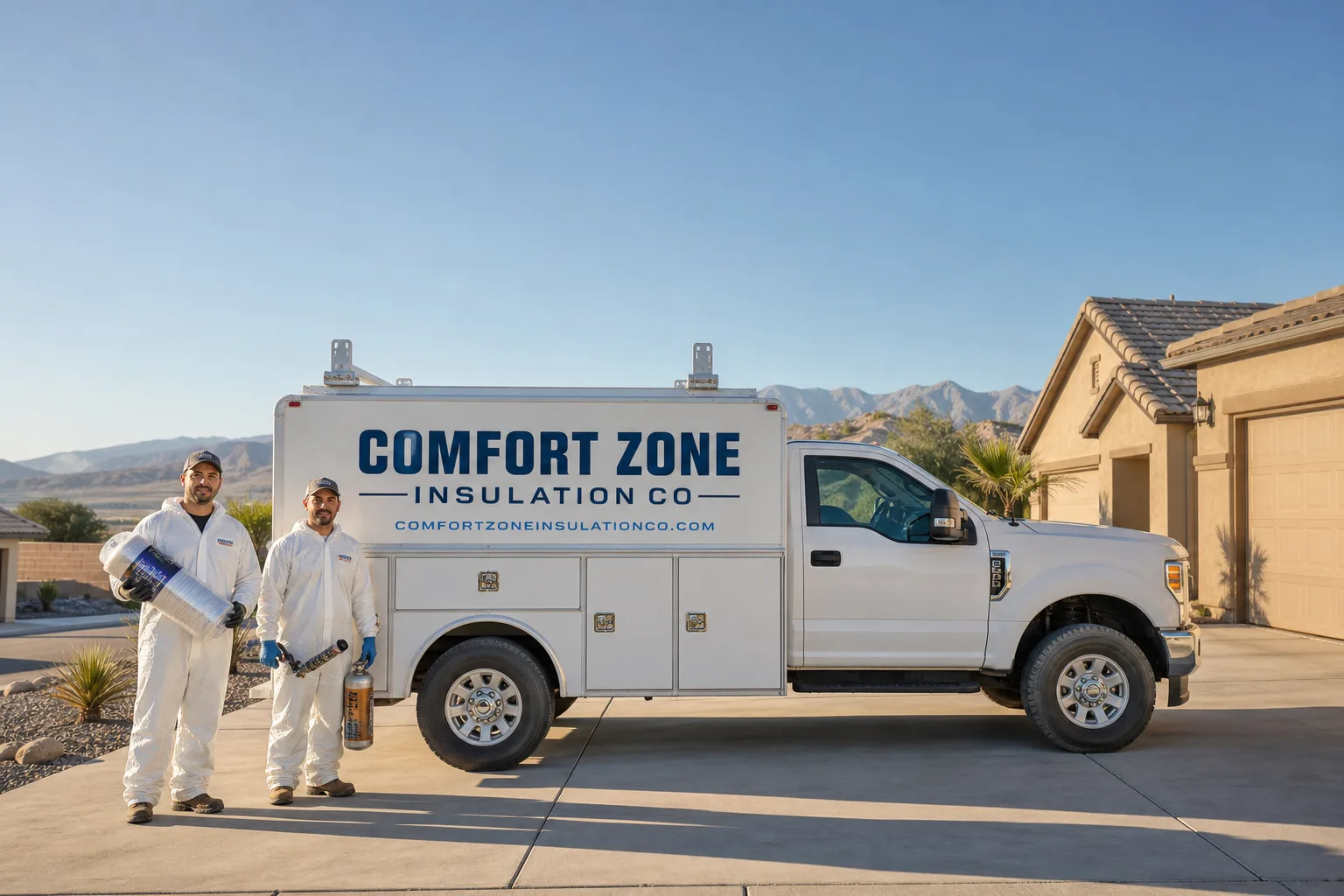
Fast, Reliable Spray Foam Insulation Across Monrovia
Spray foam insulation in Monrovia typically costs $1.80 to $4.20 per board foot installed, with most whole-attic jobs running $3,800 to $9,600 depending on cavity depth and access. We’re Comfort Zone Insulation Co, an insulation-only specialist led by Noel Carrasco, and we work in Monrovia’s 91016 and 91017 zip codes every week. The homes up toward the foothills or tucked into Old Town’s historic grid present specific challenges you won’t find in newer San Gabriel Valley subdivisions. Call (855) 341-7856 for a straight answer about what your place needs.
Why Comfort Zone Insulation Co Is Monrovia’s Preferred Spray Foam Insulation Company
Monrovia homeowners call us because we install insulation and nothing else. That focus matters when you’re dealing with a 1920s Craftsman near Myrtle Ave that has balloon framing and zero original cavity insulation, or a canyon-edge ranch where the attic is too tight for anyone to stand up. Noel Carrasco built this company around one idea: the right material for your specific situation, not whatever product happens to be sitting in the truck.
We carry eight leading brands so you’re not limited to whatever we happened to order this week. That means when a foothill home needs closed-cell spray foam for a low-slope roof deck, we reach for Icynene or Demilec. When a mid-century ranch off Foothill Blvd needs blown-in cellulose for a retrofit, GreenFiber is there. No brand loyalty games. Just fit.
We train our crews on Monrovia’s housing stock specifically, not just generic residential work. Knob-and-tube-era framing, steep access hatches, detached garages, canyon drives that eat up a morning. Our techs know what they’re walking into before they arrive, which is why we can usually handle even the awkward foothill jobs in a single trip.
Crawl Space Spray Foam Insulation in Monrovia
Crawl Space Spray Foam Insulation in Monrovia is one of the highest-impact upgrades we do for older wood-frame homes, especially the pre-war bungalows that dominate the streets south of Foothill Blvd. Many of these homes sit over vented dirt crawl spaces that leak cold air straight up through the floor every winter night, and Monrovia’s cool mountain evenings make that draft impossible to ignore. Sealing the rim joist and applying closed-cell foam to the crawl space walls turns that cold, damp underfloor into a dead air space that holds warmth exactly where you want it. We typically see crawl space projects in Monrovia run $2,200 to $5,800 depending on square footage, access height, and whether we’re air-sealing the rim joist at the same time.
Dirt-Floor Retrofits
Older Monrovia homes often have low crawl spaces, sometimes eighteen inches of clearance or less, with original dirt floors and decades of accumulated dust. Open-cell foam doesn’t belong down there. We use closed-cell on the stem walls and rim joist because it won’t hold moisture, it adds structural racking strength to old framing, and it blocks the cold-air pathway that makes floors feel like ice in January.
Foothill Drainage and Moisture Control
Up toward the foothills, properties slope and water moves through the soil differently than on the flat grid near Old Town. We check grading and drainage before we foam anything down low. A closed-cell barrier on the foundation walls plus a clean vapor boundary stops the damp, earthy smell that creeps into hillside homes after winter rains.
Garage Spray Foam Insulation in Monrovia
Garage Spray Foam Insulation in Monrovia solves a problem we hear about constantly on acreage and canyon-edge properties: the garage that’s either a furnace in July or a freezer in December. Detached workshops and oversized garages up toward the foothills have big air leaks around the door, thin wall cavities, and roof lines that soak up heat for hours every afternoon. We often apply closed-cell Icynene to the underside of the roof deck and fill the stud bays to make the space usable year-round. A standard two-car attached garage in Monrovia typically runs $1,900 to $4,200 for full ceiling and wall coverage; a detached oversized garage or workshop will land higher depending on door area and framing depth.
Detached Workshop Air Sealing
If you run tools or store equipment in a standalone garage, temperature swings are more than uncomfortable. They rust metal, warp lumber, and shorten the life of whatever you’re keeping. We treat detached structures as small buildings: seal the rim, foam the ceiling, and lock the temperature in place. One trip, done right.
Roof Deck Coatings for Flat and Low-Slope Garages
Mid-century Monrovia garages often have flat or gently sloped roofs that radiate heat directly into the space below. Closed-cell foam applied to the underside of the deck stops that transfer at the source. It’s the difference between a garage that hits ninety degrees by noon and one that stays within ten degrees of the house.
Trusted Brands We Service in Monrovia
We install products from Johns Manville, Knauf, Rockwool, and CertainTeed, plus Icynene and Demilec spray foam systems that anchor our closed-cell work. The reason we carry this portfolio is simple: Monrovia homes are too varied for a one-product approach. A hillside attic with limited access needs something different than a 1950s ranch with standard framing. We keep material for all of these systems on our trucks, which means jobs in Monrovia’s 91016 and 91017 zip codes don’t stall out waiting for a warehouse run.
Common Spray Foam Insulation Problems We See in Monrovia Homes
- Low-clearance foothill attics with no room for batts. Steep pitches and oddly framed bays rule out traditional material entirely, and closed-cell foam on the roof deck is frequently the only practical way to insulate them at all. We’ve done enough of these to know exactly how much material a canyon-edge attic takes.
- Open-cell foam under hot roof decks. Up toward the mountains, afternoon sun bakes the roof line hard. Open-cell insulates but doesn’t stop radiant heat the way a closed-cell Icynene or Demilec layer does, and we’ve seen homeowners disappointed when the upstairs still won’t cool down.
- Knob-and-tube-era wiring in pre-war framing. Older Craftsman homes near Old Town often still have active or abandoned knob-and-tube runs behind the walls. You can’t foam over a live hazard, so we inspect and flag it before any material goes in.
- Running short of material on long canyon drives. A detached workshop or oversized garage at the end of a winding foothill road is a half-day commitment just to reach. We send a heavy-duty rig with enough material for the full scope so it’s one trip, not two.
Pricing for Spray Foam Insulation in Monrovia, CA
Here’s what you can expect in Monrovia’s market, based on the work we’ve bid across 91016 and 91017:
- Open-cell spray foam, whole attic floor: $3,200 to $6,800
- Closed-cell roof deck (foothill attics, low clearance): $5,500 to $11,000 depending on square footage and pitch
- Rim joist air sealing and foam, typical crawl space: $1,200 to $2,700
- Crawl space walls, closed-cell, full perimeter: $2,500 to $6,200
- Garage ceiling and walls, standard two-car attached: $1,900 to $4,200
- Detached workshop or oversized garage, full envelope: $3,800 to $8,500
What moves the number is access, not square footage alone. A crawl space you can’t stand up in takes longer. A roof deck at a steep pitch takes longer. We quote flat, not by the hour, so you know the price before we start. Call (855) 341-7856 for a free estimate and we’ll walk the property with you.
We Also Serve Cities Near Monrovia
Our crews work throughout the San Gabriel Valley foothills. If you’re in Monrovia, we’re already nearby, and we regularly run jobs in Mayflower Village, Duarte, Bradbury, and Arcadia. Same team, same insulation-only focus, same one-trip mindset. Spray Foam Insulation done right starts with knowing the house, not just the product.
Serving Monrovia, CA — Our Local Coverage Area
We’re based in the Monrovia area and know this community well. Use the map below to see our service coverage — if you’re nearby, we can almost certainly help.
FAQs About Spray Foam Insulation in Monrovia
Yes, and that’s exactly how we plan it. Detached structures on canyon properties take longer to reach, so we load a heavy-duty rig with enough material for the full scope before we leave the yard. One trip, one finished job, no callback for a second round.
Yes. Closed-cell spray foam applied directly to the underside of the roof deck is often the only practical option for steep, low-clearance foothill attics. There’s no room to lay batts, and blown-in won’t stay in place on a steep pitch. We foam the deck, seal the oddly framed bays, and the space finally holds its temperature. Call (855) 341-7856 for an exact quote.
They need an inspection first. Knob-and-tube wiring can’t be buried under foam if it’s still live, and we check every cavity before any material goes in. If the wiring is safe or properly abandoned, spray foam is an excellent retrofit for uninsulated wood-frame walls. If there’s a problem, we tell you before we touch anything.
Closed-cell. Monrovia’s foothill homes get pounded by afternoon sun, and open-cell foam doesn’t stop radiant heat the way a dense closed-cell layer does. Icynene and Demilec closed-cell systems are what we recommend for roof decks up toward the mountains, especially on canyon-edge homes where the upstairs bakes every summer.
It stops the cold-air path that makes floors feel like ice. Monrovia’s foothill air drops hard after sunset, and that cold works into unsealed crawl spaces through the rim joist and vents. Sealing and foaming the crawl space walls blocks that path, so your living room floor stays warm and the furnace runs less. Estimates are free, so call (855) 341-7856 and we’ll take a look underneath your place.
Written by Noel Carrasco, Owner at Comfort Zone Insulation Co, serving Monrovia and the San Gabriel Valley.