
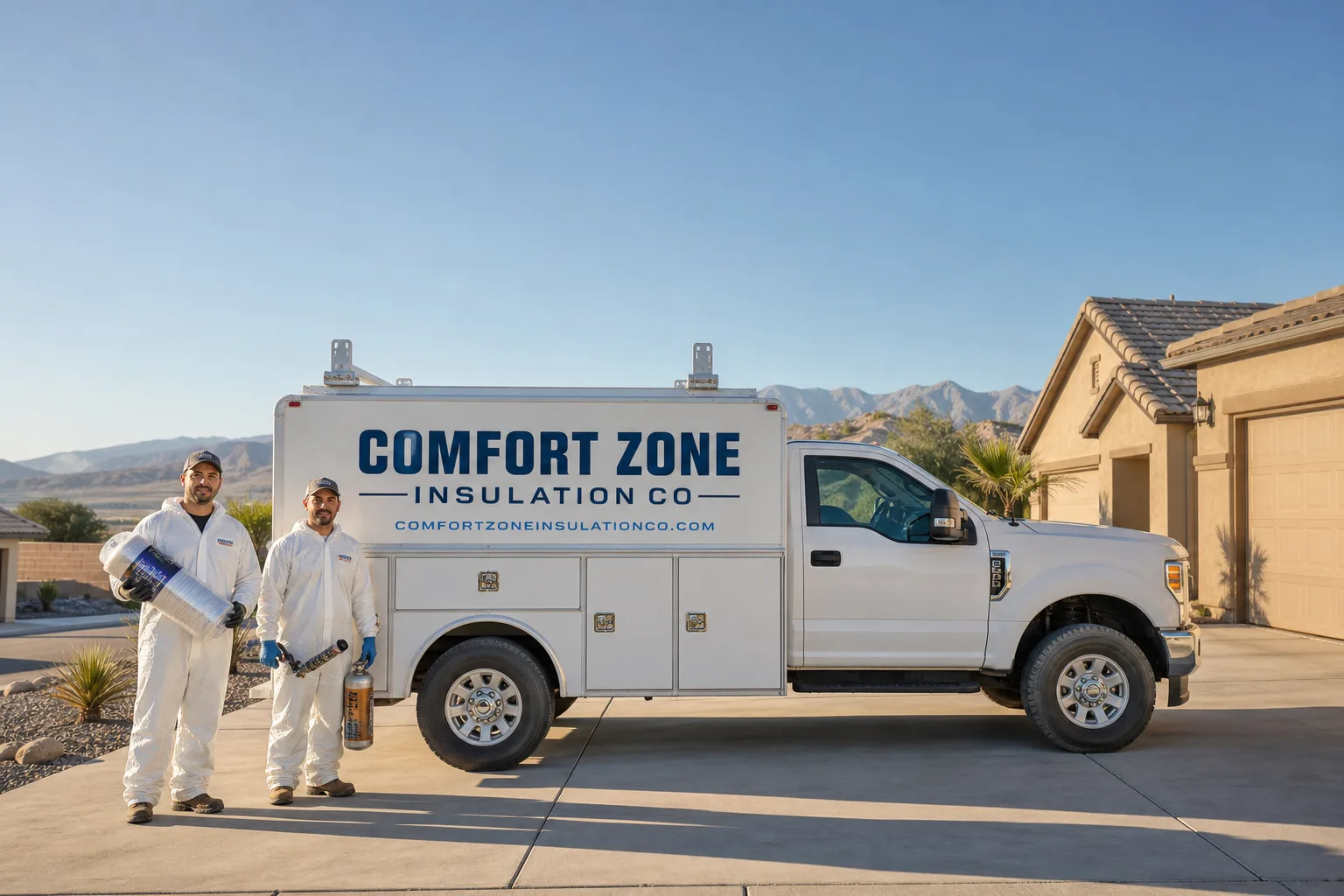
Spray Foam Insulation in Eastvale: What It Costs and Why These Homes Need It
Spray foam insulation in Eastvale typically costs $2,800 to $7,500 for a full attic project, with closed cell running higher than open cell. Most Eastvale homes were built between 2000 and 2015 with builder-grade batt or blown fiberglass that has settled well below today’s Title 24 targets. The result is an attic that bakes at 140 to 160°F through the summer and radiates that heat directly into your upstairs bedrooms. Call (855) 341-7856 for a free estimate from a crew that knows exactly how these tract homes were built and where they fail.
Fast, Reliable Spray Foam Insulation Across Eastvale
We work in Eastvale every week, and we know the city’s housing stock better than most. Nearly everything here is production tract construction from the 2000s and 2010s: two-story wood-frame plans by DR Horton, Lennar, KB, and a few others, all built to the minimum attic insulation code of that era. What that means for you is a home that started out marginally insulated and has only lost ground since. The original blown fiberglass or batt in your attic has slumped, settled, and baked through 15-plus Inland Empire summers. We’re an insulation-only contractor, so when we roll into a neighborhood off Archibald or Hamner, we’re not there to sell you windows or a new HVAC system. We’re there to fix the attic, seal the air leaks, and get your upstairs rooms holding a temperature you can actually live with. Call (855) 341-7856 and we’ll set up a time that works for your schedule.
Eastvale sits in the Santa Ana River corridor, and the summer heat here is relentless. Attic temperatures in this part of Riverside County routinely hit 140 to 160°F, which means your air conditioner fights a losing battle from June through October. We respond to Eastvale service calls same-day when we can, and we never treat a 92860 zip code as a far-off job. This is our home turf.
Why Comfort Zone Insulation Co Is Eastvale’s Preferred Spray Foam Insulation Company
Homeowners in Eastvale call us because we diagnose before we recommend. Most insulation companies around here are general contractors who happen to blow fiberglass. We install insulation and nothing else, and we carry Icynene, Demilec, Rockwool, CertainTeed, and a handful of other brands so the material matches the problem instead of whatever was ordered that week. When a homeowner on a cul-de-sac off Citrus Street asks why their bonus room is 10 degrees hotter than the rest of the house, we open the attic and show them the settled batt before we ever quote a product.
Our Spray Foam Insulation team has walked hundreds of Eastvale attics, and the pattern is the same block after block. The west and southwest-facing upper rooms sit under the least-shaded roof planes, and that’s where the builder’s original insulation has degraded the most. Noel Carrasco, who leads Comfort Zone Insulation Co, trains every tech to look for those failure points first. That’s the difference between a crew that re-blows an entire attic and one that seals the right penetrations and applies foam where it actually changes how the house feels.
We’re licensed and insured, and we stand behind the work with a real commitment to making sure your home holds the temperature you set. Eastvale homeowners know the difference between a quote that sounds good and a fix that works. We aim for the second one.
Closed Cell Spray Foam Insulation in Eastvale
Closed Cell Spray Foam Insulation is our most common recommendation for Eastvale roof decks and hot-zone applications, and it runs roughly $1.20 to $2.80 per board foot installed in this market. For a typical Eastvale attic over a two-story tract home, a closed cell roof deck application runs $5,000 to $9,000 depending on square footage and access. Closed cell gives you roughly R-7 per inch, but more importantly for Eastvale it acts as an air and vapor barrier, stopping the 150°F attic air from ever reaching your living space. It’s the right call when you’re dealing with that west-facing bonus room that never cools down.
Where closed cell makes sense
We most often apply closed cell to the underside of the roof deck over specific hot zones, not the entire attic. In two-story Eastvale plans by Lennar and DR Horton, the southwest upper bedrooms sit under roof planes that get direct afternoon sun with no shade relief. Sealing that roof deck with two to three inches of closed cell turns the attic above that room from a heat radiator into a conditioned buffer. The room holds temperature, and the AC cycles less.
Closed cell and Eastvale building codes
Eastvale falls under Riverside County permitting, and any roof deck foam application must meet current Title 24 energy standards. Closed cell spray foam is one of the cleanest paths to compliance precisely because it delivers both air sealing and high R-value per inch, which matters when you’re working with the shallow roof pitches common in Eastvale tract construction. We handle the technical side; you get an attic that actually meets today’s code instead of the minimum that was legal in 2006.
Open Cell Spray Foam in Eastvale
Open Cell Spray Foam is the more economical option for Eastvale homeowners and typically runs $0.60 to $1.30 per board foot installed, with typical whole-attic open cell projects landing between $3,500 and $6,500. Open cell gives you about R-3.7 per inch, expands aggressively to fill cavities, and excels at sound dampening, which matters in zero-lot-line neighborhoods like the ones along Schleisman Road. It’s not a vapor barrier, so it’s best used on attic floors and interior walls rather than roof decks in Eastvale’s climate.
Open cell as a top-up over settled batt
Here’s the Eastvale-specific reality. In most of these homes, we’re not doing a first-time foam install. We’re topping up builder-grade batt or blown fiberglass that has settled to half its original R-value after 15 years of thermal cycling. Open cell spray foam applied directly over the existing attic floor insulation fills gaps, seals air leaks around top plates and duct penetrations, and locks the old material in place so it can’t slump again. It’s a cost-effective way to bring a tired attic back above current Title 24 attic targets without a full tear-out.
Sound control in Eastvale’s dense layouts
Eastvale’s tract neighborhoods put homes close together, and open cell spray foam is our preferred product for interior wall cavities when a homeowner wants to cut noise bleed between a master suite and a bonus room or home office. The cellular structure of open cell absorbs sound frequencies that closed cell and fiberglass don’t touch. It’s not the primary reason most people call us, but it’s a real benefit once the attic is sealed and the house starts holding temperature.
Trusted Brands We Service in Eastvale
Because Comfort Zone Insulation Co is authorized to install Icynene, Demilec, CertainTeed, and Rockwool products, we bring the right material to each Eastvale job rather than whatever our supplier happened to have in stock. Icynene and Demilec cover the open-cell and closed-cell spray foam side of things. Rockwool and CertainTeed give us premium fiber and batt options when a hybrid approach makes more sense than full foam. For Eastvale customers, that means faster turnaround and no waiting on a single-brand distributor. If your attic needs closed cell over a hot bonus room and re-blown fiberglass over the rest of the field, we do both from one truck and one crew. That’s the advantage of being an insulation-only specialist with eight brand partnerships, not a roofer who dabbles in foam.
Common Spray Foam Insulation Problems We See in Eastvale Homes
- Settled builder-grade attic insulation. After 15 to 20 Inland Empire summers with attic temperatures peaking over 150°F, the original blown fiberglass in a 2000s Eastvale tract home has slumped to a thin mat. We routinely find attics tested at R-19 or less when today’s code target is R-38 or higher.
- Top-plate and duct-penetration air leaks. Eastvale’s production wood-frame plans were built fast, and the gaps where interior walls meet attic framing were never sealed. That pulls superheated attic air into the living space, and it’s why your upstairs feels 15 degrees hotter than your downstairs even when the thermostat says otherwise.
- Thin insulation over west and southwest upper rooms. The bonus room or fourth bedroom on the western side of an Eastvale two-story sits under the least-shaded roof plane. The builder’s original insulation there was thin from day one, and a decade and a half of direct sun exposure has made it worse.
- HVAC ducts running through unconditioned attics. In Eastvale’s heat, ducts in a 150°F attic lose a significant share of their cooling before air ever reaches the register. Spray foam on the roof deck or heavy attic floor sealing changes that math meaningfully.
Pricing for Spray Foam Insulation in Eastvale, CA
Here’s the straight answer. Open cell spray foam in Eastvale runs $0.60 to $1.30 per board foot installed. Closed cell runs $1.20 to $2.80 per board foot. A typical whole-attic open cell job on a two-story Eastvale tract home lands between $3,500 and $6,500. A closed cell roof deck application over a hot zone runs $5,000 to $9,000. What moves the number? Square footage, attic access, whether we’re removing degraded material or foaming over existing insulation, and how much air sealing is required. We offer free estimates, and we’ll give you a firm number before any work starts. Call (855) 341-7856 and we’ll walk your attic with you.
Noel Carrasco and our Eastvale crew quote honestly because we’re competing for your next project, not your first one. If spray foam isn’t the right answer for your attic, we’ll tell you. Sometimes a targeted re-blow with GreenFiber cellulose is the better value. That’s the point of carrying eight brands.
We Also Serve Cities Near Eastvale
Our crews work throughout the Inland Empire corridor, so if you’re in Norco, Home Gardens, Corona, or Jurupa Valley, the same team that handles Eastvale insulation work can get to you quickly. Commute times from our San Bernardino base are short, and we schedule multiple jobs per week in these neighboring communities.
Serving Eastvale, CA — Our Local Coverage Area
We’re based in the Eastvale area and know this community well. Use the map below to see our service coverage — if you’re nearby, we can almost certainly help.
FAQs About Spray Foam Insulation in Eastvale
The answer depends on what we find in your attic, but most Eastvale homes from the 2000s need both air sealing and insulation. Builder-grade blown fiberglass has almost certainly settled below today’s Title 24 targets, but dumping new insulation over it won’t fix the air leaks around top plates and duct penetrations that pull 150°F attic air into your living space. Spray foam is the fastest way to seal those leaks and add R-value in one pass. We’ll show you the condition of your existing insulation before recommending anything. Call (855) 341-7856 for a free attic evaluation.
Because those rooms sit under the least-shaded roof planes, and the builder’s original attic insulation over those specific areas has settled thinnest after 15-plus years of direct sun and 140 to 160°F attic temperatures. We see this on nearly every two-story tract home in Eastvale, especially along the western edge of the city. The fix is usually a targeted closed cell foam application on the underside of the roof deck over that hot zone, which stops the heat before it radiates through your ceiling. That’s a fix we’ve done dozens of times in Eastvale, and it works.
Yes, open cell spray foam can be applied directly over settled batt or blown fiberglass on an attic floor in Eastvale. The foam expands into gaps, locks the old material in place, and seals air leaks around framing penetrations. The one caveat is moisture. If the existing insulation shows signs of rodent damage or water intrusion, we’ll recommend removing the affected sections first. Our crew will assess that during the estimate.
Eastvale’s attic temperatures, which routinely spike to 140-160°F from June through September, make air sealing just as important as R-value. Closed cell foam is the better choice for roof deck applications because it acts as an air and vapor barrier under those punishing conditions. Open cell performs well on attic floors and interior walls, but it’s not a vapor barrier, so we don’t recommend it for roof decks in Eastvale’s climate. The material choice should follow the specific heat load and what part of the building envelope we’re addressing.
Yes, and in many Eastvale homes it’s the single most effective change you can make for summer cooling costs. When we seal top plates, duct penetrations, and apply foam to the hottest roof deck zones, the conditioned air your AC produces stops leaking into a 150°F attic and stops being re-heated by the attic radiating through the ceiling. Homeowners report their upstairs rooms finally holding temperature and the AC cycling noticeably less. That’s the outcome we’re after, and it’s what makes spray foam a better investment in Eastvale’s heat than in milder coastal climates.
Ready to Fix the Hottest Rooms in Your Eastvale Home?
If you’re tired of upstairs bedrooms that never cool down and energy bills that climb every summer, call Comfort Zone Insulation Co at (855) 341-7856. We’ll inspect your attic, show you what the original builder installed and what it looks like now, and give you a straight answer on whether spray foam, blown-in, or a hybrid approach makes sense for your home. Free estimates, honest recommendations, and crews that understand Eastvale’s tract housing stock because we work in it every week.
Written by Noel Carrasco, Owner at Comfort Zone Insulation Co, serving Eastvale and the Inland Empire with insulation-only expertise.