
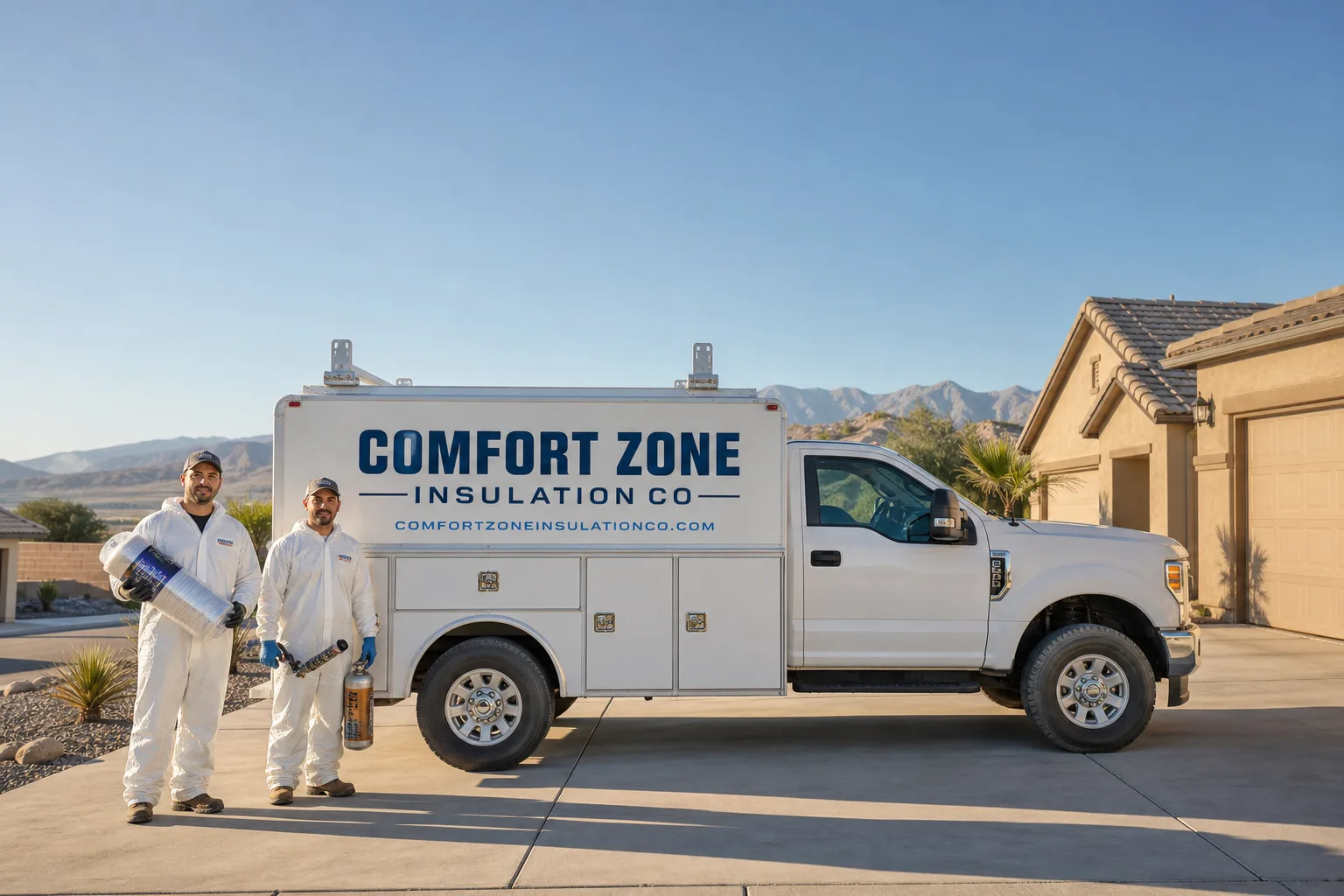
Fast, Reliable Spray Foam Insulation Across Crestline
Spray foam insulation in Crestline runs $2.40 to $4.80 per board foot installed for closed-cell and $1.10 to $2.20 for open-cell, with most whole-home retrofits landing between $4,500 and $11,000 depending on square footage and access. We respond to Crestline calls within 24 hours for most estimates because we run crews out of San Bernardino and know Highway 18 well enough to time the drive around tourist traffic. Our team works on Spray Foam Insulation every day, not as one of twelve services. Call (855) 341-7856 and we’ll tell you honestly whether foam is even the right call for your cabin or ranch home before we quote a number.
This page is written for Crestline specifically. Not Lake Arrowhead, not Running Springs. The homes up here are different, the freeze-thaw cycles are different, and the decisions about where to spray foam are different because of the sun exposure changes that followed the tree mortality die-off.
Why Comfort Zone Insulation Co Is Crestline’s Preferred Spray Foam Insulation Company
We install insulation and nothing else. That focus matters in Crestline because most homes here are early-to-mid-20th-century mountain cabins with 2×4 walls, pier-and-beam floors, and attics that were never designed for year-round occupancy at 4,600 feet. A general contractor who paints and roofs and remodels doesn’t spend years learning how Icynene open-cell behaves differently from Demilec closed-cell in a 1940s cabin wall cavity, which is why homeowners looking for Reflectix service in Crestline should choose a dedicated insulation specialist. We do. Every estimate in Crestline gets a diagnostic walkthrough first: where the cold spots are, whether the existing fiberglass is sagging or rodent-damaged, whether the rim joist is exposed to air movement, and what the sun exposure looks like now that dead pines have come down.
Our reputation in Crestline builds one job at a time. Homeowners up here talk to each other at the post office and the hardware store. When we sprayed a converted cabin near Lake Gregory and the owner told her neighbor about it holding heat through a snowy week, that neighbor called us. That’s how Crestline work spreads. We don’t advertise heavily up here. We show up, diagnose, spray, and leave the home holding the temperature you set.
Noel Carrasco leads our team. He’s built this company around the idea that insulation is a diagnostic trade, not a square-footage sale. When Noel walks a Crestline property, he’s thinking about air sealing, not just R-value. That distinction shows up in the finished work.
Spray Foam Wall Insulation in Crestline
Spray Foam Wall Insulation in Crestline means retrofitting 2×4 wall cavities in cabins and cottages that were originally built as summer getaways and later converted to full-time or short-term-rental homes. Most of these walls have no insulation at all, or they have old fiberglass batts that are compressing, sagging, and failing to stop air movement. Closed-cell foam sprayed directly into the cavity gives you about R-7 per inch, air-seals the wall in one step, and adds structural rigidity your old framing likely needs. Open-cell gives you R-3.7 per inch at a lower material cost, which can make sense in walls where you’re less worried about moisture or structural issues. Figure $3,800 to $8,600 for a typical Crestline cabin’s exterior walls, depending on access and the condition of what we’re removing first.
Airtight Cavity Fill
Old cabins in Crestline leak air through the walls constantly. Fiberglass slows heat transfer but does nothing for air movement. Spray foam expands into every gap, crack, and irregular stud bay, stopping the draft that makes a room feel cold even when the thermostat says otherwise. We remove the old batts, inspect the cavity for rot or rodent damage from freeze-thaw cycles, and spray only after the surface is clean and dry.
Freeze-Thaw Protection
At 4,600 feet, Crestline walls go through dozens of freeze-thaw cycles every winter. Moisture that gets trapped inside unsealed wall cavities freezes, expands, and slowly destroys framing. Closed-cell foam acts as a vapor barrier and an air barrier together, keeping moisture from entering the cavity in the first place. That’s the single biggest difference between spray foam and fiberglass in a mountain wall.
Rim Joist Spray Foam in Crestline
Rim Joist Spray Foam in Crestline is one of the highest-impact upgrades for pier-and-beam mountain homes. The rim joist is the band of framing where your floor system meets the foundation or the outside world, and in cabins with open crawlspaces, it’s a massive air leak. Cold air pours through the rim joist in January, making your floors feel like ice and dragging your heating bills up. Closed-cell foam on the rim joist air-seals and insulates in one pass, typically 2 to 3 inches. Expect $1,200 to $2,800 for a full rim joist treatment on a Crestline cabin, depending on crawlspace access and whether we need to remove old debris or rodent nesting first.
Pier-and-Beam Floor Connection
Most Crestline homes sit on pier-and-beam foundations with open crawlspaces below. The floor structure connects to the rim joist, and if that rim joist leaks air, the whole floor assembly leaks air. Sealing the rim joist with closed-cell foam stops the stack effect that pulls cold crawlspace air up into your living space. We often pair rim joist work with floor insulation for a continuous thermal boundary.
Rodent and Pest Deterrence
Crestline cabins deal with mice, rats, and squirrels looking for warm nesting spots every fall. Fiberglass batts in rim joist cavities are practically a welcome mat for them. Closed-cell foam fills the cavity completely and cures hard enough to make rodents look elsewhere. We’ve pulled enough shredded, urine-soaked fiberglass out of Crestline rim joists to know this is a real problem up here.
Trusted Brands We Service in Crestline
We’re authorized to install products from eight leading manufacturers, including Owens Corning, Johns Manville, Knauf, and Rockwool. That means when we quote a Crestline job, we choose the material that fits your specific cabin, your sun exposure, and your moisture conditions rather than whatever we happen to have on the truck. For spray foam specifically, we work with Icynene and Demilec systems, two of the most recognized open- and closed-cell product lines on the market. If you want a mineral wool option for fire resistance or sound attenuation, Rockwool is in our lineup. GreenFiber blown-in cellulose is available for Crestline homeowners who want a recycled-content option in attics. We carry what the job needs, not what’s easiest for us to stock.
Common Spray Foam Insulation Problems We See in Crestline Homes
- Foam over unsealed 2×4 wall cavities in old cabins traps moisture from freeze-thaw cycles, leading to hidden rot. We see this in walls where someone sprayed foam years ago without first checking whether the exterior sheathing or siding was still shedding water properly. The fix usually means removing failed sections, drying the cavity, and reapplying with proper air-sealing detail.
- Sun-baked south-facing roof decks after dead pine removal degrade spray foam from UV and heat exposure. The 2010s tree-mortality die-off changed how much direct sunlight many Crestline roofs receive. Foam that was shaded for decades suddenly sits under intense high-altitude UV. We recommend evaluating south-facing roof decks before spraying and using UV-resistant coatings where needed.
- Pier-and-beam crawlspaces with poor substrate preparation prevent foam adhesion and curing. Dust, old cobwebs, and moisture on the rim joist surface stop closed-cell foam from bonding properly. We clean and dry every surface before we spray, and we check crawlspace ventilation so the foam cures in the right conditions.
- Rodent-damaged existing insulation gets covered over instead of removed. We’ve opened walls in Crestline where someone sprayed foam directly over fiberglass batts that were nested in by mice. The foam sealed the problem in. We remove damaged material first, every time, even though it adds labor to the job.
Pricing for Spray Foam Insulation in Crestline, CA
Spray foam insulation in Crestline costs more than flatland work because of the drive, the terrain, and the condition of most existing structures. Closed-cell spray foam runs $2.40 to $4.80 per board foot installed. Open-cell runs $1.10 to $2.20. A typical interior wall retrofit in a Crestline cabin lands around $3,800 to $8,600. Rim joist treatment runs $1,200 to $2,800. A full attic roof deck with closed-cell foam runs $5,500 to $12,000 depending on roof pitch and access. If you want a spray foam roof deck on a south-facing slope, expect the higher end because UV protection becomes critical. We give free estimates in writing, and we’ll walk you through what we’re doing and why before any work starts. Call (855) 341-7856 to schedule yours.
We Also Serve Cities Near Crestline
Our crews cover the San Bernardino Mountains and the foothills below, serving Lake Arrowhead, Muscoy, San Bernardino, and Highland. If you own a second property in Crestline and a primary home down the hill, we can handle both. Spray Foam Insulation in Crestline is our specialty, but we know these other markets equally well.
Serving Crestline, CA — Our Local Coverage Area
We’re based in the Crestline area and know this community well. Use the map below to see our service coverage — if you’re nearby, we can almost certainly help.
FAQs About Spray Foam Insulation in Crestline
Crestline’s mountain climate at 4,600 feet puts real stress on insulation through snow, freeze-thaw cycles, cold nights, and intense high-altitude summer sun. Closed-cell spray foam performs well here because it air-seals and insulates in one layer, and its density resists moisture movement driven by freeze-thaw. Open-cell works too but needs careful placement in walls where condensation risk is highest. The bigger factor is sun exposure: after the tree-mortality die-off, south- and west-facing walls and roofs that were shaded for decades are suddenly cooking in direct sun, which can degrade unprotected foam over time. We factor sun exposure into every Crestline recommendation. Call (855) 341-7856 and we’ll explain what your specific property needs.
Yes, spray foam can be added to a 1940s Crestline cabin without removing original lath and plaster, but the application method changes. We access wall cavities either from the exterior by removing siding in sections or from the interior by drilling access holes through the plaster and spraying foam into the cavity. Exterior access is usually cleaner and lets us inspect framing condition at the same time. Interior drilling is less invasive to the exterior look but requires patching afterward. Either way, we check for rodent damage and moisture before we spray. Call (855) 341-7856 and we’ll walk your specific cabin.
The best way to insulate a pier-and-beam floor in Crestline is closed-cell spray foam on the rim joist combined with either spray foam or dense-pack cellulose in the floor cavities, depending on your budget and moisture conditions. The rim joist is the biggest air leak in most pier-and-beam homes, so sealing it first delivers the fastest comfort gain. After that, insulating the floor assembly stops the cold radiating up from the crawlspace. We recently sprayed closed-cell foam on the rim joists and 2×4 walls of a 1940s cabin near Lake Gregory that had been a summer getaway until the owners converted it for year-round use. The previous fiberglass batts were sagging and rodent-nibbled, so we removed them, air-sealed with Icynene, and sprayed 3 inches of foam to R-21, sealing the pier-and-beam crawlspace and attic ceiling in one trip. The owners noted the cabin held heat through a snowy week for the first time. Call (855) 341-7856 for a specific recommendation on your floor.
You should insulate south-facing walls in Crestline as soon as practical after removing a dead pine, ideally within the same season. The tree-mortality die-off left many properties with sun-baked south- and west-facing walls that were shaded for decades. Exposed to direct high-altitude UV and heat, those walls cycle through extreme temperature swings that accelerate the failure of whatever insulation is in there. Upgrading to closed-cell foam with proper UV protection on the exterior gives you the best defense. If the wall is already insulated, we can evaluate whether the foam needs a protective coating or replacement. Call (855) 341-7856 and we’ll assess your sun exposure.
Yes, we service rural properties throughout the 92325 ZIP code, including cabins and acreage homes off Lake Gregory Drive, along the ridgelines, and on the back roads toward Lake Arrowhead. Our crews are used to long gravel drives, tight turnarounds, and properties where we need to bring our own water for cleanup. We schedule Crestline work in blocks so we can reach multiple properties in one trip and pass the time savings on to you. If your property is hard to find or has limited access, tell us when you call and we’ll plan accordingly. Call (855) 341-7856 to schedule an estimate at your rural Crestline property.
Written by Noel Carrasco, Owner at Comfort Zone Insulation Co, serving Crestline and the San Bernardino Mountains.