
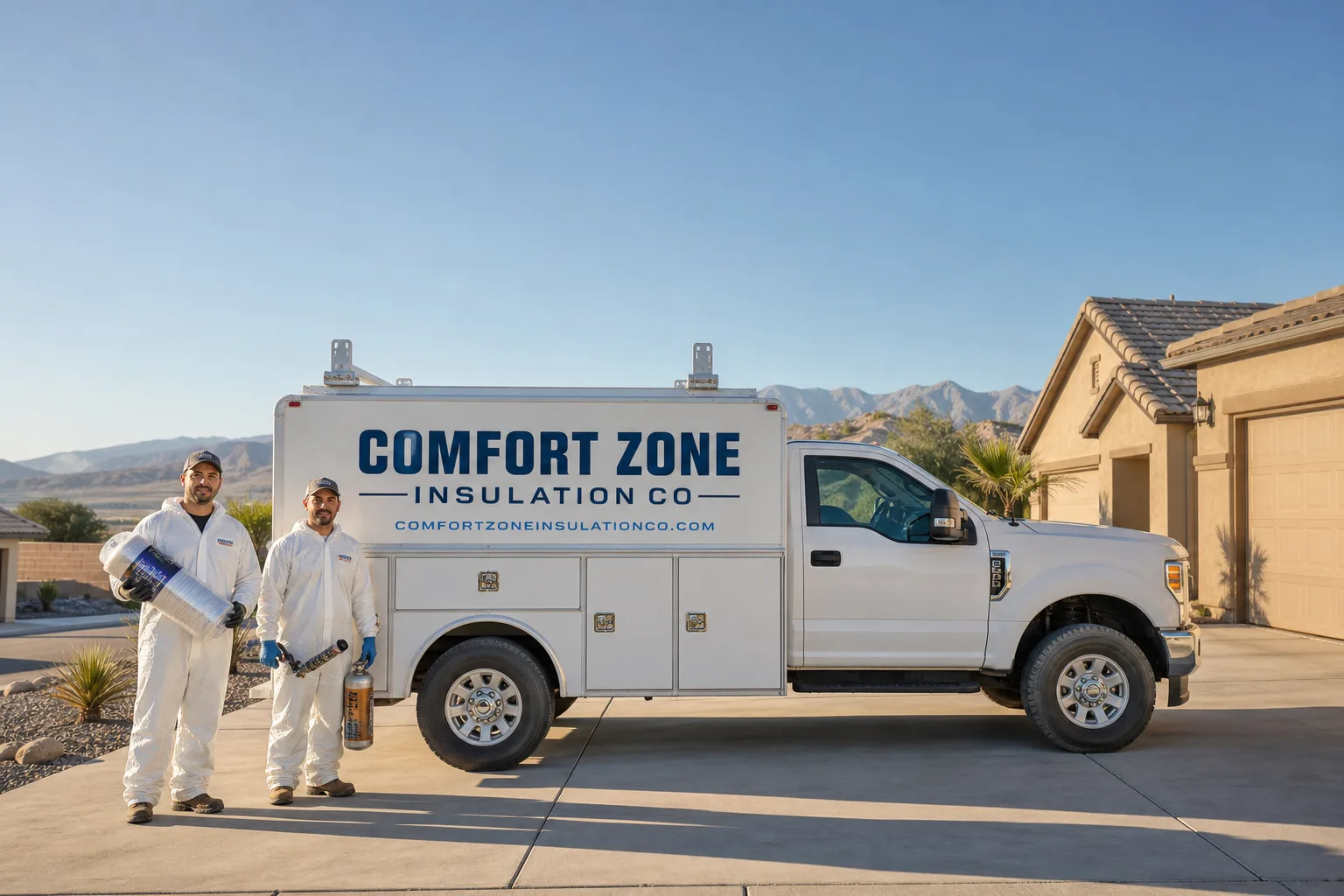
Fast, Reliable Spray Foam Insulation Across Covina
Spray foam insulation in Covina homes tackles two jobs at once: it air-seals the gaps that let conditioned air escape and it insulates the surfaces that fight San Gabriel Valley heat. In Covina’s older flatland tracts, attic temperatures routinely climb past 140°F on August afternoons, which means the right foam system and the right ventilation strategy matter more here than almost anywhere else in the region. Our crews know Covina’s housing stock block by block, from the 1950s ranches near downtown to the hillside builds climbing toward the San Jose Hills. Call (855) 341-7856 for a free estimate, and we’ll send someone who actually understands what your attic is doing right now.
Key Takeaways:
- Covina attics need ventilation before foam; skipping that step causes heat degradation and wasted R-value.
- We install Icynene and Demilec spray foam systems, alongside blown-in options from Owens Corning, Rockwool, and others.
- Our response time to most Covina neighborhoods is same-day or next-day.
- We’re insulation-only specialists. We install insulation and nothing else.
- Free estimates, upfront pricing ranges, and no pressure to buy a brand we happen to have in stock.
Why Comfort Zone Insulation Co Is Covina’s Preferred Spray Foam Insulation Company
We carry eight leading brands so you’re not limited to whatever we happened to order this week. For Covina homeowners, that means the material choice follows the diagnosis, not the other way around. A 1960s ranch with a low-pitch attic and original batts needs a different foam strategy than a 1990s two-story with a vented roof deck. We can offer both Icynene open-cell for interior cavity work and Demilec closed-cell for roof decks and rim joists, because we’re authorized installers for both product lines.
Noel Carrasco built Comfort Zone Insulation Co around a simple idea: your home holds the temperature you set, and the material that gets you there depends on your specific situation. Covina customers call us because we diagnose before we quote. We look at the attic bypasses, the existing ventilation, the roof orientation, and the condition of whatever insulation is already in place. Then we recommend the right product, not just the one that’s easiest to sell. That approach is why homeowners from West Covina to Azusa and Citrus keep our number: (855) 341-7856.
We’re a dedicated insulation contractor, not a general contractor who handles insulation as an afterthought. That focus shows up in the details: we know which Covina neighborhoods were built with minimal soffit venting, we know where the WUI (wildland-urban interface) building codes apply near the foothills, and we know that a flatland attic in 91723 behaves nothing like a hillside attic in 91724.
Spray Foam Attic Insulation in Covina
Spray Foam Attic Insulation in Covina is the single highest-impact upgrade for homes in the 91722 and 91723 ZIP codes, where low-pitch attics with minimal soffit venting routinely hit 140°F or hotter on summer afternoons. The job involves air-sealing the attic floor or roof deck, then applying either open-cell or closed-cell foam to stop the heat transfer that turns your second story into a slow cooker. Typical costs for a Covina flatland home run $2,800 to $6,200 for a full attic spray foam application, depending on square footage and whether we’re foaming the roof deck or the attic floor. Homes in 91724 hill areas often fall on the higher end because the roof geometry is more complex and fire-resistant venting requirements add material cost.
Ventilation First, Foam Second
In Covina’s older flatland tracts, we frequently find original batts collapsed to nothing and attic temps exceeding 145°F by early afternoon. Applying foam over an unvented, superheated attic space doesn’t fix the problem, it traps it. We add soffit and ridge venting before we apply foam, so the assembly can breathe and the foam performs as designed. Your home holds the temperature you set, but only if the attic isn’t fighting you.
Roof Deck Foam for Wildfire Zones
For hillside homes toward the San Jose Hills, closed-cell foam on the roof deck does double duty: it insulates and it hardens the roof assembly against ember intrusion. That matters because Covina’s foothill edge sits in a wildland-urban interface where ember-resistant vent screening is often required for WUI inspection. We coordinate the foam and the vents so the assembly passes the first time.
Spray Foam Wall Insulation in Covina
Spray Foam Wall Insulation in Covina is the right call for two common situations: walls opened during a remodel and walls that never got adequate insulation in the first place. Most of Covina’s postwar wood-frame stucco homes were built before modern energy codes, which means wall cavities with thin fiberglass batts, or nothing at all. Typical wall cavity foam for a Covina ranch runs $1,800 to $4,500 depending on the number of exterior walls and whether we’re working from the inside or outside. For open wall cavities during a renovation, Icynene open-cell foam fills the space completely and air-seals every seam; for retrofit injection, we can dense-pack blown-in options from GreenFiber when foam isn’t practical.
Garage Wall and Rim Joist Foam
Attached garages are a major source of heat gain in Covina, especially when the garage shares a wall with living space. Foaming the garage ceiling and rim joist cuts the heat that bleeds into the house every afternoon. It also knocks down the dust and exhaust smells that migrate from garage to home, a common complaint in the older tracts near San Bernardino Road.
Existing Wall Retrofit
When walls can’t be opened, we evaluate whether injection foam or dense-pack blown-in works better. Not every Covina wall cavity is a candidate for spray foam, and we’ll tell you when it isn’t. The right material for your specific situation means we don’t force a product where it doesn’t belong.
Trusted Brands We Service in Covina
We’re authorized to install Spray Foam Insulation products from Icynene and Demilec, two of the most recognized open- and closed-cell lines in the North American market. For blown-in and batt applications across Covina, we also work with Owens Corning, Rockwool, and Knauf. That breadth of access matters for a city like Covina, where one block might call for mineral wool with superior fire resistance near the hills and the next block calls for GreenFiber blown-in cellulose in a 1970s attic. We stock the materials our Covina crews need locally, so turnaround on common jobs stays fast, not waiting on a truck from across the county.
Common Spray Foam Insulation Problems We See in Covina Homes
- Foam over unvented 140°F+ attics. In older flatland tracts, crews sometimes apply foam without first adding ventilation. The trapped heat accelerates foam degradation and can produce off-gassing. We correct the ventilation before re-foaming.
- Original batts foamed over without removal. Low-pitch attics in 1950s and 1960s builds often have compressed original batts that get covered instead of removed. That traps moisture from Covina’s mild wet winters and cuts effective R-value. We remove first, then foam.
- Roof deck foam without ember-resistant vent screening. Hillside homes toward the San Jose Hills face WUI inspection requirements. Foam without the right vent screens fails inspection and leaves the assembly vulnerable during wildfire season. We specify WUI-compliant vents from the start.
- Under-insulated second stories. Two-story Covina homes often have hot upstairs rooms because the attic insulation stops at the knee walls or the rim joist. Spray foam seals those bypasses and brings the upstairs temperature in line with downstairs.
On a 1950s ranch off San Bernardino Road near downtown Covina, our crew found collapsed original batts and attic temps hitting 145°F by early afternoon. We first added soffit and ridge venting to bring the attic under control, then applied Icynene spray foam to the roof deck and gable walls. The homeowner reported a 30% drop in summer cooling costs and the attic has stayed below 120°F even during last August’s heat wave.
Pricing for Spray Foam Insulation in Covina, CA
Here’s what Covina homeowners can expect for spray foam work in 2025 and 2026:
- Attic spray foam (open-cell, flatland ranch): $2,800 to $6,200
- Attic spray foam (closed-cell, hillside or roof deck): $4,500 to $8,500
- Wall cavity spray foam (remodel, per project): $1,800 to $4,500
- Garage ceiling and rim joist foam: $900 to $2,400
- Roof deck foam with WUI vent screening: added $700 to $1,600 depending on vent count
Square footage, attic accessibility, and ventilation corrections drive most of the price difference. Homes in 91722 and 91723 often need venting added before foam, which adds a few hundred dollars but protects the foam from heat degradation. Homes in 91724 often need fire-rated assembly details, which cost more in materials. Every estimate includes an attic inspection and a written scope of work. Call (855) 341-7856 and we’ll give you a real number, not a vague range.
We Also Serve Cities Near Covina
We work throughout the eastern San Gabriel Valley, including Covina and nearby Irwindale, Azusa, Citrus, and West Covina. If you’re in one of those cities and your attic is hotter than the outside air, the same crew that handles Covina can be there fast. The local knowledge carries over, because the housing stock and the summer heat don’t change at the city line.
Serving Covina, CA — Our Local Coverage Area
We’re based in the Covina area and know this community well. Use the map below to see our service coverage — if you’re nearby, we can almost certainly help.
FAQs About Spray Foam Insulation in Covina
Your Covina attic hits 140°F because older flatland homes were built with minimal soffit venting and low-pitch roofs, so heat has no way to escape. Existing insulation slows conduction but doesn’t stop the air inside the attic from superheating. The fix is ventilation first, then spray foam. Call (855) 341-7856 and we can tell you if your attic has enough venting.
Yes, closed-cell spray foam on the roof deck can harden the assembly against ember intrusion, but it must be paired with ember-resistant vent screening to pass WUI inspection in Covina’s foothill zones. Foam alone doesn’t solve the vent problem. We spec the full assembly so it meets the fire district’s requirements.
In Covina’s flatland tracts, sustained attic temperatures above 140°F can degrade improperly applied spray foam over time, reducing R-value and sometimes causing odor issues. That’s why we add soffit and ridge venting before applying foam, bringing attic temperatures down to a range where the foam stays stable and effective.
For most 1960s Covina ranches, open-cell Icynene spray foam on the attic floor works well after removing the original batts and adding ventilation. Open-cell is a good fit for the low-pitch attics common in 91722 and 91723 because it air-seals the ceiling plane without requiring a full roof deck conversion. Call for an exact recommendation after we see the attic.
Most spray foam insulation work in Covina is done under the existing building permit for a remodel, or as a repair that doesn’t require one. For roof deck conversions and any WUI-related vent changes in the 91724 foothill area, Covina’s building department may require a permit. We handle the permit paperwork when it’s needed, so you don’t have to sort it out yourself.
Contact Comfort Zone Insulation Co in Covina
If your Covina home has rooms that never reach the right temperature, an attic that feels like an oven, or energy bills that don’t match your effort, call Noel Carrasco and the team at Comfort Zone Insulation Co. We’ll inspect the attic, diagnose the real problem, and recommend the right material for your specific situation. Free estimates, honest pricing, and no pressure. Call (855) 341-7856 today.
Written by Noel Carrasco, Owner at Comfort Zone Insulation Co, serving Covina and the eastern San Gabriel Valley.