
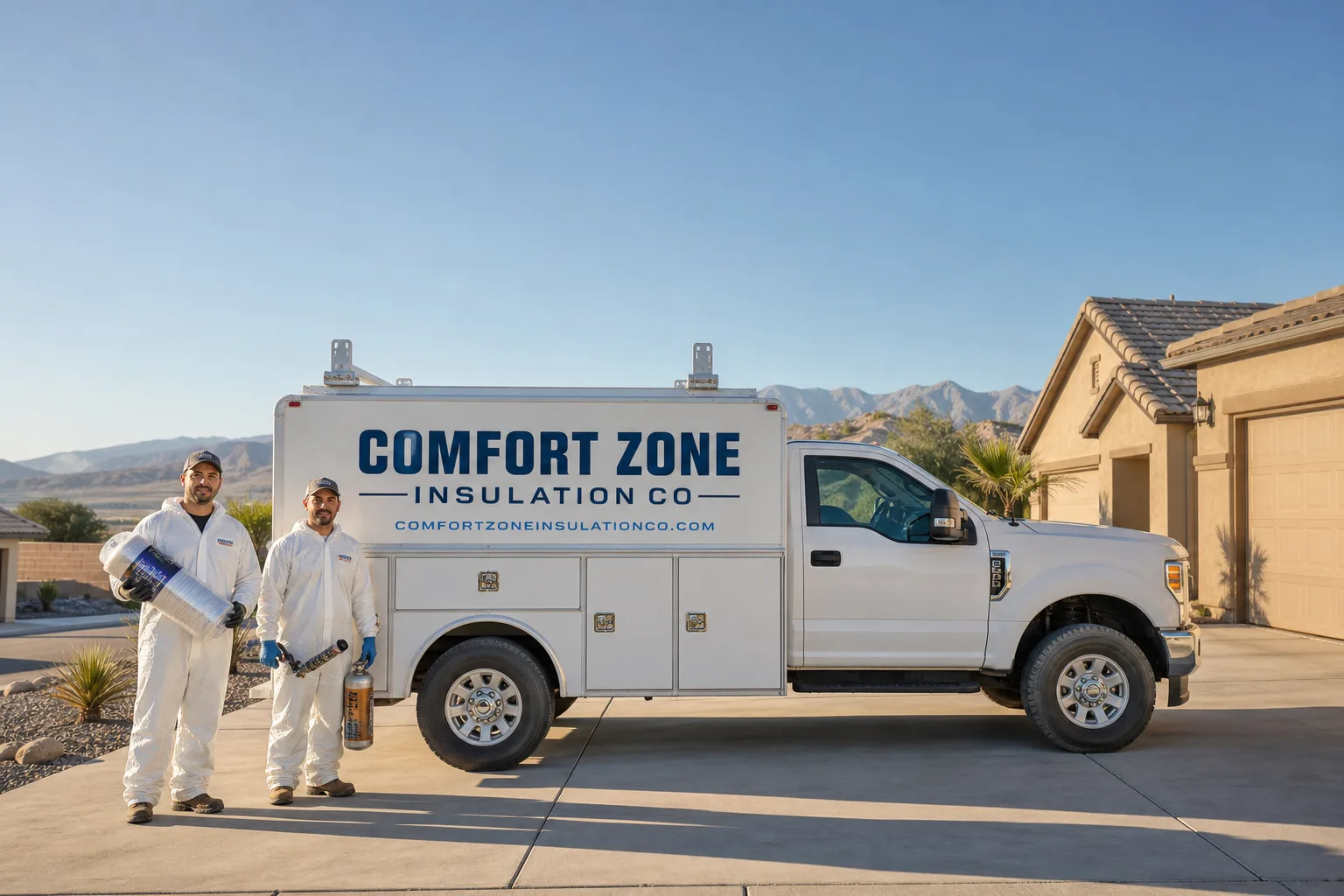
Fast, Reliable Spray Foam Insulation Across Compton
Spray foam insulation in Compton typically costs $2.40 to $5.10 per board foot installed, with a full attic project in a 1,200-square-foot home running $3,800 to $6,900. Most Compton jobs are done in a single day by our Spray Foam Insulation crew. Homes in the 90220, 90222, and 90223 ZIP codes are usually within 45 minutes of our trucks. The real issue here isn’t extreme cold. It’s marine-layer moisture working its way into stucco walls and uninsulated attics, then condensing exactly where you can’t see it. That’s the problem we solve in Compton more than any other. Call (855) 341-7856 if your walls feel damp-cold at night or your upstairs rooms won’t hold a set temperature.
Key Takeaways:
- Closed-cell foam in Compton stucco homes requires moisture readings on framing before sealing, a step most inland crews skip
- Older attics near the Alameda Corridor often need old loose-fill removed first due to rodent contamination and uneven settling
- Compton’s marine layer means open-cell foam in attic roof decks needs ventilation planning, or you’ll create a condensing surface
- Free estimates and same-week scheduling for all Compton ZIP codes: call (855) 341-7856
Why Comfort Zone Insulation Co Is Compton’s Preferred Spray Foam Insulation Company
Compton homeowners don’t need a general contractor who insulates on the side. They need someone who understands what 1920s stucco over raised foundations actually does when you seal it. That’s what we do. Our Compton customers keep calling us back because we check moisture before we spray, and we’re honest when a wall cavity isn’t ready for closed-cell foam. Noel Carrasco built this company around a simple idea: the right material for your specific situation, not whatever’s on the truck. We install insulation and nothing else.
We carry eight leading brands, so nobody gets pushed into a single product line. The multi-brand access matters in Compton specifically because older construction and coastal damp create conditions where one foam type is clearly better than another. Being authorized for both Icynene and Demilec systems means we can recommend open-cell where drying matters, closed-cell where air-sealing matters, and mineral wool where fire resistance rises to the top. Most Compton calls come through word of mouth from neighbors along Rosecrans Avenue and Compton Boulevard. That reputation comes from showing up on time and leaving homes that hold temperature.
Spray Foam Attic Insulation in Compton
Spray Foam Attic Insulation in Compton homes matters more than in inland cities because the marine layer keeps attic surfaces cool for so much of the year. In a Compton home, the attic is where moisture and heat gain collide. Most attics in the 90221 and 90222 ZIP codes run 20 to 40 degrees hotter than the living space during summer afternoons, and that heat pushes down through whatever insulation is already up there. When old loose-fill has settled to two inches or less, the fix isn’t adding more on top. It’s removing the compromised material and sealing the attic floor or roof deck properly.
Compton Attic Roof Deck Foam
Spraying the underside of the roof deck turns the attic into a conditioned space. In Compton’s mild climate, that’s a strong option because it keeps ductwork from baking in summer heat. But here’s the catch most inland crews miss: sealing the roof deck without planning make-up ventilation turns a mild coastal attic into a condensing surface. We walk through ventilation before we ever gun foam on a Compton roof deck.
Attic Floor Sealing and Removal
In blocks close to the Alameda Corridor, we regularly find old loose-fill insulation that’s been through rodent traffic, and it’s settled unevenly across the attic floor. We don’t spray over it. We remove it, inspect the ceiling plane for gaps around wiring and plumbing, seal those bypasses, then apply open-cell spray foam to the attic floor for a consistent thermal and air barrier. This runs roughly $3,200 to $5,800 for a typical Compton single-story home of 1,100 to 1,500 square feet, including removal.
Spray Foam Wall Insulation in Compton
Spray Foam Wall Insulation in Compton homes is where the marine-layer problem shows up most clearly. Most of the housing stock dates from the 1920s through the 1960s, built as stucco over wood framing on raised foundations. The original wall cavities were often open to the crawlspace, and the builders assumed those cavities would breathe. Close them off with closed-cell foam without checking the framing first, and you can lock damp air where it does real damage. That’s not a hypothetical. It’s a failure we’ve corrected on other Compton jobs.
Cavity Fill for Stucco Walls
When a Compton homeowner says the walls feel cold in the evening, that’s not just the temperature. It’s damp stucco back-venting into the living space. We run a moisture reading on the framing before we touch the wall. If the framing reads dry, closed-cell spray foam goes into the cavities and seals the wall properly. If it reads damp, we address the moisture source first or choose a drying strategy that keeps the wall from trapping condensation behind the stucco.
Crawlspace and Rim Joist Connection
On a raised-foundation bungalow off East Compton Boulevard, our crew found original wall cavities open to the crawlspace with marine damp already darkening the stucco lathe. We checked framing moisture before applying anything, then sprayed closed-cell foam into the exterior wall cavities and left a deliberate ventilation path to the crawlspace so the wall could dry toward the inside. The homeowner later told us the evening chill was gone from those walls. A follow-up reading a month out showed dry framing. That’s how we handle Compton walls.
Trusted Brands We Service in Compton
We’re authorized to install products from the full span of the insulation trade, including Icynene and Demilec spray foams, Owens Corning and Johns Manville batt systems, and Rockwool mineral wool for fire-rated and sound-sensitive jobs. If a Compton homeowner wants a recycled-content option, GreenFiber blown-in cellulose is available. The brand decision depends on the house and the condition of its walls and attic. Having Knauf and CertainTeed in the lineup means we aren’t limited to whatever got ordered last week. We stock materials for Compton’s older housing stock specifically, so turnaround is faster when you call (855) 341-7856.
Common Spray Foam Insulation Problems We See in Compton Homes
- Marine-layer condensation in sealed walls: Closed-cell foam applied to damp 1920s stucco framing without a moisture reading traps the damp inside the cavity. Rot starts behind the wall where nobody sees it until the stucco stains or the framing softens.
- Rodent-contaminated attic insulation: Near the Alameda Corridor and the rail spurs off Alameda Street, attics collect rodent activity in old loose-fill. Spraying foam over it seals in odor and hides the gaps the rodents used to get in. Removal comes first.
- Roof-deck foam with no ventilation plan: Sealing an older Compton roof deck with open-cell foam and skipping make-up ventilation turns the attic into a condensing surface during marine-layer months. The foam gets blamed. The real culprit was the install plan.
- Knob-and-tube wiring complications: 1940s-era Compton homes often still have active or abandoned knob-and-tube in exterior walls and attics. Spray foam can’t go over live knob-and-tube without an electrician’s sign-off, and even abandoned wiring needs to be mapped before cavities get sealed.
Pricing for Spray Foam Insulation in Compton, CA
Here’s what Compton homeowners can expect for sprayed-foam work. Open-cell foam runs $1.40 to $2.80 per board foot installed. Closed-cell runs $2.20 to $3.50 per board foot because the material costs more and delivers a higher R-value per inch plus a built-in vapor barrier. A typical attic floor job in a 1,100-square-foot home using open-cell lands between $2,900 and $5,200 including removal of old material when needed. Wall cavity injection on a single-story stucco home runs $4,200 to $7,600 depending on cavity depth and accessibility. Rim joist sealing around a raised foundation runs $900 to $1,800 for a standard crawlspace perimeter. Roof deck spray foam is the biggest single ticket, usually $5,500 to $9,500 for a full Compton attic. Call (855) 341-7856 for an exact quote. Estimates are free, and we’ll give you a line-item breakdown before any work begins.
We Also Serve Cities Near Compton
Our trucks cover Compton and the surrounding South Bay communities daily. That includes East Rancho Dominguez, West Rancho Dominguez, Carson, and Gardena. If you’re just outside Compton and dealing with the same marine-layer moisture in a raised-foundation stucco home, call us at (855) 341-7856 and we’ll let you know if we’re in your area this week.
Serving Compton, CA — Our Local Coverage Area
We’re based in the Compton area and know this community well. Use the map below to see our service coverage — if you’re nearby, we can almost certainly help.
FAQs About Spray Foam Insulation in Compton
Only if the installer skips the moisture reading. In Compton’s marine-layer climate, we check framing moisture before sealing any stucco wall cavity. If the framing is dry, closed-cell foam goes in and the wall is properly sealed. If it’s damp, we resolve the moisture path first or choose an application method that lets the wall dry toward the inside. Call (855) 341-7856 and we’ll walk you through what a moisture check looks like on your specific house.
No. We remove the old loose-fill first. In that part of Compton, old attic fill usually has rodent contamination and uneven settling, and spraying over it hides both problems. Removal lets us inspect the ceiling plane for air gaps and wiring issues before new foam goes in. This usually adds $600 to $1,200 to the project depending on attic size and fill depth.
It depends on the wiring’s condition and location. Live knob-and-tube in a wall or attic cavity can’t be covered with foam until an electrician addresses it, because the foam changes the wiring’s heat dissipation. Abandoned knob-and-tube needs to be mapped before we seal the cavity. We’ll tell you exactly what’s needed after we look. Call (855) 341-7856 to schedule an inspection.
That depends on where it’s going. Closed-cell works better in Compton wall cavities because it acts as a vapor barrier and stops marine-layer damp from condensing inside the wall. Open-cell often works better on attic floors where you want the assembly to dry upward if any moisture gets in. We choose based on the surface and the moisture profile, not a blanket preference.
Because sealing the attic changes how the whole house handles moisture. Compton’s marine layer keeps outside air damp for long stretches, and if you seal a roof deck without a make-up air plan, the attic can become a condensing surface. We plan ventilation and check the existing roof vents before applying foam to any Compton roof deck. Call (855) 341-7856 for a free estimate and we’ll explain the ventilation plan for your specific attic.
Written by Noel Carrasco, Owner at Comfort Zone Insulation Co, serving Compton and the South Bay since day one.