
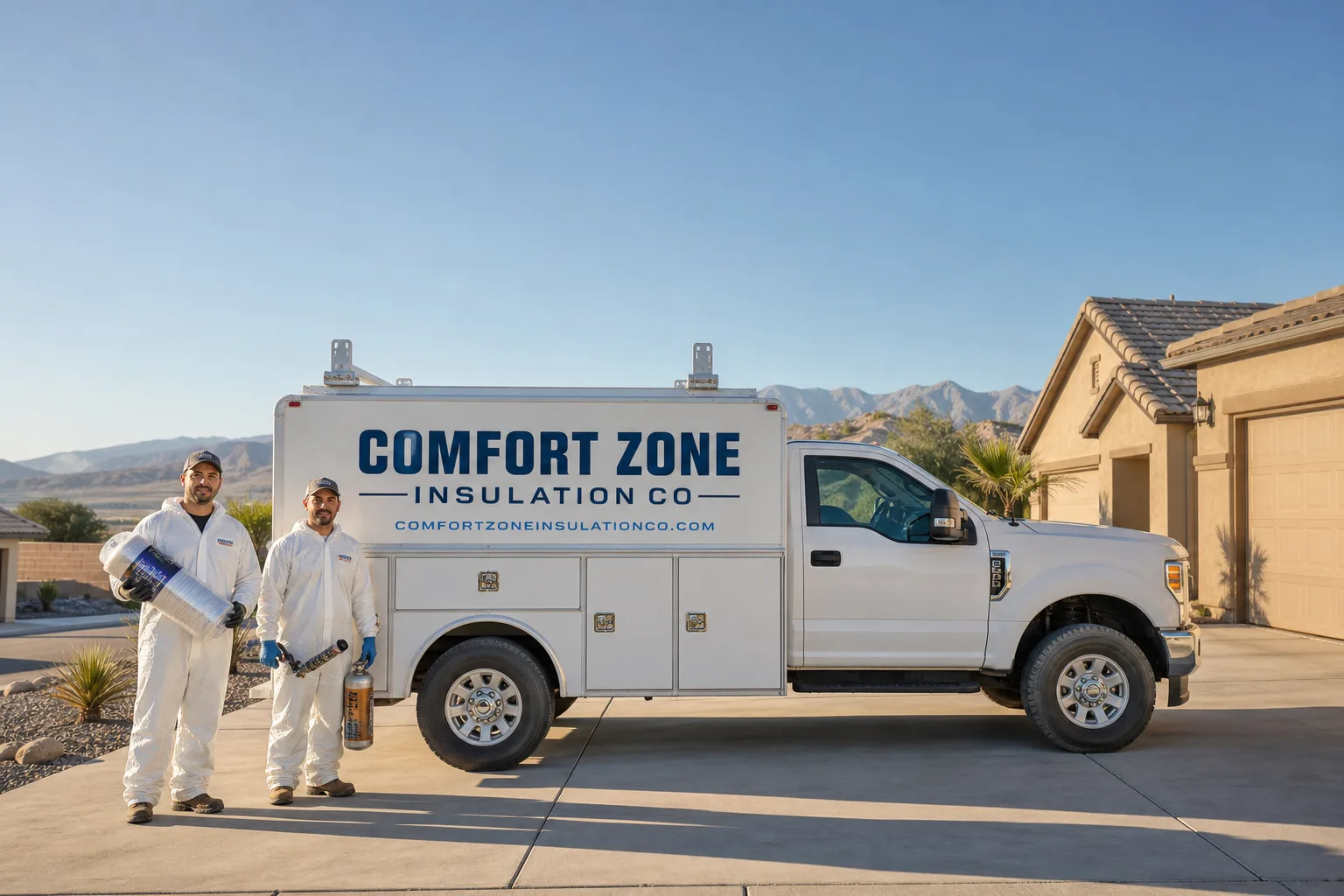
Fast, Reliable Attic Insulation Across San Marino
Attic insulation in San Marino is rarely a simple “add more fiberglass” job. Most homes here were built between the 1910s and 1950s with lath-and-plaster ceilings, finished attic spaces, and rafter bays that were never designed for modern dense-pack materials. That means the work has to be planned carefully: sealed top plates, baffled ventilation, and cavity-fill that doesn’t disturb historic detailing. Our crews work throughout 91108 and 91118 regularly, and we know which San Marino properties need invisible wall-cavity work rather than visible attic-floor depth. Call (855) 341-7856 for a free estimate, and we’ll be straight with you about what your house actually needs.
Why Comfort Zone Insulation Co Is San Marino’s Preferred Attic Insulation Company
We install insulation and nothing else. That focus matters in San Marino, where the homes are architecturally significant and the wrong material choice can damage a plaster ceiling or trigger a preservation review you never wanted. Noel Carrasco leads our team, and he’s spent years working in historic Pasadena-area housing stock, so he understands the difference between a 1928 Spanish Colonial near the Huntington Library and a 1990s addition off St. Albans Road.
San Marino homeowners call us because we don’t push one product. We carry materials from Owens Corning, Rockwool, and GreenFiber, among others, so the recommendation fits the house, not our inventory. When a San Marino customer calls about a hot upstairs bedroom in a 1950s ranch off Huntington Drive, we talk about radiant heat gain and ventilation before we ever quote a material. That diagnostic-first approach is why referrals from San Marino neighbors keep coming.
Response time to San Marino is typically same-week, and for urgent situations like exposed wiring or pest-damaged insulation, we can often get a crew out faster. We’re based in San Bernardino but treat the San Gabriel Valley as core territory, not a distant service call.
Insulation Contractors in San Marino
Insulation contractors working in San Marino need a different skillset than crews serving newer tract-home cities nearby. The job here involves retrofitting houses with lath-and-plaster walls, knob-and-tube-era cavities, and finished attics that can’t simply be buried under twelve inches of loose-fill. Every opening has to be planned around what’s visible and what’s structural.
Preservation-Sensitive Cavity Work
A 1920s estate off Lombardy Road typically has double-wythe masonry or wood-frame walls with empty cavities. Dense-packing those cavities with cellulose or mineral wool keeps the original plaster intact while cutting heat transfer through the walls. The work happens from small access points, so the finished look doesn’t change. This is the kind of job that separates insulation specialists from general contractors who treat every house like a 2000s build.
Top-Plate Sealing and Air Bypass Correction
In many San Marino homes, the real comfort problem isn’t missing attic insulation, it’s the air path between the attic and the living space. Gaps where interior walls meet attic framing let conditioned air escape and pull hot attic air down into rooms. Our Attic Insulation team seals top plates and wire penetrations before any insulation goes in, because adding R-value to a leaky ceiling is wasted effort.
Attic Ventilation in San Marino
Attic ventilation in San Marino is often the thing that determines whether blown-in insulation works or quietly fails. These older roofs with lath-and-plaster rafters depend on eave-to-ridge airflow to prevent moisture buildup and summer heat stratification. Pack insulation against the rafters without baffles, and you block that airflow, drive moisture into the plaster, and create exactly the kind of problem that shows up as cracked ceilings or peeling paint a year later.
Baffled Ventilation Behind Historic Cornices
We frequently install baffles behind plaster cornices on San Marino homes where soffit vents are narrow or don’t exist at all. The baffle creates a protected air channel from eave to ridge, so the insulation can sit tight against the top plate without choking ventilation. On a flat-roof addition, the soffit path is usually missing entirely, which means we design venting through gable ends or add low-profile roof vents that don’t disrupt the roofline’s character.
Title 24 Compliance on Era Homes
Under California’s Title 24, any new blown-in attic insulation in these older plaster-and-rafter roofs triggers ventilation requirements that weren’t enforced when the house was built. That’s a real consideration for San Marino homeowners, and it’s one reason we plan the attic venting and air-sealing as part of the same scope, not as a surprise change order mid-project. An unventilated 1940s attic with new insulation is a moisture problem waiting to happen.
Trusted Brands We Service in San Marino
We’re authorized to install products from Owens Corning, Rockwool, and GreenFiber, along with several other lines we carry for specific applications. That matters in San Marino because the right material for a finished attic above an original 1920s living room is often different from what you’d use in a detached garage or guest house. We stock fiberglass, mineral wool, and recycled cellulose so we’re not limited to whatever we happened to order this week. If a San Marino customer wants Rockwool for fire resistance and sound attenuation in a separated garage studio, we can do that. If another wants GreenFiber dense-packed into original wall cavities, that’s in the truck too.
Common Attic Insulation Problems We See in San Marino Homes
- Blown-in insulation packed against lath-and-plaster rafters without baffles. This blocks the eave ventilation these 1920s roofs were designed around, trapping moisture and slowly deteriorating the plaster from the attic side. By the time a homeowner notices the ceiling crack, the damage is already done.
- Visible attic-floor depth added to finished attic spaces. Some contractors treat a San Marino attic like an unfinished suburban truss attic and lay thick loose-fill over a floor that doubles as a finished room. The result destroys historic detailing and flags the property for the same kind of review San Marino homeowners wanted to avoid.
- Flat-roof additions left under-insulated. Homes with 1980s to 2000s flat-roof additions along Huntington Drive or near Lacy Park often have a main attic that looks finished while the addition’s cavity access is completely different. Those rooms bake in the San Gabriel Valley summer sun while the rest of the house feels fine.
- Knob-and-tube-era cavities that were never sealed. The original wiring paths left open chases through wall top plates and attic floors. Air moves through them constantly, so even a well-insulated attic underperforms because the conditioned air is leaking out through the walls below it.
Pricing for Attic Insulation in San Marino, CA
Because San Marino homes vary so widely, pricing depends on the house. A straightforward blown-in top-up over an existing unfinished attic typically runs $1,200 to $2,400 for a medium-size home. Attic insulation replacement with air sealing and baffled ventilation on a 2,500-square-foot estate generally lands between $3,500 and $6,500. Dense-pack wall-cavity cellulose on a large 1920s house, done through discreet access points, often starts around $4,000 and goes up based on cavity complexity and number of stories. Flat-roof addition work is priced by square foot and access difficulty, usually $2.50 to $4.50 per square foot, because the cavity work is slower and the ventilation design takes more planning. Every estimate is free, and we walk the house with you before recommending a number. Call (855) 341-7856 to schedule a look.
We Also Serve Cities Near San Marino
Our crews cover the surrounding San Gabriel Valley communities alongside Attic Insulation in San Marino. We’re regularly in San Gabriel, East San Gabriel, Alhambra, and East Pasadena, and each of those cities has its own housing stock quirks, from 1950s tract homes to hillside additions. If you’re just outside city limits, call us anyway – we likely have a crew scheduled nearby.
Serving San Marino, CA — Our Local Coverage Area
We’re based in the San Marino area and know this community well. Use the map below to see our service coverage — if you’re nearby, we can almost certainly help.
FAQs About Attic Insulation in San Marino
Yes. We insulate the walls and ceiling cavities of finished attics from the interior side using dense-pack cellulose or mineral wool, with access points cut in closets or behind trim, not in the visible ceiling. The room’s plaster, beams, and wood detailing stay exactly as they are. The work happens invisibly, which is what San Marino’s preservation standards demand.
The cause is almost always radiant heat gain through the roof and under-insulated wall cavities, combined with air bypasses where the attic meets the interior walls. A new AC masks the problem for a few hours, but the upstairs rooms reheat quickly because the thermal envelope is still leaking. The fix is sealing the top plates, venting the rafter bays, and dense-packing the wall cavities. Call (855) 341-7856 and we’ll help you diagnose what’s happening before you spend more on cooling equipment.
Yes. California’s Title 24 energy code requires attic ventilation compliance whenever new insulation is added to these older roof assemblies. For San Marino’s plaster-and-rafter roofs, that usually means installing baffles between each rafter bay and confirming the eave-to-ridge path is clear. We handle the venting design as part of the insulation scope so the project passes and the roof stays dry.
We treat those cavities as air paths, not open voids to be filled. The knob-and-tube wiring itself often needs to be evaluated before insulation, but our scope is the thermal and air-sealing side. We dense-pack around the framing, seal top plates, and work from small access holes so the plaster never comes down. It’s slower than working on newer homes, and that slower pace is exactly what these houses require.
Yes, but the approach is different from the original house’s rafter-and-plaster attic. Flat-roof additions usually have limited cavity depth and no soffit path, so we use a combination of dense-pack wall-cavity fill, top-plate sealing, and ventilation through gable ends or low-profile roof penetrations. The result is a cooler, quieter room that behaves like the rest of the house. Call (855) 341-7856 for a free assessment of your specific addition.
Written by Noel Carrasco, Owner at Comfort Zone Insulation Co, serving San Marino and the San Gabriel Valley.
Ready to talk about your San Marino attic? Call (855) 341-7856 for a free, no-pressure estimate. We’ll walk the house, tell you what’s actually going on, and recommend the right material for the job.