
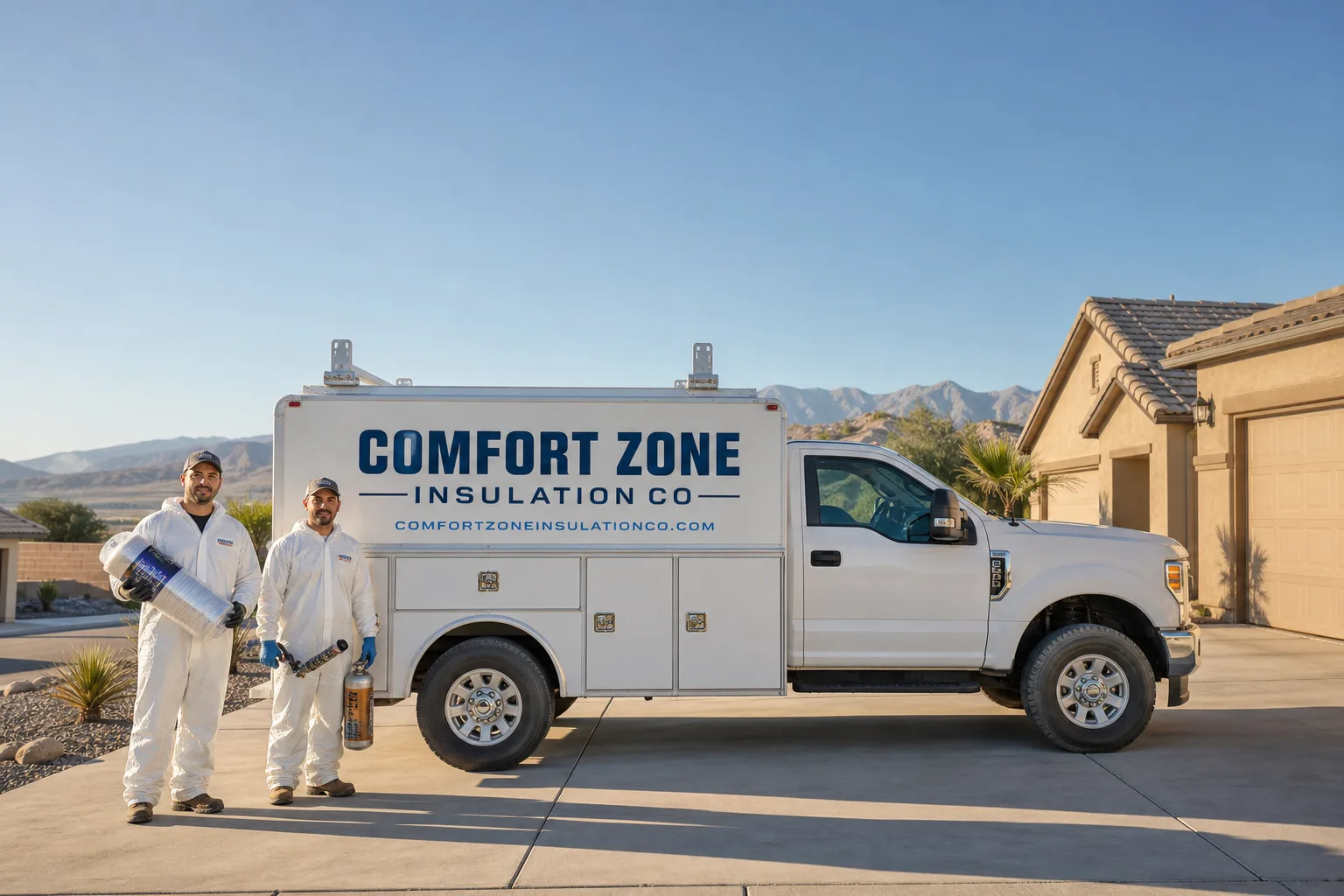
Fast, Reliable Attic Insulation Across Crestline
Most attics in Crestline were never built for the life they’re living now. Your cabin near Lake Gregory or up off a Top Town ridgeline was framed for summer weekends, not January nights at 4,600 feet. That’s why our response to Crestline is built around one idea: one trip up the mountain, done right. We remove what’s failed, air-seal what’s leaking, and install the right Attic Insulation for a snow-country ceiling. No second visit, no waiting on an installer who doesn’t know your roads. Call (855) 341-7856 and we’ll schedule a free estimate while we’re already serving the mountain.
The short version: attic insulation in Crestline is not a quick top-off job. It’s a cabin-conversion retrofit. Older 2×4 ceiling joists, unsealed top plates, and summer-cabin ventilation all have to be addressed before new material goes in. When done correctly, that work brings a typical Crestline attic up to snow-country R-value, stops the ice-dam and condensation cycle, and cuts the heat that pours through a sun-baked south-facing roof. We install insulation and nothing else, so the diagnostic questions get asked before the bags get blown.
Why Comfort Zone Insulation Co Is Crestline’s Preferred Attic Insulation Company
Crestline homeowners call us because we treat their attic like the retrofit it is, not like a flatland ranch house job. Noel Carrasco, who leads our team, has spent enough time in San Bernardino Mountain cabins to know the difference between a ceiling that can handle new blown-in weight and one that needs inspection first. We work in 92325 regularly, from the switchbacks off Highway 138 to the shaded pockets around Lake Gregory. That local repetition means we know which attics hide knob-and-tube remnants, which crawlspaces tie into ridge vents, and which south-facing slopes get punished after the pines came down.
Our reputation in Crestline is built on showing up when we say we will. Mountain scheduling is different from the flatland: we batch Crestline calls so we’re already up the hill, which means shorter wait times and fewer wasted trips. We carry products from eight major brands, including Owens Corning, Rockwool, and Knauf, so the material gets matched to the house, not to whatever is left on the truck. That includes Reflectix service in Crestline when a radiant barrier or duct wrap solution fits the job. When a Crestline homeowner on a spur off of Waters Drive needs a heavier attic baffle package or a specific mineral wool density, we can bring it first trip. That’s what insulation-only specialization buys you: the right product, installed once, without a general contractor’s markup or guesswork.
Attic Insulation Removal in Crestline
Attic insulation removal in Crestline is step one for any cabin that’s been lived in year-round for more than a decade. Old mineral wool from the 1970s, compressed fiberglass batts, rodent-damaged cellulose: it all comes out before new material goes in. The first sentence matters here: you cannot blow new insulation over failed old insulation and expect a snow-country attic to perform. In Crestline, removal is especially common in Lake Gregory cabins that were insulated once, badly, during a 1980s or 1990s conversion, and have been losing heat through the ceiling ever since. A full removal and re-insulation job in Crestline typically runs $2,400 to $4,800 depending on attic size, access, and whether contaminated material needs bagging and disposal.
When Removal Becomes Necessary
We recommend removal when the existing insulation is wet from condensation, compacted below half its original depth, or full of rodent waste. Crestline attics with venting sized for a seasonal cabin often develop moisture problems after the first full winter of year-round heating. That damp insulation loses its R-value and becomes a mold host. We also remove blown-in material when a homeowner wants to air-seal the attic floor properly. You cannot seal can light housings and top plates through a foot of old fiberglass. The removal clears the deck so the sealing work actually gets done.
One Trip Removal and Replacement
For most Crestline homes, we complete removal and new installation in the same visit. That’s not a flatland concern. On the mountain, a second trip means another drive up Highway 18 or 138, another day of coordinating access on a narrow spur road, another round of scheduling around weather. We bring the vac truck, the bags, the new material, and the sealing gear in one load. By evening, the attic has old material out and new insulation in place. That’s the standard, not the exception.
Insulation Contractors in Crestline
Insulation contractors in Crestline have to think about joist spans, snow loads, and condensation in ways that flatland contractors never do. We’re a dedicated insulation shop, not a general contractor picking up an attic job between kitchen remodels. That matters in 92325 because the wrong call on an old cabin ceiling creates problems that don’t show up until the first freeze-thaw cycle. Crestline attics need a contractor who can read an existing structure, identify what the original build intended, and recommend the upgrade that respects what’s already there. A full attic air-seal and insulation package in Crestline, including removal, ranges from $1,800 on a small one-bedroom cabin to $6,500 or more on a larger year-round home near the ridgelines.
Air Sealing Before the New Material
Every insulation contractor who works in Crestline should be doing attic floor air sealing before anything else. The top plates, wire penetrations, plumbing stacks, and can light housings are where your heated air leaves. In an old cabin with gaps around the chimney chase and open soffit bays, sealing those leaks matters more than adding another six inches of fiberglass. We seal first, then blow. It’s the sequence that actually changes how the home holds temperature.
Reading the Existing Structure
A real insulation contractor in Crestline starts with a structural read. What’s the joist spacing? Is the ceiling drywall or original tongue-and-groove? What’s already up there, and has it been wet? We document what we find and talk it through with you before material starts moving. You should know what we’re doing and why. That’s the difference between a bid and a diagnostic.
Trusted Brands We Service in Crestline
Crestline attics do not all need the same product. A tight Lake Gregory cabin with 2×4 ceiling joists might want a dense-pack cellulose that locks into the bays. A newer ranch home over by the Crestline Village shops might do better with blown-in fiberglass from Owens Corning. A homeowner worried about fire resistance near the tree line could choose Rockwool, and we can install it. We carry material access across eight manufacturers, including Owens Corning, Johns Manville, Knauf, and Rockwool, so the decision gets made on performance, not on what’s quick to order. We stock the common bag types and densities for Crestline jobs, which keeps turnaround tight and means the attic gets done in one visit. “We carry eight leading brands so you’re not limited to whatever we happened to order this week” is exactly the point. The brand should serve the cabin, not the other way around.
Common Attic Insulation Problems We See in Crestline Homes
- Unsealed top plates under old blown-in material. This is the signature Crestline issue. Warm air rises through the gaps where wall framing meets ceiling framing, condenses in the cold attic, and wets the insulation from underneath. New insulation over unsealed top plates wastes money.
- Summer-cabin ventilation sized for part-time living. A full-time household produces far more moisture than a weekend cabin ever did. Under-ventilated attics in Crestline grow mold after the first winter of daily showers, cooking, and heating. Insulation without a ventilation correction will fail early.
- Sun-exposed south and west roofs after tree die-off. When those dead pines came down across the San Bernardino Mountains in the 2010s, whole roof slopes suddenly baked in summer sun. That raises attic temperatures and accelerates degradation of kraft-faced batts and older radiant surfaces. We see this pattern on exposed Crestline lots that never used to get direct afternoon sun.
- Old mineral wool and newspaper-based fills that have compacted to nothing. Mid-century Crestline cabins often got a thin shake of mineral wool or even shredded paper as original attic fill. Fifty years later, that material sits at a fraction of its original depth and does almost no work. Removal is the only fix.
Pricing for Attic Insulation in Crestline, CA
Honest numbers help you plan. A straightforward blown-in attic top-up in Crestline runs $1,200 to $2,200 for a typical 1,000-square-foot attic. A full removal and re-insulation job runs $2,400 to $4,800, and that’s the work most cabin conversions need. Air sealing alone typically runs $600 to $1,400 depending on can light count and how many top plates and chases we’re sealing. Larger year-round homes up off a ridge road or around the south side of Lake Gregory can push $6,500 or more when removal, sealing, baffle work, and brand-specific material all come together. The price moves on attic access, joist condition, and whether we’re hauling out contaminated material. Call (855) 341-7856 for an exact quote on your attic. Estimates are free, and we’ll walk the attic before we price it.
We Also Serve Cities Near Crestline
We run regular routes from the flatlands to the mountain towns, so if you’re in Crestline or just down the hill, we’re already in the area. We serve Lake Arrowhead, Muscoy, San Bernardino, and Highland with the same insulation-only focus. Mountain scheduling and flatland scheduling are different, which is exactly why a local contractor beats a distant one. Call (855) 341-7856 and we’ll fit your job into the right route.
Serving Crestline, CA — Our Local Coverage Area
We’re based in the Crestline area and know this community well. Use the map below to see our service coverage — if you’re nearby, we can almost certainly help.
FAQs About Attic Insulation in Crestline
Not automatically, which is why we inspect the joist size, spacing, and condition before adding material. Many original Crestline cabins used 2×4 ceiling joists designed to carry a light shake of old mineral wool or nothing at all. Blown-in fiberglass at a snow-country R-value weighs enough to sag older ceilings if the structure can’t handle it. The right fix is usually air sealing plus a material depth matched to what the joists can carry, sometimes with dense-pack cellulose locked into the bays instead of a heavy loose fill. Call (855) 341-7856 and we’ll tell you what your attic can safely hold.
Crestline sits around 4,600 feet with real winters, snow, and freeze-thaw cycles that the flatland cities never experience. A San Bernardino home might lose a little conditioned air through a thin attic; a Crestline cabin loses a lot of heat into freezing mountain air and picks up condensation problems along the way. Snow sitting on a warm roof also creates ice dams that under-insulated attics make worse. Highland and Muscoy don’t have that failure mode. The stakes are simply higher up the mountain, which raises the value of doing the attic right.
Yes, and we see this pattern constantly in Crestline. The tree mortality crisis left many south and west roof slopes exposed to direct summer sun for the first time. That bakes the attic, degrades existing batts, and can wreck kraft-faced paper. We may recommend a heavier insulated ceiling, a radiant barrier, or improved venting to handle the new solar load. Each exposed slope changes the heat math, so we read the roof’s sun exposure as part of the attic inspection.
Yes. We plan Crestline jobs as one-trip operations because that’s how mountain service should work. We bring the removal equipment, sealing materials, and new insulation in a single load. The work gets done that day, so you’re not waiting on a second appointment to finish the attic. Call (855) 341-7856 to schedule, and we’ll confirm the one-trip scope during the estimate.
Usually yes. Original summer-cabin venting was sized for light, part-time use, not for a full-time household’s moisture output. When we add insulation, we typically also check baffles, ridge vents, and eave airflow. Without that correction, the attic traps moisture after the first winter of year-round living. We include ventilation prep and baffle work where existing venting is undersized, because insulation without airflow fails early in a snow-country attic.
Ready to get your attic right? Call Comfort Zone Insulation Co at (855) 341-7856 for a free estimate. We’ll inspect your Crestline attic, explain what’s up there, and give you a number before any material moves. One trip. Right product. Done.
Written by Noel Carrasco, Owner at Comfort Zone Insulation Co, serving Crestline and the San Bernardino Mountains.